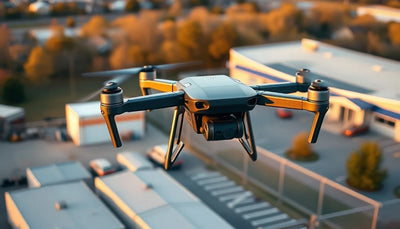
Automated DJI Drones Transform Public Safety in Celaya – Lessons for Operators
Celaya, Mexico once a violent hotspot, now uses automated DJI drones and integrated command centers to improve emergency response. Drone operators and fleet managers can learn from this real-world deployment about autonomous patrolling, fleet integration, and the growing second-hand market for public safety drones.

For years, the Mexican city of Celaya carried a reputation that no municipality wants. Ranked among the country’s most dangerous urban centers, it faced persistent violent crime and an emergency response system that largely reacted after incidents had already unfolded. Today, city officials report that a combination of autonomous drone technology and integrated command-and-control systems is helping rewrite that narrative. The story out of Celaya offers more than a public safety case study; it provides commercial drone operators, fleet managers, and repair customers with a concrete example of how automated DJI drones are being deployed in real-world, high-stakes environments.
According to a report by DroneDJ, Celaya’s shift toward proactive policing relies heavily on unmanned aerial systems that operate with minimal human intervention. The autonomous drones are linked to a central command hub that coordinates surveillance, incident detection, and dispatch in near real-time. For buyers and operators, this deployment underscores a growing trend: the demand for drones that can function as part of a larger networked ecosystem, not just as isolated flying cameras.
The Celaya model: autonomous drones in emergency response
Celaya’s approach is built on automated DJI drones that patrol assigned corridors or respond automatically to triggers from the command system. Instead of requiring a pilot to fly each mission manually, the drones follow pre-programmed routes or react to alerts from ground sensors, cameras, and data feeds integrated into the command center. This reduces the reaction time between an incident occurring and a drone being overhead, a critical advantage in a city where every second matters.
Industrial drone procurement
Source a brand-new industrial drone for this mission.
Discuss mission fit, aircraft model, quantities, configuration, pickup, and lifecycle support with Reboot Hub.

Officials noted that the previous system left police continuously reacting. Now, the autonomous drones provide a persistent aerial presence that can detect emerging threats or track suspects without tying up officers in the air. The command center, staffed by a small team, monitors multiple drone feeds simultaneously and can redirect units as needed. For fleet operators, this model highlights the operational benefits of moving beyond single-pilot, single-drone workflows. It also raises important considerations about fleet composition: vehicles that support autonomous flight modes and robust data transmission are becoming essential for agencies and enterprises aiming to replicate Celaya’s results.
How integrated command systems change drone fleet dynamics
The success of Celaya’s program depends heavily on integration between the drones and the command-and-control infrastructure. The drones are not merely flying cameras; they are nodes in a larger network that includes ground sensors, dispatch software, and real-time video analytics. For commercial operators and public safety buyers, this means that drone hardware decisions cannot be made in isolation. Compatibility with existing or planned command platforms becomes a major procurement factor.
Drone buyers evaluating pre-owned equipment should consider whether older DJI models can interface with modern command software. Some legacy drones may lack the APIs or transmission protocols needed for full integration, potentially limiting their usefulness in an automated fleet scenario. Fleet managers who plan to phase in autonomous operations might prioritize drones that offer built-in SDK support and reliable data links. Repair customers, too, should note that maintaining a drone’s connectivity components — such as antennas and data modules — is critical for preserving its value in an increasingly networked environment. Seeking professional DJI repair services that use genuine OEM parts ensures those integration-critical elements stay in top condition.
What this means for drone buyers
The Celaya deployment sends a clear signal to the commercial drone market: autonomous capabilities are moving from nice-to-have to must-have, particularly in public safety and enterprise fleets. Buyers should factor this into their purchasing decisions, whether they are acquiring new drones or sourcing pre-owned units. A drone that can fly autonomously, integrate with command software, and support over-the-air updates will retain more operational relevance and resale value in the coming years.
For those shopping in the pre-owned market, the shift toward automation creates both opportunities and cautions. As cities and agencies upgrade to newer autonomous-ready models, they may offload older DJI drones that are still highly capable but lack advanced integration features. These units can be excellent value for operators who do not require full command-center connectivity — for example, solo agricultural inspectors or real estate photographers. However, buyers intending to build a fleet around integrated operations should verify that any pre-owned drone supports the necessary interfaces. The pre-owned DJI drones on the market today cover a wide range of capabilities; understanding which features are non-negotiable for your operation is key.
One operator-facing takeaway from Celaya’s experience is this: before committing to a drone purchase, map out how it will fit into your current or planned workflow. If autonomous patrols, remote command center integration, or data sharing with other systems are on your roadmap, invest in drones that offer those features natively. For those with existing fleets, consider a phased upgrade. If you hold older drones that still fly well but lack connectivity, you might use them for manual missions while allocating autonomous tasks to newer acquisitions. And when it is time to upgrade, the drone trade-in guide can help you assess the value of your current equipment against the features you need next.
Broader market trends: automation and pre-owned DJI opportunities
Reboot Hub analysis: Celaya is not an isolated experiment. Similar automated drone deployments are being explored in other cities and regions, signaling a broader market trend toward integrated, autonomous aerial systems. This shift has direct implications for the pre-owned DJI market. As public safety agencies and enterprise fleets adopt next-generation automated drones, a wave of well-maintained earlier-model DJI units is likely to enter the secondary market. These drones, often originally purchased for manual inspection or survey work, may still have plenty of flight hours left and can serve operators whose needs do not demand full autonomy.
For repair shops and parts suppliers, the trend means increased demand for components that support autonomous flight — such as RTK modules, obstacle sensing systems, and enhanced transmission units. Stocking genuine OEM spare parts for these high-value subsystems becomes a strategic advantage. At the same time, operators who service their own fleets should pay close attention to firmware updates and compatibility notes, as autonomy features often depend on the latest software releases. A drone that cannot receive updates may lose its ability to integrate with new command systems, diminishing its value.
The broader commercial lesson from Celaya is that the drone industry is moving toward systems thinking. A drone is no longer just a platform; it is a data-gathering node in a larger information network. Buyers who understand this trend and align their procurement strategies accordingly will position themselves to capture the full value of their investments, whether those investments are in brand-new units or carefully inspected pre-owned equipment.
Are automated DJI drones only for public safety applications?
No. While Celaya’s use case is public safety, the same autonomous and integrated technologies are applicable to infrastructure inspection, agriculture, logistics, and industrial monitoring. Commercial operators can adapt the model to their own workflows, using automated patrols for power line inspections or perimeter surveillance.
How can I integrate my existing DJI drone with command software?
Integration depends on your drone model and the command platform you use. Many DJI drones support SDK-based integration. Check the manufacturer’s developer resources or consult a professional DJI repair services provider for advice on hardware and software compatibility upgrades.
Should I consider buying a pre-owned DJI drone for autonomous missions?
Yes, but verify that the specific model supports autonomous flight modes and can be integrated with your chosen command software. Many recent pre-owned DJI drones retain excellent autonomous capabilities at lower prices. Use a trusted inspection service to ensure all sensors and connectivity components are fully functional.
Fontes consultadas
- DroneDJ automated drone city public safety report - primary reporting source
- DJI Enterprise Celaya public safety case study - official company case study
- DJI Dock 3 official product page - official product page
- DJI Dock official product page - official product page
O Editorial Reboot Hub acrescenta análises de compra, reparação, revenda e operacionais para proprietários de drones. Se detetar um erro, contacte-nos para a revisão da correção através da nossa política editorial.