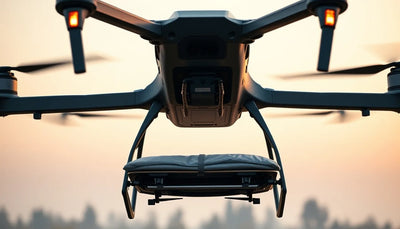
Zipline Turns to Software to Quiet Drone Delivery Noise
Drone delivery leader Zipline is reportedly addressing a growing operational friction point: neighborhood noise complaints. A new software-focused approach could reshape how delivery drone fleets manage acoustic footprints in residential areas, with implications for operators, regulators, and the broader commercial UAV market.

Quick answer
DroneDJ reports that Zipline is developing a software-based answer to growing noise complaints around drone delivery operations, shifting the improvement focus from speed and range to acoustic footprint.
- Zipline is reportedly working on software to reduce delivery drone noise, according to DroneDJ.
- Noise from drone delivery is becoming a community acceptance problem in residential areas.
- The development signals a market shift toward acoustic performance as a key operational metric.
- Software-based noise mitigation could affect fleet planning and platform selection for commercial operators.
Evidence: DroneDJ
Market context
Turn market news into a buy, repair, or trade-in decision.
Compare pre-owned availability, resale timing, and repair economics before the market moves again.

Drone delivery has spent years chasing two numbers: how fast a package can arrive and how far a drone can fly. But according to a new report from DroneDJ, the next competitive frontier may be something far less glamorous and far more practical: how quietly a delivery drone can do its job. The outlet reports that Zipline, one of the most established names in autonomous delivery, is now turning its attention to software as a way to reduce the acoustic footprint of its aircraft.
The development matters because noise is not a minor inconvenience. It is a community acceptance problem, a regulatory flashpoint, and a potential constraint on how densely delivery routes can operate in residential neighborhoods. For commercial UAV operators, fleet buyers, and anyone watching the second-hand drone market, the reported shift signals that acoustic performance is becoming a measurable operational metric rather than an afterthought.
What DroneDJ is reporting about Zipline
According to DroneDJ, the next meaningful improvement in drone delivery may not involve faster transit times or longer battery endurance. Instead, the report points to a quieter delivery experience as the next big step. The central claim is that Zipline has a new answer to the noise problem, and that answer is software-based rather than a wholesale hardware redesign.
This is a notable distinction. Hardware changes, such as new propeller designs or motor configurations, typically require recertification, supply chain adjustments, and longer development cycles. A software approach could theoretically be deployed across a fleet more quickly, adjusting flight profiles, descent angles, or motor control parameters to reduce perceived noise without replacing physical components. DroneDJ's reporting does not specify the exact mechanics of Zipline's software approach, so the precise method remains source-limited. But the direction is clear: acoustic management is moving into the operational software stack.
Zipline has built its reputation on high-volume medical and retail delivery operations, often in environments where reliability and speed dominate the conversation. The reported pivot toward noise reduction suggests the company is now contending with a different kind of constraint: the tolerance of the people living beneath its flight paths. That is a meaningful signal for the broader industry.
Why noise is becoming a commercial constraint
Drone noise has long been a background concern in the UAV industry, but it rarely drove procurement decisions. Buyers focused on payload capacity, range, flight time, and regulatory compliance. What the DroneDJ report highlights is a shift in that calculus. As delivery operations scale and flight frequencies increase, the cumulative acoustic impact on a neighborhood becomes harder to ignore.
For fleet operators, this is not just a public relations issue. Municipalities and local authorities can impose operating restrictions, curfews, or route limitations in response to noise complaints. Those constraints directly affect route density, delivery economics, and fleet utilization. A drone that cannot operate during certain hours or along certain corridors is a drone that is not generating revenue. In that context, software-based noise mitigation becomes a tool for protecting operational flexibility.
The commercial logic extends further. Delivery companies bidding for municipal contracts or negotiating airspace access may soon find that acoustic performance is written into the evaluation criteria. A quieter platform could mean fewer community objections, faster approvals, and more favorable operating terms. That gives noise reduction a direct line to revenue, not just reputation.
What this means for drone owners and the market
Reboot Hub analysis: The reported Zipline development is not just about one company's delivery network. It signals where the broader commercial UAV market is heading. Acoustic performance is likely to become a more prominent factor in platform selection, fleet planning, and aftermarket value. Buyers who once overlooked noise may start asking harder questions about how a drone sounds in operation, particularly if they intend to fly in populated areas.
For the pre-owned drone market, the implications are worth watching. If quieter platforms become the commercial standard, older or louder models may face steeper depreciation, especially in delivery and logistics segments. Conversely, platforms with strong acoustic performance could hold value better as operators look to rotate fleets toward quieter equipment. This is the kind of shift that can reshape resale demand before it shows up in official spec sheets. Reboot Hub analysis suggests that operators and buyers should begin treating noise as a procurement criterion now, rather than waiting for formal regulations or contract requirements to force the issue. For those evaluating current inventory or planning future acquisitions, the Drone Wiki offers a reference point for understanding how platform characteristics translate into real-world operating value. For owners evaluating service and lifecycle risk, Drone Wiki explains the relevant repair, parts, resale, or operational path.
Repair and maintenance providers may also feel the shift. Software-based noise mitigation could reduce wear on certain components by smoothing flight profiles or adjusting motor loads. That could extend component life in some cases, but it also introduces a new layer of diagnostic complexity. A drone that sounds different may be signaling a software issue, a mechanical problem, or both. Repair shops that understand acoustic signatures and software-driven flight behavior will be better positioned to serve commercial fleets as these systems mature.
The operator-facing takeaway is straightforward: do not wait for noise to become a compliance problem. If you are flying delivery routes, inspecting residential infrastructure, or operating anywhere with nearby populations, start evaluating the acoustic footprint of your current fleet. Ask whether your platform supports the kind of flight profile adjustments that could reduce perceived noise. And when comparing new or pre-owned aircraft, treat acoustic performance as a real operational metric alongside range, payload, and endurance.
The broader signal for commercial UAV adoption
Zipline's reported move is best understood as part of a larger maturation process for the drone delivery industry. The early years were dominated by technical feasibility: could a drone reliably carry a package from point A to point B? The next phase focused on economics: could the cost per delivery compete with ground transportation? The emerging phase, if DroneDJ's reporting is accurate, is about social and environmental integration: can these systems operate at scale without degrading the quality of life around them?
That question has consequences far beyond Zipline. Every delivery drone operator, infrastructure inspection company, and municipal UAV program will eventually face some version of the noise challenge. The companies that address it early, whether through software, hardware, or operational design, will have a competitive advantage in markets where community acceptance is a prerequisite for expansion.
It is also worth noting what this story does not say. DroneDJ's report does not provide specific decibel reductions, deployment timelines, or technical details about how Zipline's software approach works. Those details may emerge in future reporting or company announcements. For now, the signal is directional: noise is on the industry's agenda, and software is being positioned as part of the solution.
For commercial operators and buyers, the practical response is to stay informed and start planning. Acoustic performance is unlikely to appear as a formal spec on every product page overnight, but it is already influencing how leading companies think about fleet operations. The operators who treat noise as a first-class operational concern will be better prepared for the contracts, regulations, and community expectations that are coming next.
FAQ
Frequently asked questions
Is Zipline releasing a new quieter drone?
According to DroneDJ, Zipline is working on a software-based answer to drone delivery noise. The report does not describe a new hardware platform, but rather a software approach to reducing acoustic impact.
Why does drone delivery noise matter for operators?
Noise complaints can lead to operating restrictions, route limitations, and community opposition. For commercial operators, quieter platforms may mean more route flexibility, fewer regulatory hurdles, and stronger long-term fleet value.
Should drone buyers consider noise performance before purchasing?
Yes. As delivery and inspection operations scale in populated areas, acoustic performance is becoming a practical procurement factor. Buyers should evaluate noise alongside range, payload, and endurance when comparing new or pre-owned platforms.
Which sources support this update?
The visible evidence links identify DroneDJ; each source is used only for the claim it directly supports.
What remains subject to change?
Retail pricing, availability, product bundles and regulatory timelines can change. Readers should verify the latest terms with the named retailer, manufacturer or regulator before acting.
How should buyers or operators use this analysis?
Use the verified facts as a starting point, then compare mission fit, lifecycle support, maintenance needs and current procurement terms before making a purchase or fleet decision.
Konsultowane źródła
- DroneDJ - primary source
W momencie publikacji dodatkowa oficjalna dokumentacja nie była dostępna.
Redakcja Reboot Hub dostarcza analizy zakupowe, serwisowe, odsprzedażowe i operacyjne dla właścicieli dronów. Jeśli zauważysz błąd, skontaktuj się z nami w celu weryfikacji poprawki zgodnie z naszą polityką redakcyjną.