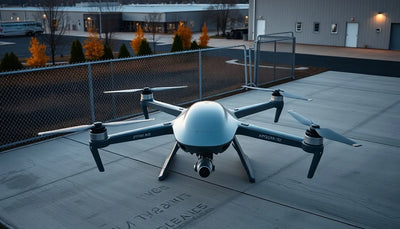
Why America's Nuclear Bases Suddenly Need DJI Drones
A new DroneDJ report says America's nuclear bases have a sudden need for DJI drones. The development raises fresh questions about defense procurement, fleet planning, and the commercial drone supply chain.

Quick answer
A DroneDJ report indicates that America's nuclear bases suddenly need DJI drones, according to the publication's industry reporting.
- DroneDJ reported the development involving US nuclear bases and DJI drones.
- The report does not include official confirmation from a named agency or company.
- The story raises questions about defense procurement and commercial drone supply.
- Operators and buyers should treat the report as source-limited industry reporting.
Evidence: Defense.gov official source
Fleet readiness
Keep DJI hardware available without overbuying new units.
Use defense and fleet news as a planning signal for repair support, inspected pre-owned aircraft, and replacement timing.

A new report from DroneDJ, a drone industry publication, says America's nuclear bases suddenly need DJI drones. The headline claim is striking because it cuts against years of policy friction between US government agencies and the Chinese drone maker. For commercial operators, fleet managers, and repair customers, the report matters less as a policy verdict and more as a signal about how defense-adjacent demand can shape the broader DJI ecosystem.
The reporting is source-limited. DroneDJ is the named primary reporting source, and the available summary does not include confirmation from a specific military command, federal agency, or DJI representative. That does not make the story irrelevant. It means readers should treat the development as an early industry report rather than an established procurement outcome.
What the DroneDJ report actually says
According to DroneDJ, America's nuclear bases have developed a sudden need for DJI drones. The summary does not specify which bases, which DJI models, or what operational mission triggered the reported demand. It also does not identify a contract, purchase order, or formal policy change.
For commercial readers, the absence of those details is itself useful. Defense and security buyers sometimes turn to commercial off-the-shelf drones for inspection, perimeter awareness, or logistics support when purpose-built military systems are too expensive, too slow to deploy, or unavailable. If the report is directionally accurate, it suggests that even sensitive sites may evaluate DJI hardware for narrow, non-kinetic tasks.
Reboot Hub analysis: the report should be read as a procurement signal, not a confirmed acquisition. Until an agency or command confirms the need, operators should avoid assuming that a large defense order has been placed or that specific DJI models have been approved for nuclear site use.
Why defense interest in DJI remains commercially significant
DJI dominates the commercial drone market, and its hardware is widely used in inspection, mapping, public safety, and industrial work. When defense or security institutions show interest in DJI platforms, the commercial market pays attention because those buyers tend to require maintenance, spare parts, training, and replacement units over long service windows.
The DroneDJ report does not confirm that any US nuclear base has purchased DJI drones. It reports a sudden need. That distinction matters. A need can lead to a pilot program, a limited procurement, or nothing at all. But even the discussion of need can influence how fleet operators think about supply continuity and how repair providers plan for parts demand.
For commercial operators, the practical takeaway is to watch whether the reported need turns into a documented acquisition. If it does, demand for certain DJI platforms, batteries, and OEM components could tighten, especially in the pre-owned and spare parts channels.
What this means for drone owners and the market
If defense-adjacent buyers begin competing for DJI hardware, commercial owners may feel the effects in three areas: pricing, parts availability, and resale value. Defense and institutional buyers often purchase in volume, which can temporarily reduce inventory for smaller commercial customers. That dynamic has appeared before in public safety and utility procurement cycles. For owners evaluating service and lifecycle risk, Drone Wiki explains the relevant repair, parts, resale, or operational path.
For individual pilots and small fleet operators, the report is a reminder that the DJI supply chain is sensitive to institutional demand. A buyer who needs a specific drone or battery for an upcoming job may want to plan purchases earlier rather than waiting for a possible procurement spike. Operators who maintain older DJI fleets should also consider how parts availability might shift if defense demand accelerates.
The pre-owned market could see a related effect. When new DJI inventory tightens or prices rise, inspected pre-owned units often become more attractive to cost-conscious commercial buyers. Reboot Hub's Drone Wiki offers a useful reference point for operators evaluating pre-owned DJI drones, genuine OEM spare parts, and professional repair considerations in a changing supply environment.
Repair customers should pay attention as well. If a reported defense need leads to real procurement, repair shops may see longer lead times for certain OEM components. Operators who depend on a single drone for revenue should think about spare batteries, propellers, and other consumables before any confirmed shortage appears.
What operators should watch next
The most important next step is confirmation. The DroneDJ report is the starting point, not the finish line. Operators should watch for a named agency, command, or procurement office to confirm or deny the reported need. A formal contract, a Federal Business Opportunities listing, or a public statement from a military command would move the story from industry reporting to verified fact.
Until then, fleet managers should treat the report as a scenario to plan around, not a reason to change operations immediately. The commercial drone market is large enough that a single reported need at nuclear bases is unlikely to disrupt national supply on its own. But it is a useful early indicator of how defense demand can intersect with the same DJI hardware that commercial operators fly every day.
For buyers, the practical move is simple: monitor the story, keep an eye on parts availability for your current fleet, and avoid making large procurement decisions based on an unconfirmed report. The drone market rewards operators who stay calm, verify information, and plan for supply variability without overreacting.
FAQ
Frequently asked questions
Is the DroneDJ report confirmed by the US government?
No. The available source summary does not include confirmation from a named military command, federal agency, or procurement office. The report should be treated as industry reporting until an official source confirms the development.
Which DJI drone models are involved?
The source summary does not specify any DJI models. It reports a sudden need for DJI drones at America's nuclear bases without identifying particular platforms, configurations, or quantities.
Should commercial drone buyers change their purchasing plans?
Not yet. The report is source-limited and unconfirmed. Buyers should monitor the story and watch for any documented procurement, but there is no verified evidence of an immediate supply disruption or price change in the commercial DJI market.
Which sources support this update?
The visible evidence links identify Defense.gov official source; each source is used only for the claim it directly supports.
What remains subject to change?
Retail pricing, availability, product bundles and regulatory timelines can change. Readers should verify the latest terms with the named retailer, manufacturer or regulator before acting.
How should buyers or operators use this analysis?
Use the verified facts as a starting point, then compare mission fit, lifecycle support, maintenance needs and current procurement terms before making a purchase or fleet decision.
Konsultowane źródła
W momencie publikacji dodatkowa oficjalna dokumentacja nie była dostępna.
Redakcja Reboot Hub dostarcza analizy zakupowe, serwisowe, odsprzedażowe i operacyjne dla właścicieli dronów. Jeśli zauważysz błąd, skontaktuj się z nami w celu weryfikacji poprawki zgodnie z naszą polityką redakcyjną.