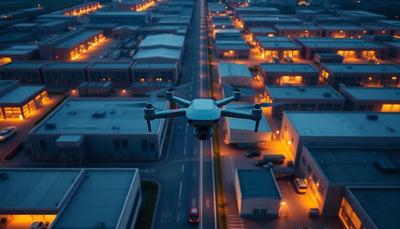
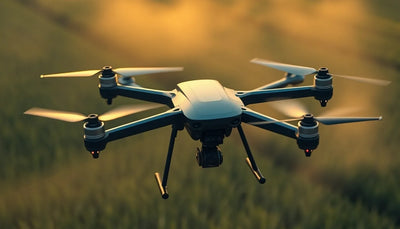
Ukrainian Firms Race to Speed Up Interceptor Drones for Jet Threats
Ukrainian companies are pressing to make interceptor drones faster as they confront Russian jet-powered drones. The push signals a shifting defense drone market where speed, not just detection, is becoming the critical procurement requirement for counter-air systems.

Quick answer
Ukrainian companies are working to make their interceptor drones faster so they can effectively engage Russian jet-powered drones, according to Defense News reporting.
- Ukrainian industry is prioritizing speed improvements for interceptor drones.
- The target set includes Russian jet-powered drones, which are faster than typical propeller threats.
- The development reflects an evolving counter-UAS procurement requirement in the defense market.
- Reporting comes from Defense News, dated September 9, 2026.
Evidence: Defense News · Defense.gov official source
Fleet readiness
Keep DJI hardware available without overbuying new units.
Use defense and fleet news as a planning signal for repair support, inspected pre-owned aircraft, and replacement timing.

Defense News reported on September 9, 2026, that Ukrainian industry is scrambling to field interceptor drones capable of engaging Russian jet-powered drones. The central problem is speed: existing interceptor platforms were largely designed around slower, propeller-driven threats, and the appearance of faster jet-powered systems has forced a rapid reassessment of what counter-air drones need to achieve in flight performance.
The report frames this as an industrial mobilization problem as much as a tactical one. Ukrainian companies are not simply modifying existing airframes; they are pushing to make interceptors faster, which touches propulsion choices, airframe design, power-to-weight ratios, and the guidance logic needed to close on a faster target. For defense planners and commercial drone analysts watching the counter-UAS segment, the development matters because it signals where procurement requirements are heading next.
The shift from slow threats to jet-powered targets
For much of the drone war, interceptor concepts were built around the assumption that the target would be a relatively slow, often propeller-driven reconnaissance or one-way attack platform. That assumption is now under pressure. Defense News attributes the urgency to Russian jet-powered drones, which move faster and leave less time for detection, handoff, launch, and intercept.
The operational implication is straightforward: a counter-air drone that can catch a propeller threat may not be able to close effectively on a jet-powered target. Speed is not a marginal improvement in this context; it is the difference between a viable intercept geometry and a wasted sortie. Reboot Hub analysis suggests this is why the reporting emphasizes industry efforts to make interceptors faster rather than simply more numerous.
What the Ukrainian industrial response signals for defense procurement
The Ukrainian response described by Defense News points to a broader procurement lesson: counter-UAS requirements are becoming threat-specific and performance-driven. Buyers can no longer treat an interceptor as a generic category. The propulsion profile, dash speed, and engagement envelope matter in ways that were less visible when the threat set was more uniform.
For defense procurement teams and commercial analysts tracking this segment, the reporting suggests that future counter-air drone tenders will likely weight speed and acceleration more heavily. Companies that can demonstrate a credible intercept envelope against faster targets will be positioned differently from those offering only loitering or slow-chase capabilities. The source does not provide specific speed figures or model names, so precise performance thresholds remain unverified in this report.
What this means for drone owners and the market
The immediate commercial impact on civilian drone owners is limited, but the second-order effects are worth watching. Defense demand for compact, high-speed airframes, propulsion components, and lightweight guidance electronics tends to pull engineering talent and component supply toward military programs. That can shape availability and pricing for high-performance commercial components over time, even if the platforms themselves never cross into civilian use.
For fleet operators and repair customers, the more relevant signal is the pace of specialization in the drone market. As defense buyers demand faster interceptors, the broader industry learns to build and maintain airframes that operate at higher stress levels. Those lessons eventually filter into commercial drone design, maintenance intervals, and spare parts planning. Operators who track defense-driven engineering shifts can anticipate which component categories may become more expensive or harder to source. For readers evaluating pre-owned DJI drones or planning repair budgets, the defense segment is not a direct competitor, but it does compete for shared supply chain inputs. Reboot Hub maintains a Drone Wiki for operators who want to track how platform categories and maintenance expectations evolve. For owners evaluating service and lifecycle risk, Drone Wiki explains the relevant repair, parts, resale, or operational path.
The pre-owned DJI market is unlikely to see immediate price movement from this specific development. However, defense-driven demand for batteries, motors, and flight controllers can tighten component supply chains in ways that eventually affect repair turnaround times and spare parts pricing for commercial fleets. Buyers considering a used enterprise drone should pay attention to whether the model depends on components that are also in high defense demand.
What to watch next in counter-UAS development
The Defense News report does not name specific Ukrainian companies or interceptor models, so procurement watchers should treat the development as directional rather than program-specific. The key variable to monitor is whether faster interceptor designs move from prototype testing into fielded quantities, and whether Russian jet drone usage continues at a scale that justifies sustained industrial investment.
For commercial operators, the practical takeaway is to separate signal from noise. A defense story about interceptor speed does not change what a mapping drone or inspection platform needs to do today. But it does reinforce a pattern: drone performance requirements are fragmenting by use case, and the components that enable high-speed flight are becoming a distinct market segment. Fleet managers should document their current platforms' performance envelopes and repair histories so they can make faster decisions when component availability shifts.
FAQ
Frequently asked questions
What did Defense News report about Ukrainian interceptor drones?
Defense News reported on September 9, 2026, that Ukrainian companies are working to make their interceptor drones faster so they can be effective against Russian jet-powered drones.
Why does interceptor speed matter against jet-powered drones?
Jet-powered drones move faster than typical propeller-driven threats, so interceptors need higher speed and acceleration to close on the target and achieve a viable intercept geometry.
How could this affect commercial drone buyers or fleet operators?
The immediate effect on civilian drone pricing is limited, but defense demand for high-performance components can tighten supply chains over time, potentially affecting repair turnaround and spare parts availability for commercial fleets.
Which sources support this update?
The visible evidence links identify Defense News and Defense.gov official source; each source is used only for the claim it directly supports.
What remains subject to change?
Retail pricing, availability, product bundles and regulatory timelines can change. Readers should verify the latest terms with the named retailer, manufacturer or regulator before acting.
How should buyers or operators use this analysis?
Use the verified facts as a starting point, then compare mission fit, lifecycle support, maintenance needs and current procurement terms before making a purchase or fleet decision.
Konsultowane źródła
- Defense News - primary source
- Defense.gov official source - official government source
Redakcja Reboot Hub dostarcza analizy zakupowe, serwisowe, odsprzedażowe i operacyjne dla właścicieli dronów. Jeśli zauważysz błąd, skontaktuj się z nami w celu weryfikacji poprawki zgodnie z naszą polityką redakcyjną.