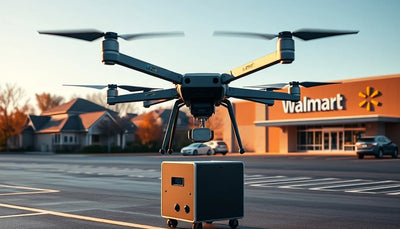
Round Rock Has No Zoning Rule for Zipline's Drone Hub
Round Rock says its zoning code has no rule for drone hubs after Zipline's Austin-area facility opened outside city limits. The city plans to draft one once a second hub appears, creating near-term uncertainty for drone logistics operators and commercial buyers watching local policy.

Quick answer
Round Rock, Texas, has no zoning rule for drone hubs, and Zipline's Austin-area hub sits outside city limits, according to DroneXL.co.
- Zipline's Austin hub operates outside Round Rock city limits
- The city says its zoning code has no drone hub category
- Round Rock plans to draft a zoning rule after a second hub opens
- The gap creates near-term regulatory uncertainty for drone logistics operators
Evidence: DroneXL.co
Operator checklist
Turn policy news into a safer fleet decision.
Before changing aircraft, compare repair paths, available DJI inventory, and trade-in timing against the rule change.

Round Rock, Texas, has confirmed that its zoning code contains no specific rule for drone hubs, according to a report published by DroneXL.co on October 11, 2026. The disclosure comes as Zipline operates a delivery hub in the Austin area that sits outside Round Rock city limits, leaving the city without a direct regulatory handle on the facility even as drone logistics activity expands nearby.
The situation highlights a familiar pattern in commercial drone infrastructure: hardware and operational networks often move faster than municipal land-use codes. For drone buyers, fleet operators, and repair customers, the Round Rock case is a reminder that local zoning can lag behind the facilities that drone delivery networks actually require.
What the Round Rock zoning gap actually involves
According to the DroneXL.co report, the city of Round Rock has no zoning rule that specifically addresses drone hubs. Zipline's Austin-area hub sits outside Round Rock city limits, which means the city's current zoning authority does not directly govern that particular facility. The report states that Round Rock plans to write a zoning rule for drone hubs after a second one opens.
The practical implication is that Round Rock is responding to a facility it does not currently regulate, rather than proactively setting standards before drone infrastructure arrives. For commercial operators, that creates a patchwork environment where a hub may be legal in one jurisdiction and undefined in the next. Fleet planners who assume a uniform regulatory baseline across a metro area should treat that assumption with caution.
Why local zoning matters for drone logistics operators
Drone delivery networks depend on ground infrastructure: launch and landing pads, charging stations, package handling areas, and maintenance bays. When a city has no zoning category for that infrastructure, operators face ambiguity about where they can build, expand, or lease space. The Round Rock case shows that a major drone logistics company can operate a hub near a city without that city having a clear rule for it.
For operators and buyers, the lesson is to check municipal zoning language before committing to a site, not just federal or state aviation rules. A facility that is compliant with airspace regulations may still sit in a local gray zone. That gray zone can affect lease terms, insurance, and the ability to expand later. Reboot Hub analysis suggests that early drone infrastructure often lands in industrial or warehouse zoning by default, but that default is not guaranteed and can change once a city drafts a specific rule.
What this means for drone owners and the market
The Round Rock development matters beyond delivery operators. When a city writes a new zoning rule for drone hubs, it can also shape where drone service centers, inspection stations, and maintenance facilities may operate. A restrictive rule could push those businesses to the edge of a metro area, while a permissive rule could make them more accessible to commercial clients. Buyers of enterprise drones and pre-owned DJI equipment should watch these local decisions because they influence the real-world cost of operating and servicing a fleet.
For pre-owned DJI drone owners, the zoning question is indirect but real. Many operators use pre-owned DJI airframes for mapping, inspection, and light logistics work. If local rules make it harder to base those operations near clients, the practical value of a drone depends partly on where it can be stored, charged, and repaired. Readers tracking this space can consult the Drone Wiki for broader context on how regulatory and market shifts affect drone ownership decisions. For owners evaluating service and lifecycle risk, Drone Wiki explains the relevant repair, parts, resale, or operational path.
The second-hub trigger is also worth noting. Round Rock is not drafting a rule now; it is waiting for a second facility to open. That means the current regulatory vacuum will persist until another operator or another Zipline site appears. For fleet managers, that is a planning risk: the rules could change after you have already committed to a location.
What operators should do differently now
The immediate step for any drone operator or buyer is to review the zoning status of any planned hub, service center, or storage site, especially in Texas metros where drone logistics activity is growing. Do not assume that a city regulates drone infrastructure just because a major operator is active nearby. The Round Rock example shows that a city can publicly acknowledge it has no rule at all.
Operators should also monitor local planning agendas in cities where drone hubs are proposed or already operating. A zoning rule drafted after a second hub opens could impose new setbacks, noise limits, operating hours, or maintenance requirements. Those changes can affect repair scheduling, spare parts storage, and the resale value of pre-owned aircraft that depend on nearby service infrastructure.
Finally, treat local zoning as part of procurement and resale due diligence. A drone that is easy to operate in one county may be harder to support in another if the local government has not yet defined where drone-related businesses can exist. The Round Rock case is not a crisis, but it is a clear signal that municipal codes are still catching up to commercial drone operations.
FAQ
Frequently asked questions
Does Round Rock currently regulate Zipline's drone hub?
No. According to DroneXL.co, Round Rock has no zoning rule for drone hubs, and Zipline's Austin-area hub sits outside Round Rock city limits.
When will Round Rock write a drone hub zoning rule?
The city plans to write a zoning rule after a second drone hub opens, according to the DroneXL.co report. No specific date or draft rule has been announced.
Why should drone buyers care about local zoning rules?
Local zoning can affect where drone hubs, service centers, and maintenance facilities may operate. That can influence lease costs, repair access, and the practical value of commercial or pre-owned drone equipment.
Which sources support this update?
The visible evidence links identify DroneXL.co; each source is used only for the claim it directly supports.
What remains subject to change?
Retail pricing, availability, product bundles and regulatory timelines can change. Readers should verify the latest terms with the named retailer, manufacturer or regulator before acting.
How should buyers or operators use this analysis?
Use the verified facts as a starting point, then compare mission fit, lifecycle support, maintenance needs and current procurement terms before making a purchase or fleet decision.
Konsultowane źródła
- DroneXL.co - primary source
W momencie publikacji dodatkowa oficjalna dokumentacja nie była dostępna.
Redakcja Reboot Hub dostarcza analizy zakupowe, serwisowe, odsprzedażowe i operacyjne dla właścicieli dronów. Jeśli zauważysz błąd, skontaktuj się z nami w celu weryfikacji poprawki zgodnie z naszą polityką redakcyjną.