Low-Altitude Economy Enters Normal Operations in 2026, Shifting Drone Demand
China’s trillion-dollar low-altitude economy is moving from pilot flights to normal operations in 2026, according to an industry report. Commercial drone buyers and fleet operators should prepare for steadier demand, longer planning cycles, and a maturing second-hand market.

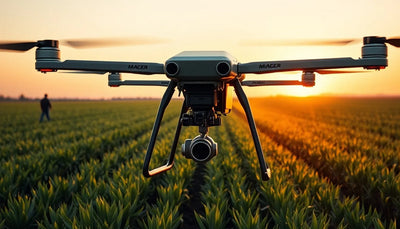
China’s low-altitude economy is entering a new phase in 2026, according to an industry report highlighted by Jiangnan Sports Web Portal. The report describes this year as the transition from pilot flights to the first year of normal operations for a sector that has been widely described as a trillion-dollar opportunity. For commercial drone buyers and fleet operators, the shift is less about a single product launch and more about the overall shape of demand: steadier, more routine, and increasingly tied to operational planning rather than experimental validation.
The framing matters because it signals a change in how the market should be read. Pilot programs tend to reward early adopters and tolerate technical uncertainty. Normal operations reward reliability, repeatability, and cost control. That shift has direct implications for procurement decisions, maintenance planning, and the value of pre-owned equipment as fleets mature and rotate hardware.
What the 2026 normal operations milestone actually means
The central claim in the source report is that 2026 marks the move from pilot flights to normal operations for the low-altitude economy. That is a meaningful distinction. Pilot flights are typically limited in scope, tightly regulated, and often subsidized or treated as demonstrations. Normal operations imply routine commercial activity, which brings with it more consistent utilization, more predictable maintenance cycles, and a greater need for dependable supply chains.
Market context
Turn market news into a buy, repair, or trade-in decision.
Compare pre-owned availability, resale timing, and repair economics before the market moves again.

For fleet operators, the practical implication is that utilization rates should rise. Drones that were previously flown in controlled test scenarios are now expected to operate on regular schedules. That changes the calculus around spare parts, battery rotation, and repair turnaround times. A machine that flies daily needs a different support structure than one that flies weekly for demonstrations.
The report does not specify which sectors within the low-altitude economy are driving the shift, but the broader context of the trillion-dollar figure points to logistics, delivery, inspection, and agricultural applications as likely beneficiaries. Reboot Hub analysis would caution that the report is source-limited and does not provide granular data on flight volumes, revenue, or regulatory changes. What it does provide is a clear directional signal: the market is maturing from proof-of-concept to routine service.
How normal operations change fleet planning and repair decisions
When operations become routine, the economics of maintenance shift. In a pilot phase, a grounded drone is an inconvenience. In a normal operations phase, a grounded drone is a missed revenue window. That distinction should push fleet operators toward more disciplined maintenance schedules and faster repair turnaround times.
For buyers, the shift suggests that purchasing decisions should be based on total cost of ownership rather than initial price alone. A drone that is easy to service, has readily available genuine OEM spare parts, and can be repaired quickly is worth more in a normal operations environment than in a pilot environment. The same logic applies to pre-owned equipment: a well-maintained pre-owned DJI drone with documented service history becomes a more attractive option when the alternative is waiting on a new unit during a period of steady demand.
The source report does not provide specific figures on repair volumes or parts availability, so those points should be treated as Reboot Hub analysis rather than verified facts. However, the operational logic is straightforward. Routine operations create predictable wear and tear, and predictable wear and tear creates predictable demand for repair services. Fleet managers who build that into their planning will be better positioned than those who treat maintenance as an afterthought.
What this means for drone buyers
The most direct takeaway for drone buyers is that the market is becoming more stable, which is generally good news for purchasing decisions. In a pilot-phase market, prices can be volatile, availability can be inconsistent, and the risk of buying hardware that becomes obsolete quickly is higher. In a normal operations market, demand is steadier, which tends to support more stable pricing and better availability of both new and pre-owned units.
Reboot Hub analysis: For buyers considering pre-owned DJI drones, the maturation of the market is a double-edged sword. On one hand, more fleets moving to routine operations means more used hardware entering the market as operators upgrade or rotate equipment. On the other hand, the same operators are more likely to maintain their equipment well, which means the pre-owned supply should be of higher quality. Buyers should look for documented service history, verified flight hours, and evidence of regular maintenance when evaluating pre-owned units.
For repair customers, the shift to normal operations reinforces the value of professional repair services using genuine OEM parts. In a routine operations environment, downtime is expensive, and repairs that use substandard parts or lack proper calibration can lead to repeat failures. A professional repair service that uses OEM-pulled parts and follows manufacturer specifications is a better investment than a quick fix that may not hold up under daily use.
Fleet managers should also revisit their trade-in and upgrade cycles. In a maturing market, the pace of technological change may slow relative to the pilot phase, which means equipment may remain viable for longer. That makes trade-in planning more important: knowing when to retire a unit, when to sell it on the pre-owned market, and when to invest in new hardware becomes a strategic decision rather than a reactive one.
Market signals and what to watch next
The source report is a single industry signal, and it should be read as such. It does not provide regulatory details, company names, or specific financial figures. What it does provide is a clear statement that 2026 is being treated as the first year of normal operations for the low-altitude economy. That is a useful benchmark for anyone planning purchases, fleet expansions, or repair capacity.
Operators should watch for follow-on signals that would confirm the shift. These include more concrete regulatory frameworks for routine operations, published flight volume data, and announcements from logistics or delivery companies about scaling their drone fleets. The absence of those confirmations does not invalidate the report, but it does mean that the claim should be treated as directional rather than definitive.
For the pre-owned DJI market, the most important thing to monitor is fleet turnover. As operators move from pilot to normal operations, they will eventually rotate older hardware. That rotation creates supply. The quality of that supply will depend on how well those fleets were maintained during the pilot phase. Buyers who are patient and selective will likely find good deals on well-maintained pre-owned units, but they should verify service history rather than assuming it.
The practical question every buyer, pilot, repair customer, and fleet manager should ask after reading this report is simple: is my current equipment and support plan built for routine operations or for occasional demonstrations? If the answer is the latter, it is worth revisiting maintenance schedules, spare parts inventory, and repair partnerships before the market fully normalizes.
Is 2026 really the first year of normal operations for the low-altitude economy?
According to the industry report highlighted by Jiangnan Sports Web Portal, yes. The report describes 2026 as the move from pilot flights to the first year of normal operations. The claim is source-limited and not independently verified, but it is a clear directional signal from an industry source.
How does this shift affect the pre-owned DJI drone market?
Reboot Hub analysis: The shift to normal operations should increase fleet turnover as operators move from experimental to routine use, which can increase the supply of pre-owned DJI drones. Buyers should look for documented maintenance history and verified flight hours, since fleets in normal operations are more likely to be well-maintained.
What should fleet operators do differently based on this report?
Fleet operators should plan for higher utilization and more predictable maintenance cycles. That means investing in professional DJI repair services, keeping genuine OEM spare parts available, and building trade-in and upgrade plans around the assumption that the market is maturing rather than staying in a pilot phase.
Konsultowane źródła
W momencie publikacji dodatkowa oficjalna dokumentacja nie była dostępna.
Redakcja Reboot Hub dostarcza analizy zakupowe, serwisowe, odsprzedażowe i operacyjne dla właścicieli dronów. Jeśli zauważysz błąd, skontaktuj się z nami w celu weryfikacji poprawki zgodnie z naszą polityką redakcyjną.