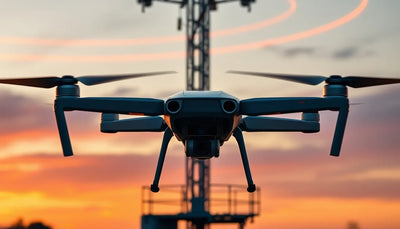
Laredo Police Threaten Drone Action at Hotel Fire Without FAA TFR
Laredo's police chief says officers will mitigate drones over the DoubleTree hotel fire, but no FAA temporary flight restriction was listed. The incident highlights the legal limits local police face when trying to control airspace during emergencies.

Quick answer
Laredo's police chief said officers would mitigate drones over the DoubleTree hotel fire, but the FAA listed no temporary flight restriction for the area, and federal law limits local police drone mitigation to FBI-certified personnel.
- Laredo police chief publicly stated officers would take action against drones at the DoubleTree fire scene
- No FAA temporary flight restriction was listed for the incident area
- Federal law permits local police to mitigate drones only with FBI certification
- The gap between local statements and federal authority creates legal uncertainty for operators
Evidence: DroneXL.co · FAA UAS official guidance
Operator checklist
Turn policy news into a safer fleet decision.
Before changing aircraft, compare repair paths, available DJI inventory, and trade-in timing against the rule change.

Verified facts
What the available evidence confirms
| Entity | Reported Position | FAA Status |
|---|---|---|
| Laredo Police Department | Chief says officers will mitigate drones over hotel fire | No TFR listed |
| Local police drone mitigation | Limited by federal law to FBI-certified personnel | Not confirmed as certified |
DroneXL.co reported on October 7, 2026, that Laredo's police chief publicly stated officers would take action against drones flying over the DoubleTree hotel fire scene. The same report noted that the FAA had not listed a temporary flight restriction, or TFR, for the area. The situation puts a sharp focus on a recurring question in commercial drone operations: what authority do local police actually have when they say they will mitigate drones during an emergency?
For commercial operators, fleet managers, and anyone flying near an active incident, the Laredo case is a reminder that local statements and federal airspace authority do not always line up. A police chief can announce an intent to act, but the legal framework governing who may disable, seize, or interfere with an aircraft in flight remains narrow and specific. Understanding that gap matters for pilots who want to stay compliant while also avoiding conflict with first responders.
The reported Laredo incident and the missing TFR
According to DroneXL.co, the Laredo police chief said officers would mitigate drones operating over the DoubleTree hotel fire. The report emphasized that no FAA temporary flight restriction appeared for the incident area. That absence is significant because a TFR is the standard federal mechanism for temporarily restricting airspace around emergencies, disasters, or high-profile events. Without a TFR, the airspace over the fire was not formally closed to drone traffic under the usual emergency restriction framework.
This does not mean drone pilots had a green light to interfere with emergency operations. Existing rules still prohibit interfering with first responders and require pilots to yield to manned aircraft. But the absence of a TFR changes the legal character of any local enforcement action. A police officer acting outside a TFR and outside FBI-certified counter-UAS authority would be operating in a much murkier legal space than if a formal restriction were in place.
Federal law limits local drone mitigation authority
DroneXL.co reported that federal law allows local police to mitigate drones only with FBI certification. This is the central legal constraint in the Laredo situation. Under the relevant federal framework, counter-UAS authority is not something a municipal police department can simply claim during an emergency. The authority to disable, jam, or otherwise interfere with an unmanned aircraft is tightly controlled and generally reserved for specific federal agencies or local personnel operating under a federally supervised program.
For commercial drone operators, this matters because it means a local police statement about taking down drones may not reflect actual legal authority at the scene. A pilot who hears such a statement might assume the airspace is closed or that local officers have the power to seize or disable their aircraft. In reality, the legal basis for that action may be absent unless the officers involved are operating under a recognized federal counter-UAS certification and protocol. That gap creates risk for both the officer and the operator.
The practical implication is that drone pilots should not rely on local police statements alone to determine airspace status. The authoritative source remains FAA notices, TFR listings, and official airspace data. If no TFR is listed, the airspace has not been formally restricted through the standard emergency mechanism, even if local officials express frustration or announce their own plans.
What this means for drone owners and the market
For drone owners, repair customers, and fleet planners, the Laredo incident is a useful case study in operational risk. A pilot flying near an active fire scene could face conflicting signals: local police may verbally demand that drones leave or threaten action, while the FAA may have issued no formal restriction. The safest course is to avoid active emergency scenes entirely, regardless of TFR status. But the legal nuance still matters if an operator is questioned, detained, or has equipment seized. For owners evaluating service and lifecycle risk, Drone Wiki explains the relevant repair, parts, resale, or operational path.
The incident also has implications for the pre-owned DJI market and repair demand. When local police departments publicly discuss taking down drones, some operators become more cautious about flying in public spaces or near emergency activity. That caution can reduce flight hours in the short term, but it can also increase interest in drones with strong geofencing awareness, reliable return-to-home behavior, and easy access to airspace data. Operators who want to minimize conflict with first responders often look for aircraft that make compliance simpler and recovery more predictable. For those evaluating their options, understanding airspace rules before flying is as important as the hardware itself, and resources like the Drone Wiki can help pilots keep operational context in view.
Fleet managers should treat the Laredo case as a training prompt. Pilots need clear guidance on what to do when local authorities make statements that conflict with FAA data. The answer is not to argue on scene, but to land safely, document the situation, and verify airspace status through official channels. A drone that is seized or damaged during an ambiguous enforcement action represents a real cost, whether it is a new unit or a pristine pre-owned DJI aircraft. Avoiding that outcome starts with knowing the rules before takeoff.
Broader regulatory signal for commercial operators
The Laredo report is not an isolated event. It reflects a broader pattern in which local governments and police departments are increasingly vocal about drones near emergencies, even as federal authority remains centralized. DroneXL.co's coverage frames this as a tension between local enforcement intent and the federal certification structure. For commercial operators, that tension is unlikely to disappear soon.
Operators should expect more local statements about drone mitigation as public awareness of drone activity grows. At the same time, the legal authority to actually disable or interfere with a drone remains constrained. The practical takeaway is to monitor FAA notices carefully, avoid active incident scenes, and document any encounter with local authorities. A calm, informed response protects both the operator and the broader commercial drone market from unnecessary friction.
FAQ
Frequently asked questions
Did the FAA issue a temporary flight restriction for the Laredo hotel fire?
No. According to DroneXL.co, the FAA listed no temporary flight restriction for the DoubleTree hotel fire area at the time of the report.
Can local police legally take down drones without FBI certification?
Federal law limits local police drone mitigation authority. DroneXL.co reported that local police may mitigate drones only with FBI certification, meaning a local department acting without that certification would face significant legal constraints.
What should a drone operator do if local police demand they land near an emergency?
Land safely and promptly, avoid confrontation, and verify airspace status through official FAA channels. A local police statement does not replace FAA notices or TFR data, but avoiding active emergency scenes is the safest operational choice.
Which sources support this update?
The visible evidence links identify DroneXL.co and FAA UAS official guidance; each source is used only for the claim it directly supports.
What remains subject to change?
Retail pricing, availability, product bundles and regulatory timelines can change. Readers should verify the latest terms with the named retailer, manufacturer or regulator before acting.
How should buyers or operators use this analysis?
Use the verified facts as a starting point, then compare mission fit, lifecycle support, maintenance needs and current procurement terms before making a purchase or fleet decision.
Konsultowane źródła
- DroneXL.co - primary source
- FAA UAS official guidance - official regulator source
Redakcja Reboot Hub dostarcza analizy zakupowe, serwisowe, odsprzedażowe i operacyjne dla właścicieli dronów. Jeśli zauważysz błąd, skontaktuj się z nami w celu weryfikacji poprawki zgodnie z naszą polityką redakcyjną.