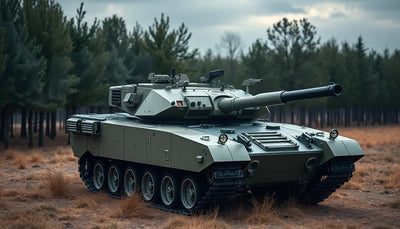
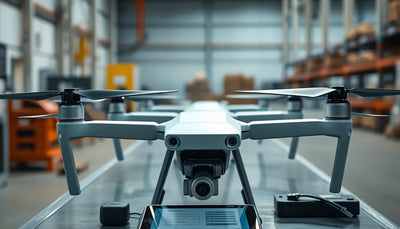
Hellenic Aerospace Industry to Present UAV at Thessaloniki Trade Fair
Hellenic Aerospace Industry is presenting a UAV at the Thessaloniki International Fair, signaling Greece's growing domestic aerospace ambitions. For commercial operators and buyers, the appearance points to shifting European defense and dual-use drone supply chains worth watching.

Quick answer
Hellenic Aerospace Industry is presenting a UAV at the Thessaloniki International Fair, according to eKathimerini.
- The appearance highlights Greece's domestic aerospace manufacturing activity
- The event gives defense and dual-use drone buyers a public look at a national UAV program
- For commercial operators, it signals shifting European supply chains outside dominant Asian manufacturers
Evidence: AeroVironment unmanned systems solutions · DIU Blue UAS
Market context
Turn market news into a buy, repair, or trade-in decision.
Compare pre-owned availability, resale timing, and repair economics before the market moves again.

Hellenic Aerospace Industry is presenting a UAV at the Thessaloniki International Fair, according to a report from eKathimerini. The appearance places a Greek state-linked aerospace manufacturer in front of defense buyers, government delegations, and industry observers at one of southeastern Europe's most visible trade events.
The report is thin on operational detail. It does not specify the UAV model, its capabilities, its stage of development, or whether it is a prototype, production unit, or concept display. What matters for the commercial drone market is the signal itself: European national aerospace players are increasingly using public trade forums to showcase domestic unmanned systems, and that visibility has downstream consequences for procurement patterns, repair ecosystems, and second-hand equipment demand.
What the Thessaloniki International Fair appearance signals
The Thessaloniki International Fair, commonly referred to as TIF, is a long-running commercial and industrial exhibition that attracts government officials, defense contractors, and technology firms from across the region. Hellenic Aerospace Industry, a state-controlled aerospace and defense company, choosing to present a UAV there is a deliberate public positioning move, according to the eKathimerini report.
For market analysts, the appearance matters less for any single airframe and more for what it represents. Southern European governments have been expanding domestic drone and counter-drone programs, often with an emphasis on reducing reliance on non-European suppliers. When a national aerospace company brings a UAV to a public trade event, it typically indicates that the program has reached a stage where public visibility is useful for attracting partners, customers, or political support.
Reboot Hub analysis: the absence of technical detail in the source means operators should treat this as an early-stage market signal rather than a procurement-ready product announcement. No specifications, pricing, production timelines, or certification status are available in the source data.
The European defense and dual-use drone supply chain context
European drone procurement has been shifting over the past several years, with defense ministries and public safety agencies showing greater interest in domestically manufactured or European-assembled systems. This trend runs parallel to, but does not replace, the dominant position of Asian manufacturers in the commercial camera drone segment.
Hellenic Aerospace Industry's UAV presentation fits into a broader pattern of national aerospace champions entering the unmanned systems market. Greece, like several other European countries, has defense modernization programs underway, and domestic UAV development is often framed as both a security priority and an industrial policy goal.
For commercial fleet operators, the practical implication is that the supplier landscape is becoming more fragmented. A European agency or enterprise customer that previously defaulted to a single major manufacturer may now evaluate multiple national platforms. That fragmentation can affect everything from spare parts availability to repair turnaround times, especially for specialized or defense-adjacent systems.
What this means for drone owners and the market
The immediate impact on most commercial drone owners is limited. A state aerospace company showing a UAV at a trade fair does not change the regulatory environment, the availability of consumer camera drones, or the day-to-day operations of inspection, mapping, or agricultural pilots. But the medium-term signal is worth monitoring.
European procurement programs that favor domestic UAV platforms can influence the pre-owned DJI market in subtle ways. When agencies or enterprises shift budgets toward European-built systems, some pre-owned DJI units may enter the resale channel as organizations rebalance their fleets. At the same time, repair demand for existing DJI airframes remains steady because operators continue to fly them for commercial work while evaluating longer-term alternatives. For buyers and fleet managers tracking the second-hand market, public appearances like the one at TIF are early indicators of where institutional demand may move over the next two to three years.
Operators who depend on genuine OEM spare parts and professional repair services should also watch how European dual-use drone programs evolve, since a more fragmented supplier base can create longer lead times for specialized components. For now, the practical guidance is to keep existing airframes maintained and to treat European national UAV programs as a procurement trend to track rather than an immediate replacement threat. Readers evaluating pre-owned DJI equipment or repair options can consult the Drone Wiki for reference material on maintenance and ownership considerations. For owners evaluating service and lifecycle risk, Drone Wiki explains the relevant repair, parts, resale, or operational path.
What buyers and fleet managers should watch next
The eKathimerini report does not indicate whether Hellenic Aerospace Industry will release additional specifications, pricing, or partnership announcements during or after the fair. Buyers and fleet managers should watch for follow-up coverage that identifies the UAV platform, its intended mission set, and any stated production or certification plans.
For commercial operators, the actionable takeaway is straightforward: do not make procurement changes based on a trade fair appearance alone. Instead, use these public signals to build a watchlist of emerging European platforms and suppliers. If a national program reaches certification or production milestones, that is the point where it becomes relevant to fleet planning, parts sourcing, or resale strategy.
The broader market pattern is clear even if the specific UAV details are not. European aerospace companies are competing for visibility in the unmanned systems sector, and that competition will shape procurement, repair, and resale dynamics over time. For now, the Thessaloniki appearance is a data point, not a market shift.
FAQ
Frequently asked questions
What did Hellenic Aerospace Industry present at TIF?
According to eKathimerini, Hellenic Aerospace Industry is presenting a UAV at the Thessaloniki International Fair. The report does not specify the model name, technical specifications, or production status.
Does this affect the pre-owned DJI drone market?
Not immediately. European national UAV programs can influence institutional procurement over time, which may eventually affect fleet composition and resale supply, but the TIF appearance alone does not change current pre-owned DJI demand or pricing.
What should commercial drone operators do after this news?
Operators should treat the appearance as an early market signal, maintain their current airframes and repair schedules, and monitor whether the program reaches certification or production milestones before making any procurement decisions.
Which sources support this update?
The visible evidence links identify AeroVironment unmanned systems solutions and DIU Blue UAS; each source is used only for the claim it directly supports.
What remains subject to change?
Retail pricing, availability, product bundles and regulatory timelines can change. Readers should verify the latest terms with the named retailer, manufacturer or regulator before acting.
How should buyers or operators use this analysis?
Use the verified facts as a starting point, then compare mission fit, lifecycle support, maintenance needs and current procurement terms before making a purchase or fleet decision.
Konsultowane źródła
- eKathimerini.com via Google News - primary source
- AeroVironment unmanned systems solutions - official company source
- DIU Blue UAS - official government source
Redakcja Reboot Hub dostarcza analizy zakupowe, serwisowe, odsprzedażowe i operacyjne dla właścicieli dronów. Jeśli zauważysz błąd, skontaktuj się z nami w celu weryfikacji poprawki zgodnie z naszą polityką redakcyjną.