First Breach Completes First Untethered Flight of Drone Prototype
First Breach Inc. has completed the first untethered flight of its proprietary drone prototype, according to SUAS News. The milestone advances an American-made unmanned systems program and signals shifting defense procurement priorities that commercial operators and drone buyers should watch closely.

Quick answer
First Breach Inc. completed the first untethered flight of its proprietary drone prototype, advancing its American-made unmanned systems program, according to SUAS News.
- Reported by SUAS News on September 2026
- First untethered flight of a proprietary First Breach drone prototype
- Company is an American-made defense technologies firm listed on NASDAQ as FBDT
- Milestone tied to an American-made unmanned systems program
Evidence: SUAS News · FAA UAS official guidance · Defense.gov official source
Fleet readiness
Keep DJI hardware available without overbuying new units.
Use defense and fleet news as a planning signal for repair support, inspected pre-owned aircraft, and replacement timing.

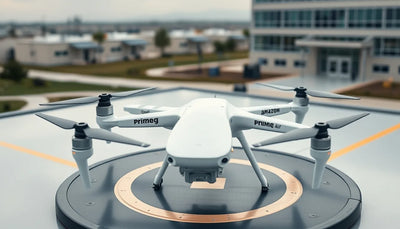
First Breach Inc. (NASDAQ:FBDT), an American-made defense technologies company, has completed the first untethered flight of its proprietary drone prototype, according to reporting by SUAS News. The flight represents a tangible step forward for the company's American-made unmanned systems program and offers an early signal of how domestic defense drone development is progressing outside the established commercial drone ecosystem.
For commercial drone operators, fleet managers, and buyers who track the broader unmanned systems market, the development matters less for any single flight and more for what it indicates about procurement direction, supply chain emphasis, and the growing separation between defense-focused American platforms and the consumer and enterprise drones that dominate everyday commercial work.
The reported milestone and its source
SUAS News reported that First Breach completed the first untethered flight of its proprietary drone prototype. The report frames the flight as advancing the company's American-made unmanned systems program. First Breach is identified as a NASDAQ-listed defense technologies company under the ticker FBDT, and the source describes the company's focus as American-made defense technologies.
Because this is a source-limited report, Reboot Hub is not in a position to confirm flight duration, altitude, payload, range, or any other operational specification. No verified spec context was available for this article, and the primary reporting does not include those details. What can be stated plainly is that an American defense technology firm has moved from tethered testing to an untethered prototype flight, a practical threshold that typically signals increased confidence in airframe stability, power management, and basic autonomous or manual control.
The absence of detailed performance data should not be read as a negative. Early prototype milestones are often disclosed without full telemetry, especially when the platform is tied to defense programs where operational characteristics may be sensitive or export-controlled. The commercial takeaway is narrower: a domestic defense drone developer is progressing through real flight testing, and that progression has implications for how American defense buyers may source unmanned systems in the future.
Why defense drone development matters to commercial buyers
Defense and commercial drone markets have historically operated on separate tracks, but they share suppliers, component pipelines, regulatory conversations, and sometimes airspace. When American defense programs invest in proprietary domestic platforms, the effects can ripple into the commercial sector in several ways. Component suppliers may expand capacity for domestically sourced flight controllers, motors, batteries, and communications modules. Regulatory frameworks may evolve to accommodate a wider range of unmanned systems. And the resale market for imported commercial drones can shift as procurement policies and public sentiment change.
For operators who fly DJI equipment commercially, the most relevant question is whether defense-driven domestic manufacturing creates pressure on the availability or pricing of imported platforms. The pre-owned DJI market has remained resilient because DJI hardware continues to deliver strong value for inspection, mapping, agricultural, and public safety work. A growing American defense drone sector does not immediately change that, but it can influence long-term procurement behavior among government-adjacent fleets, utility contractors, and enterprise buyers who must consider supply chain security alongside performance.
Fleet managers evaluating future purchases should watch whether American-made defense platforms eventually produce commercial derivatives or whether component demand from defense programs tightens supply for certain drone subsystems. Neither outcome is confirmed by this single flight, but the milestone is a useful early indicator that domestic unmanned systems development is active and progressing.
What this means for drone owners and the market
The immediate impact on individual drone owners is limited. A single prototype flight by a defense-focused company does not change FAA rules, DJI availability, repair pricing, or resale values overnight. The more meaningful signal is directional: American defense procurement continues to emphasize domestic unmanned systems, and that emphasis can shape the commercial drone landscape over a multi-year horizon.
For operators who rely on pre-owned DJI drones, the practical takeaway is to continue evaluating platforms based on mission fit, parts availability, and service support rather than reacting to defense headlines. Genuine OEM spare parts and professional DJI repair remain the backbone of keeping commercial fleets operational, and those services are largely insulated from early-stage defense prototype testing. Readers who want a clearer picture of how drone hardware, repair, and ownership fit together can consult the Drone Wiki for operator-focused reference material. For owners evaluating service and lifecycle risk, Drone Wiki explains the relevant repair, parts, resale, or operational path.
What should a buyer, pilot, repair customer, or fleet manager do differently after reading this? The most defensible action is to note the milestone as a supply chain signal and continue making procurement decisions on verified performance, serviceability, and total cost of ownership. If domestic defense drone manufacturing accelerates, the commercial sector may eventually see new component suppliers, new service providers, and possibly new domestic platforms aimed at enterprise work. None of that is actionable today, but it is worth tracking for fleet planning cycles that extend beyond the next quarter.
The broader commercial and resale picture
American defense drone programs have historically drawn attention for their potential to create spillover innovation in autonomy, secure communications, and ruggedized airframes. When a company like First Breach reaches an untethered flight milestone, it suggests that at least one domestic program is moving beyond bench testing and into real-world flight validation. That progression can attract further investment, component partnerships, and eventually production contracts.
For the pre-owned DJI market, the near-term effect is likely minimal. DJI platforms remain widely used across commercial sectors, and the demand for inspected pre-owned units continues to be driven by practical factors such as camera quality, flight reliability, and ecosystem familiarity. Defense prototype news does not alter those fundamentals. However, operators who serve government-adjacent clients may see procurement language evolve over time, with some contracts favoring domestic platforms or requiring supply chain documentation that imported hardware cannot easily satisfy.
Reboot Hub analysis suggests that the most realistic scenario is a gradual, parallel development: defense-focused American platforms mature on one track while commercial operators continue flying proven imported and pre-owned hardware on another. The two tracks may intersect through component supply, regulatory policy, or enterprise procurement preferences, but that intersection is not yet defined by this single reported flight.
FAQ
Frequently asked questions
What did First Breach announce?
According to SUAS News, First Breach Inc. completed the first untethered flight of its proprietary drone prototype, advancing its American-made unmanned systems program.
Does this affect DJI drone availability or pricing?
There is no evidence in the source that this milestone changes DJI availability or pricing. The pre-owned DJI market is driven by performance, parts availability, and service support, which are not directly affected by a single defense prototype flight.
Should fleet managers change procurement plans based on this news?
Not immediately. Fleet managers should track domestic defense drone development as a long-term supply chain signal, but current procurement decisions should still be based on verified performance, serviceability, and total cost of ownership.
Which sources support this update?
The visible evidence links identify SUAS News and FAA UAS official guidance and Defense.gov official source; each source is used only for the claim it directly supports.
What remains subject to change?
Retail pricing, availability, product bundles and regulatory timelines can change. Readers should verify the latest terms with the named retailer, manufacturer or regulator before acting.
How should buyers or operators use this analysis?
Use the verified facts as a starting point, then compare mission fit, lifecycle support, maintenance needs and current procurement terms before making a purchase or fleet decision.
Konsultowane źródła
- SUAS News - primary source
- FAA UAS official guidance - official regulator source
- Defense.gov official source - official government source
Redakcja Reboot Hub dostarcza analizy zakupowe, serwisowe, odsprzedażowe i operacyjne dla właścicieli dronów. Jeśli zauważysz błąd, skontaktuj się z nami w celu weryfikacji poprawki zgodnie z naszą polityką redakcyjną.