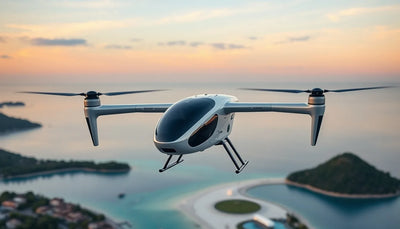
EHang Forms Thailand Working Group for Autonomous eVTOL Flights
EHang is forming a special working group with Thailand's civil aviation authority and Phuket's provincial government to advance commercial autonomous eVTOL operations. The move signals growing regulatory momentum for passenger-grade drone aircraft in Southeast Asia and carries long-term implications for commercial operators and fleet buyers.

Quick answer
EHang has established a special working group with the Civil Aviation Authority of Thailand and the Phuket provincial government to accelerate commercial deployment of autonomous eVTOL aircraft.
- The working group involves EHang, Thailand's civil aviation authority, and Phuket provincial government
- The stated goal is faster commercial deployment of autonomous eVTOL operations
- The development signals regulatory engagement in a Southeast Asian tourism market
- Source reporting comes from cj.sina.cn, a Chinese financial news outlet
EHang is moving to formalize a regulatory pathway for autonomous electric vertical takeoff and landing aircraft in Thailand. According to a report from cj.sina.cn, the Chinese eVTOL manufacturer has established a special working group with the Civil Aviation Authority of Thailand and the Phuket provincial government. The stated purpose is to accelerate the commercial deployment of autonomous eVTOL operations in the country.
Operator checklist
Turn policy news into a safer fleet decision.
Before changing aircraft, compare repair paths, available DJI inventory, and trade-in timing against the rule change.

The development matters because Thailand, and Phuket specifically, represents a high-visibility tourism and short-haul transport market where autonomous passenger aircraft could find early commercial use. For commercial drone operators, fleet buyers, and aviation service providers, the announcement is less about an immediate product launch and more about how regulators in Southeast Asia are beginning to structure oversight for passenger-grade autonomous aircraft.
What the reported working group actually signals
The source report is limited in operational detail. It does not specify a launch date, route network, aircraft model, or certification timeline. What it does establish is that EHang, the Civil Aviation Authority of Thailand, and the Phuket provincial government are now engaged in a structured working relationship. That is a meaningful step in a region where autonomous eVTOL regulation has been developing unevenly.
For commercial readers, the practical takeaway is that regulatory engagement is becoming a visible part of EHang's international expansion strategy. The company has previously pursued certification and demonstration activity in multiple markets. A working group with a national civil aviation authority and a provincial government suggests that Thailand is being treated as a serious candidate for early commercial operations rather than a demonstration-only venue.
Reboot Hub analysis: the choice of Phuket is commercially logical. The island has concentrated tourism demand, relatively short inter-destination distances, and an existing appetite for premium transport services. Those conditions align with how early autonomous eVTOL operators are likely to test revenue models before scaling to denser urban air mobility networks.
Regulatory context for autonomous eVTOL in Southeast Asia
The Thai working group announcement arrives as multiple jurisdictions are trying to define how autonomous passenger aircraft fit within existing aviation frameworks. Unlike conventional drones, passenger-grade eVTOL aircraft raise questions about airworthiness certification, pilotless operation, passenger safety standards, and integration with manned air traffic. Each of those questions requires a regulator to make decisions that go well beyond standard drone rules.
From a commercial standpoint, operators should read this as a signal that Thailand is willing to work directly with manufacturers on those questions. That does not mean certification is imminent. It means the institutional groundwork is being laid. For fleet planners and aviation service companies, the timeline from working group to revenue operations can stretch across years, not quarters.
The source does not provide details on what specific regulatory milestones the working group will address. Without verified spec context or official statements, Reboot Hub cannot confirm which aircraft model, payload capacity, or operational range would be involved in any Thai deployment. Readers should treat the announcement as an early-stage regulatory development rather than a commercial launch event.
What this means for drone owners and the market
For most commercial drone operators and pre-owned DJI buyers, autonomous passenger eVTOL aircraft are not a direct purchase consideration today. The technology, certification requirements, and operating costs sit far outside the scope of conventional inspection, mapping, or agricultural drone work. But the regulatory direction matters for the broader market in two ways.
First, when civil aviation authorities begin building frameworks for autonomous passenger aircraft, those frameworks often create precedents that later influence rules for larger commercial drones, beyond visual line of sight operations, and automated flight in controlled airspace. Operators who follow those regulatory shifts can position their fleets and training programs ahead of changes that eventually reach smaller aircraft classes. Second, the entry of well-funded eVTOL manufacturers into tourism and transport markets can accelerate public acceptance of autonomous flight generally, which may ease the path for commercial drone services in adjacent segments.
For readers managing existing drone fleets or evaluating pre-owned DJI equipment, the immediate practical step is to monitor how regulators define autonomy, pilotless operation, and airworthiness. Those definitions will shape future resale value, repair standards, and compliance requirements across the industry. Reboot Hub maintains a Drone Wiki that tracks regulatory and market developments relevant to drone owners and operators. For owners evaluating service and lifecycle risk, Drone Wiki explains the relevant repair, parts, resale, or operational path.
It is also worth noting that the announcement does not change the near-term supply or pricing environment for consumer and enterprise drones. DJI inventory, OEM spare parts, and repair service demand are driven by different factors than passenger eVTOL certification. The Thailand working group is a long-horizon signal, not an immediate market mover for conventional drone hardware.
What operators should watch next
The most useful follow-up indicators will be concrete regulatory outputs from the working group. Those could include draft operating rules, airworthiness guidance, designated test corridors, or public consultation documents. Any of those would tell commercial readers more than the existence of the working group itself.
Operators with business interests in Southeast Asia should also watch whether other provinces or national regulators pursue similar arrangements. If Thailand's approach produces a workable template, it could influence how neighboring markets approach autonomous eVTOL oversight. That would have implications for companies planning regional expansion of drone-based services, even if their current aircraft are far smaller than EHang's passenger platforms.
For now, the responsible reading is that EHang is investing in a regulatory relationship that could eventually support commercial passenger operations in Phuket. The source does not support claims about specific aircraft, routes, or timelines. Reboot Hub will update this analysis if verified operational details emerge from official channels.
FAQ
Frequently asked questions
What did EHang announce in Thailand?
According to cj.sina.cn, EHang has established a special working group with the Civil Aviation Authority of Thailand and the Phuket provincial government to accelerate commercial deployment of autonomous eVTOL aircraft.
Does this mean autonomous eVTOL flights are launching in Phuket soon?
No launch date, route, or certification timeline was reported. The announcement signals regulatory engagement, not an immediate start of commercial passenger operations.
How does this affect commercial drone operators and DJI owners?
There is no direct near-term impact on conventional drone pricing, repair, or supply. The development is worth monitoring because passenger eVTOL regulation can create precedents that later influence rules for larger commercial drones and automated flight.
Which sources support this update?
The article distinguishes reported information from analysis and does not present an unverified source as official confirmation.
What remains subject to change?
Retail pricing, availability, product bundles and regulatory timelines can change. Readers should verify the latest terms with the named retailer, manufacturer or regulator before acting.
How should buyers or operators use this analysis?
Use the verified facts as a starting point, then compare mission fit, lifecycle support, maintenance needs and current procurement terms before making a purchase or fleet decision.
Konsultowane źródła
- cj.sina.cn - primary source
W momencie publikacji dodatkowa oficjalna dokumentacja nie była dostępna.
Redakcja Reboot Hub dostarcza analizy zakupowe, serwisowe, odsprzedażowe i operacyjne dla właścicieli dronów. Jeśli zauważysz błąd, skontaktuj się z nami w celu weryfikacji poprawki zgodnie z naszą polityką redakcyjną.