DJI Drone Feeds Chimp at Sanctuary While Florida Agencies Stay Grounded
A DJI drone successfully delivered food to a chimpanzee named Kaleb at a sanctuary, while Florida public agencies remain barred from flying the same hardware. The contrast highlights a widening gap between proven commercial drone utility and state-level procurement restrictions affecting operators, buyers, and repair markets.

Quick answer
A DJI drone was used to feed a chimpanzee named Kaleb at a sanctuary, while Florida public agencies remain restricted from flying the same DJI hardware, according to a DroneXL report.
- The feeding operation demonstrates practical DJI drone payload delivery in a controlled environment
- Florida agency restrictions on DJI hardware continue despite demonstrated commercial and humanitarian use cases
- The contrast highlights an uneven U.S. market for DJI operators, buyers, and repair services
- Pre-owned DJI drones and OEM parts may see sustained demand in regions without procurement restrictions
Verified facts
DJI buying context
Match product news to hardware you can actually deploy.
Check inspected DJI aircraft, repair support, and trade-in timing before deciding whether to upgrade, repair, or wait.

What the available evidence confirms
| Scenario | DJI Drone Status | Operational Context |
|---|---|---|
| Chimp sanctuary feeding | Operational and successful | Private sanctuary used a DJI drone to deliver food to Kaleb |
| Florida public agencies | Restricted or prohibited | State-level restrictions prevent agencies from flying DJI hardware |
A DJI drone successfully delivered food to a chimpanzee named Kaleb at a sanctuary, according to a report from DroneXL, a development that underscores the everyday operational reliability of commercial DJI hardware. The feeding operation, carried out in a private sanctuary setting, demonstrates how drone payload delivery has moved beyond industrial logistics and into routine animal care and habitat management.
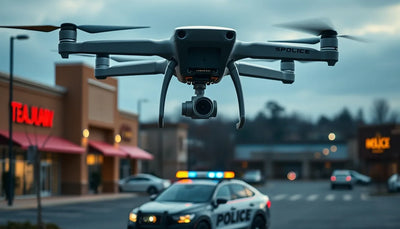
At the same time, the report highlights a striking contrast: Florida public agencies remain unable to fly the same DJI platforms. That split between proven field utility and state-level procurement restrictions is becoming one of the defining tensions in the U.S. commercial drone market, with direct consequences for fleet operators, independent pilots, repair customers, and the pre-owned DJI ecosystem.
The sanctuary operation and what it shows
The DroneXL report describes a sanctuary using a DJI drone to feed Kaleb, a chimpanzee, in what appears to be a controlled and carefully managed delivery task. While specific model details and payload specifications were not included in the source data, the operation itself is notable because it reflects a broader pattern: organizations with limited staffing or challenging terrain are turning to commercial drones for repetitive, low-risk delivery work.
For operators, the sanctuary case is less about chimpanzee care and more about proof of concept. If a private facility can reliably use a DJI platform to deliver food to an animal enclosure, similar workflows can translate to agricultural feeding, remote monitoring, wildlife management, and small-payload logistics. The operational implication is that DJI hardware continues to perform in environments where reliability and repeatability matter more than headline specifications.
Florida's restrictions and the fragmented U.S. market
The same report notes that Florida agencies cannot fly DJI drones, a restriction that has been part of a broader state and federal scrutiny of Chinese-manufactured drone platforms. The source does not specify the exact legal instrument behind the Florida restriction, but the practical effect is clear: public-sector operators in the state face a different procurement reality than private operators elsewhere in the country.
This fragmentation creates an uneven market. A private sanctuary can use a DJI drone for daily feeding tasks, while a Florida public agency with similar operational needs may be barred from the same hardware. For commercial buyers and fleet managers, the lesson is that geography and sector now shape drone procurement as much as performance or price. A platform that is fully legal and operationally proven in one state may be unavailable to public buyers in another.
What this means for drone owners and the market
The sanctuary story reinforces that DJI drones remain deeply embedded in real-world operations, even as public-sector restrictions tighten in certain states. For private operators, independent pilots, and small businesses, the practical utility of DJI hardware has not diminished. In fact, each new documented use case, from sanctuary feeding to infrastructure inspection, strengthens the case for continued investment in DJI platforms where they remain legally available.
Reboot Hub analysis: For the pre-owned DJI market, this dynamic cuts in two directions. In unrestricted regions, demand for inspected pre-owned DJI drones and genuine OEM spare parts is likely to remain steady, because operators see ongoing value in platforms with proven field records. In restricted states, public agencies may exit the DJI ecosystem entirely, potentially releasing used hardware into the secondary market or shifting repair volume toward alternative platforms. Buyers should evaluate their operating region and sector before committing to a platform, and repair customers should confirm that parts and service channels remain accessible for the specific model they own. For operators and fleet managers tracking these shifts, the Drone Wiki offers a reference point for understanding how platform availability and repair considerations intersect across different U.S. markets. For owners evaluating service and lifecycle risk, Drone Wiki explains the relevant repair, parts, resale, or operational path.
The operator-facing takeaway is straightforward: if you fly in a state or sector without DJI restrictions, the sanctuary case is another data point confirming that DJI hardware can handle routine, repeatable payload work. If you operate in a restricted state or serve public agencies, you should monitor procurement rules closely, because they can change the resale value of your current fleet and the availability of repair parts over time.
The broader signal for commercial drone adoption
The juxtaposition of a working DJI drone at a sanctuary and grounded Florida agencies captures the current moment in U.S. commercial drone policy. On one side, the technology is demonstrably capable of safe, useful, everyday work. On the other, policy decisions are increasingly disconnected from operational evidence, driven instead by supply chain security concerns and geopolitical considerations.
For the commercial drone industry, this means adoption will continue to be uneven. Private-sector operators in permissive jurisdictions will keep accumulating flight hours and use cases, while public-sector operators in restricted states will be forced toward alternative platforms, often at higher cost or with different performance profiles. The DroneXL report does not suggest any imminent policy change, so operators should plan for this fragmented landscape to persist through the near term.
FAQ
Frequently asked questions
Is the DJI drone feeding story verified by an official source?
The central report comes from DroneXL, a drone industry news outlet. The source data does not include confirmation from the sanctuary, DJI, or any Florida agency, so the details should be treated as industry reporting rather than officially verified information.
Does the Florida restriction affect private drone owners?
The source indicates that Florida public agencies cannot fly DJI drones. It does not state that private owners or commercial operators in Florida are barred from using DJI hardware, so private buyers should review their specific operating context and any applicable local rules before making purchasing decisions.
Should I buy a pre-owned DJI drone given the policy uncertainty?
If you operate in a region without DJI restrictions, pre-owned DJI hardware remains a practical option with a strong field record. If you work with public agencies or in restricted states, evaluate whether platform availability and repair parts will remain accessible before committing to a purchase.
Which sources support this update?
The article distinguishes reported information from analysis and does not present an unverified source as official confirmation.
What remains subject to change?
Retail pricing, availability, product bundles and regulatory timelines can change. Readers should verify the latest terms with the named retailer, manufacturer or regulator before acting.
How should buyers or operators use this analysis?
Use the verified facts as a starting point, then compare mission fit, lifecycle support, maintenance needs and current procurement terms before making a purchase or fleet decision.
Konsultowane źródła
- DroneXL via Google News - primary source
W momencie publikacji dodatkowa oficjalna dokumentacja nie była dostępna.
Redakcja Reboot Hub dostarcza analizy zakupowe, serwisowe, odsprzedażowe i operacyjne dla właścicieli dronów. Jeśli zauważysz błąd, skontaktuj się z nami w celu weryfikacji poprawki zgodnie z naszą polityką redakcyjną.