Axon Adds $1.2B to Skydio as Ring Enters the $249 Drone Market
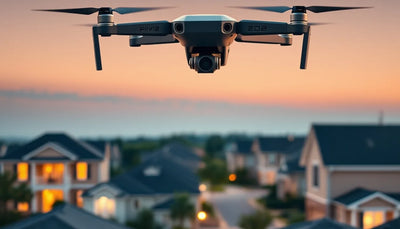
Axon has placed another $1.2 billion into Skydio, deepening the public-safety drone supply chain, while Ring announced a $249 indoor drone camera. DroneXL.co reports the developments alongside Nampa's request for Amazon flight data, signaling faster commercial and residential drone adoption.

Quick answer
Axon invested $1.2 billion more in Skydio, Ring announced a $249 indoor drone camera, and Nampa asked Amazon for flight data, according to DroneXL.co.
- Axon's additional $1.2 billion deepens its stake in Skydio and signals long-term public-safety drone demand.
- Ring's $249 indoor drone camera points to a new consumer price point for autonomous home monitoring.
- Nampa's request for Amazon flight data shows local governments want more operational transparency from drone delivery.
- These moves may influence fleet planning, repair volume, and pre-owned drone pricing across commercial and consumer segments.
Evidence: DroneXL.co
Market context
Turn market news into a buy, repair, or trade-in decision.
Compare pre-owned availability, resale timing, and repair economics before the market moves again.

Verified facts
What the available evidence confirms
| Development | Reported detail | Market signal |
|---|---|---|
| Axon investment | $1.2 billion more into Skydio | Stronger public-safety drone supply chain and enterprise demand |
| Ring product | $249 indoor drone camera | Lower-cost consumer autonomous monitoring category |
| Nampa request | City asks Amazon for flight data | Growing local oversight of drone delivery operations |
DroneXL.co reported on November 13 that Axon is putting another $1.2 billion into Skydio, Ring has announced a $249 indoor drone camera, and the city of Nampa is asking Amazon for flight data. The three developments sit in different corners of the industry, but together they point to the same trend: drone adoption is accelerating across public safety, consumer home monitoring, and logistics at the same time.
For commercial operators, fleet buyers, repair customers, and anyone watching the pre-owned DJI market, the week's news is less about any single product and more about how quickly the competitive map is changing. A large public-safety investment, a low-cost consumer camera drone, and a municipal data request each create different pressure points for pricing, service volume, and procurement planning.
Axon's $1.2 billion move deepens the public-safety drone supply chain
Axon's additional $1.2 billion investment in Skydio is the largest single development in the DroneXL.co report. Axon is already a major name in public-safety technology, and the expanded position suggests that drone hardware is becoming a durable part of law enforcement and emergency response budgets rather than a pilot program or short-term experiment. The investment does not, by itself, confirm new product lines or delivery timelines, but it does signal that a well-capitalized buyer sees long-term demand in the segment.
Reboot Hub analysis: For fleet operators and procurement teams, the practical takeaway is that public-safety drone programs are likely to keep growing even when broader technology budgets tighten. That can affect parts availability, service lead times, and the secondary market for enterprise-class airframes. When a large customer base is funded and expanding, repair demand tends to follow because these aircraft are flown in demanding conditions and need consistent maintenance. Reboot Hub analysis suggests that a stronger Skydio pipeline may also push some mixed fleets to standardize more aggressively, which changes how buyers think about spare parts and backup aircraft.
Ring's $249 drone camera resets consumer price expectations
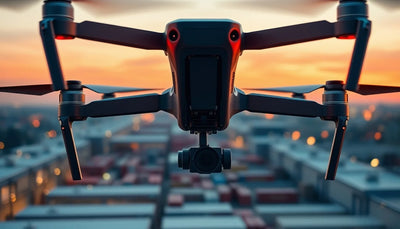
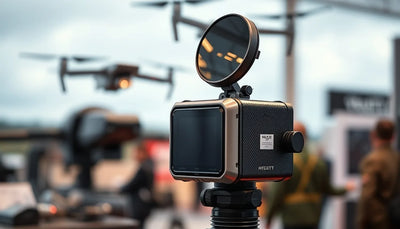
Ring's announced $249 indoor drone camera is a direct signal that autonomous home monitoring is moving toward a mainstream price point. DroneXL.co frames the product as an indoor camera drone, which means the value proposition is less about manual piloting and more about scheduled or automated observation inside a home. At $249, the product sits well below many traditional camera drones and closer to premium home security hardware.
That price point matters for the broader market because it conditions buyers to expect capable, connected drone hardware at consumer-electronics prices. For pre-owned DJI drones, the effect is not necessarily direct competition; a small indoor monitoring drone does not replace a Mavic or Mini for outdoor imaging, mapping, or inspection work. But it can shift how casual buyers think about value. If a $249 autonomous indoor camera is seen as acceptable, some first-time buyers may enter the drone market at that level and later move up to more capable pre-owned platforms. Others may delay a larger purchase while they test whether a low-cost indoor unit meets their needs.
Nampa's Amazon flight data request highlights local oversight pressure
The third item in the DroneXL.co report is Nampa's request for Amazon flight data. The city is asking for operational information, which reflects a growing pattern of local governments wanting more visibility into drone delivery activity. The request does not confirm any specific regulatory action, penalty, or operational change, but it shows that municipalities are paying closer attention to how delivery drones operate above their communities.
For commercial operators, this is a reminder that local data requests and oversight expectations can arrive even when federal rules are stable. Fleet managers should treat flight logging, route documentation, and operational transparency as part of normal cost and compliance planning. The more cities ask for data, the more valuable clean operational records become, whether for delivery operators, inspection teams, or public-safety programs. This also has a quiet effect on resale value: aircraft with well-documented flight histories and maintenance records tend to hold value better in the pre-owned market.
What this means for drone owners and the market
The three developments point to a market that is becoming more segmented and more competitive at the same time. Public-safety buyers are consolidating around funded platforms, consumer buyers are seeing lower entry prices, and logistics operators are facing more local scrutiny. For individual owners and small commercial operators, the main risk is buying into a platform or workflow that does not match how the market is actually moving. Buyers who need reliable outdoor imaging, inspection, or mapping capability should not assume that a low-cost indoor product can substitute for a proper camera drone, and fleet buyers should not assume that enterprise support networks will remain unchanged as investment flows into specific manufacturers.
One practical step for buyers and repair customers is to evaluate the total cost of ownership rather than the sticker price. A lower-cost consumer drone can still generate repair and parts costs, and a heavily funded public-safety platform can still face service bottlenecks if demand outpaces support capacity. For operators who want dependable hardware without overpaying for new units, the pre-owned DJI market remains a useful middle path, especially when aircraft are inspected and supported with genuine OEM spare parts. Readers evaluating repair or replacement options can check the Drone Wiki for reference material on drone platforms and maintenance considerations. For owners evaluating service and lifecycle risk, Drone Wiki explains the relevant repair, parts, resale, or operational path.
The common thread across Axon, Ring, and Nampa is that drones are becoming normal infrastructure. That means more buyers, more flight hours, more repair volume, and more questions about data and accountability. Operators who plan for those conditions now will be better positioned than those who react after a platform shift or a local policy change.
FAQ
Frequently asked questions
What did Axon's investment in Skydio actually change?
According to DroneXL.co, Axon put an additional $1.2 billion into Skydio. The report does not confirm specific product or delivery changes, but the investment signals stronger long-term demand in the public-safety drone segment.
Is Ring's $249 drone a direct competitor to DJI camera drones?
Not directly. Ring's product is reported as an indoor drone camera, while most DJI camera drones are designed for outdoor imaging, mapping, and inspection. The Ring price point may influence consumer expectations, but it does not replace a capable outdoor platform.
Should fleet managers change anything after these reports?
Fleet managers should review documentation and maintenance practices, especially as local governments like Nampa ask for more operational data. Clean flight logs and service records support compliance and can help preserve resale value.
Which sources support this update?
The visible evidence links identify DroneXL.co; each source is used only for the claim it directly supports.
What remains subject to change?
Retail pricing, availability, product bundles and regulatory timelines can change. Readers should verify the latest terms with the named retailer, manufacturer or regulator before acting.
How should buyers or operators use this analysis?
Use the verified facts as a starting point, then compare mission fit, lifecycle support, maintenance needs and current procurement terms before making a purchase or fleet decision.
Konsultowane źródła
- DroneXL.co - primary source
W momencie publikacji dodatkowa oficjalna dokumentacja nie była dostępna.
Redakcja Reboot Hub dostarcza analizy zakupowe, serwisowe, odsprzedażowe i operacyjne dla właścicieli dronów. Jeśli zauważysz błąd, skontaktuj się z nami w celu weryfikacji poprawki zgodnie z naszą polityką redakcyjną.