WorldSkills Adds UAV Systems Event, Signaling Drone Skills Formalization
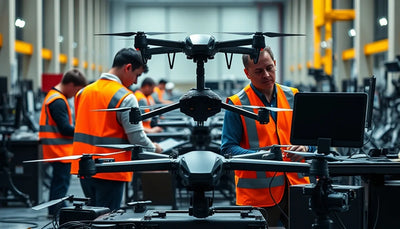
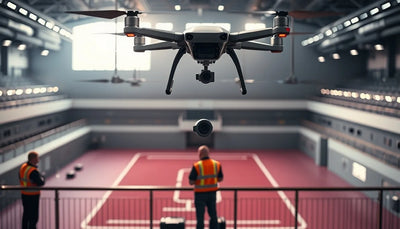
WorldSkills Competition has introduced a UAV systems event for the first time, with international experts competing across what organizers describe as triple roles. The debut marks a formal step toward standardized commercial drone skills recognition, with implications for fleet hiring, repair training, and pre-owned equipment valuation.

Quick answer
WorldSkills Competition introduced a UAV systems event for the first time, with international experts competing in what the source describes as triple roles.
- The event marks the first formal WorldSkills UAV systems competition category
- International experts competed across multiple operational roles in the same event
- The debut signals growing institutional recognition of commercial drone skills
- No specific scoring criteria, aircraft models, or regional winners were disclosed in the source
The WorldSkills Competition has introduced a UAV systems event for the first time, according to a report from rss.jingjiribao.cn. The development places commercial drone operation alongside established skilled trades on an international competition stage, with participating experts competing in what the source describes as "triple roles." While the report does not detail the specific aircraft, scoring rubric, or participating countries, the addition itself is a meaningful signal for how commercial UAV skills are being formalized.
Market context
Turn market news into a buy, repair, or trade-in decision.
Compare pre-owned availability, resale timing, and repair economics before the market moves again.

For drone buyers, fleet operators, and repair customers, the debut matters less as a sporting event and more as an institutional acknowledgment. When a global skills organization creates a dedicated UAV systems category, it suggests that the competencies involved, flight control, payload management, mission planning, and troubleshooting, are becoming legible enough to assess, rank, and certify. That has downstream consequences for hiring, training budgets, and how pre-owned equipment is evaluated.
What the WorldSkills UAV event actually signals
The primary reporting from rss.jingjiribao.cn frames the WorldSkills UAV systems debut around international experts competing in "triple roles." The phrase suggests that competitors were expected to demonstrate proficiency across multiple operational functions rather than a single narrow task. In commercial drone work, that kind of multi-role expectation mirrors real-world conditions: a single operator often handles pre-flight inspection, in-flight mission execution, and post-flight data or maintenance checks.
Reboot Hub analysis: the absence of detailed scoring criteria or aircraft specifications in the source means operators should treat this as an early-stage institutional signal rather than a fully standardized certification framework. The event's existence is the news. Its rigor, repeatability, and industry adoption remain open questions. Still, the direction is clear. Drone operation is moving from an adjacent technical curiosity toward a recognized skilled occupation with formal competition structures.
Why formal skills recognition affects hiring and repair decisions
When a global skills body adds a UAV systems category, it creates a reference point for employers and service providers. Fleet managers evaluating pilot candidates may begin to ask whether applicants have participated in or trained for structured competency assessments. Repair shops may see more customers who understand basic maintenance terminology and expect documented service workflows. The "triple roles" framing also suggests that employers value operators who can move between flight tasks and technical troubleshooting without handing off to a specialist.
Reboot Hub analysis: For repair customers specifically, this matters because a more formally skilled operator base tends to produce better-documented maintenance histories. A pilot trained to assess multiple system roles is more likely to log battery cycles, note gimbal anomalies, and flag firmware issues before they become failures. That documentation becomes valuable when a drone enters the pre-owned market or when a repair technician needs to diagnose an intermittent fault.
What this means for drone owners and the market
The WorldSkills UAV systems debut arrives at a time when commercial drone adoption is expanding across inspection, mapping, logistics, and public safety. A formal skills competition category reinforces the idea that drone operation is a durable profession, not a temporary niche. For owners of pre-owned DJI drones and other commercial platforms, that durability supports resale values. Buyers are more willing to pay for inspected pre-owned equipment when they believe the broader operator community is becoming more professional and accountable.
The pre-owned DJI market, in particular, benefits from any signal that reduces information asymmetry between sellers and buyers. A more formally trained operator base means more units entering the secondary market with coherent maintenance records, genuine OEM spare parts history, and realistic wear assessments. Readers evaluating pre-owned DJI drones or professional DJI repair options can use resources like the Drone Wiki to understand platform-specific maintenance and component considerations before making a purchase or service decision. For owners evaluating service and lifecycle risk, Drone Wiki explains the relevant repair, parts, resale, or operational path.
Fleet managers should also watch whether WorldSkills-style competency frameworks begin to influence procurement language. If tenders start referencing structured UAV skills assessments, operators without documented training may face higher barriers to enterprise contracts. That would accelerate demand for formal instruction, logged flight hours, and verifiable repair histories, all of which strengthen the case for buying from sellers who provide transparent condition reports.
What operators should do differently after this news
The practical takeaway is not to chase a WorldSkills credential that does not yet have a defined commercial pathway. Instead, operators should treat the debut as a prompt to document their own multi-role competence. Maintain flight logs that show varied mission types. Keep maintenance records that reflect genuine OEM spare parts use and professional DJI repair work when applicable. If you plan to sell a drone, organize that documentation before listing it.
For buyers, the event is a reminder that the market is maturing. Sellers who can demonstrate structured operational history and clean maintenance records will increasingly stand out from those who cannot. When evaluating a pre-owned commercial drone, ask about the seller's training background, logged mission types, and repair documentation. The WorldSkills UAV systems category may be new, but the underlying expectation, that drone operators should be verifiably competent across multiple roles, is already shaping how serious buyers evaluate both equipment and the people who flew it.
FAQ
Frequently asked questions
What is the WorldSkills UAV systems event?
It is a newly introduced competition category at the WorldSkills Competition where international experts compete in UAV systems tasks described by the source as "triple roles." It marks the first time the competition has included a dedicated UAV systems event.
Does this mean there is now an official WorldSkills drone certification?
No. The source reports the event's introduction but does not describe a formal certification program, scoring rubric, or commercial credential. Operators should view it as an early institutional signal rather than an established certification pathway.
How could this affect pre-owned drone values?
If formal skills recognition encourages better operator documentation and maintenance habits, pre-owned drones with verifiable histories could become easier to evaluate and sell. Buyers may increasingly expect structured flight logs and repair records alongside used equipment.
Which sources support this update?
The article distinguishes reported information from analysis and does not present an unverified source as official confirmation.
What remains subject to change?
Retail pricing, availability, product bundles and regulatory timelines can change. Readers should verify the latest terms with the named retailer, manufacturer or regulator before acting.
How should buyers or operators use this analysis?
Use the verified facts as a starting point, then compare mission fit, lifecycle support, maintenance needs and current procurement terms before making a purchase or fleet decision.
Sources consulted
Additional official documentation was not available at publication time.
Reboot Hub Editorial adds buyer, repair, resale, and operational analysis for drone owners. If you spot an error, contact us for correction review through our editorial policy.