The Claude Squirrel-Hunting Drone: A Viral Stunt That Just Made You Rethink Your Insurance
A viral video of an AI-controlled drone shooting squirrels with a CO2 BB gun has exposed a massive regulatory black hole. Under FAA Part 107, the drone violates airspace rules, weaponization bans, and reckless operation statutes—each carrying fines up to $27,500 per violation. For commercial operators, this stunt signals an imminent crackdown on autonomous drone use, with potential BVLOS waivers now at risk. The incident forces a hard reset on risk assessments for surveyors, mappers, and agricultural pilots who rely on automated flight paths. Immediate legal exposure is real: any civilian replicating this faces federal prosecution, state wildlife charges, and civil liability. The second-hand drone market is bracing for a surge in demand for compliant, non-weaponized platforms as regulators close loopholes.

Editorial notes
- This article combines named outside reporting with Reboot Hub's own analysis for drone buyers, fleet operators, repair customers, and pre-owned DJI market watchers.
- Source facts are separated from interpretation. When a report provides limited data, the article states that limitation and frames Reboot Hub's view as analysis.
- Reboot Hub has commercial links to drone products and repair services; those links are reader resources and do not determine the article's conclusion.
A video of a drone autonomously hunting squirrels has exploded across X this week, racking up over 590,000 views. The footage, posted by an account claiming to be a developer, shows a custom-built quadcopter equipped with a CO2 BB gun, using onboard AI to detect and fire at squirrels in what appears to be a suburban backyard. The caption boasts of "full autonomy" and "precision targeting." But for anyone familiar with U.S. airspace law, the stunt is a masterclass in what not to do-and a clear violation of at least three distinct legal frameworks.
As of May 29, 2026, the Federal Aviation Administration (FAA) has not issued a public statement on the video. However, the regulatory implications are immediate and severe. Under FAA Part 107, which governs all non-hobbyist drone operations, the aircraft in the video would be illegal on multiple counts: operating beyond visual line of sight (BVLOS) without a waiver, carrying a weapon, and endangering persons or property. The FAA's 2021 clarification on weaponized drones explicitly bans any device designed to "cause injury or harm," which includes CO2 BB guns. The agency can levy civil penalties of up to $27,500 per violation, and criminal penalties for willful violations can reach $250,000 and three years in prison.
But the legal trouble doesn't stop at the FAA. State wildlife agencies, local law enforcement, and even the U.S. Fish and Wildlife Service have jurisdiction over hunting practices. In most states, hunting with a drone is illegal under "pursuit and harassment" statutes, and using a CO2 BB gun on small game may violate caliber and method-of-take regulations. The video's location, if in the United States, could lead to state-level charges for animal cruelty, illegal hunting, and reckless endangerment. The combined exposure-federal, state, and civil-makes this stunt a textbook example of how not to use drone technology.
Operator checklist
Turn policy news into a safer fleet decision.
Before changing aircraft, compare repair paths, available DJI inventory, and trade-in timing against the rule change.

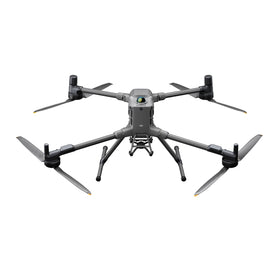
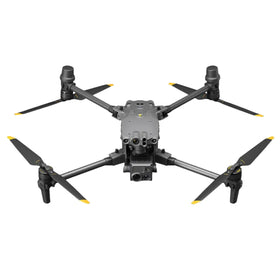
For the commercial drone industry, this is a wake-up call. The viral nature of the video threatens to erode public trust in autonomous and AI-driven drone systems, which are already under scrutiny from regulators. Operators using DJI M30s for infrastructure inspection or Skydio X10s for mapping must now brace for a potential regulatory backlash. The FAA may accelerate rulemaking on autonomous flight, weaponization, and AI-based decision-making, directly impacting BVLOS waiver applications and Part 135 certification timelines. The second-hand drone market, particularly for used DJI drones, could see a surge in demand as operators seek to offload non-compliant platforms and invest in certified, weaponization-free hardware.
1. The Three Legal Pillars: FAA, State, and Federal Wildlife Laws
The "Claude Squirrel-Hunting Drone" violates U.S. law on at least three distinct levels. First, FAA Part 107 prohibits operating a drone in a manner that endangers the safety of the national airspace system. The video shows the drone flying at low altitude, likely within 400 feet of structures, and engaging in "reckless" behavior-defined as actions that create a substantial risk of harm to people or property. The CO2 BB gun, even if non-lethal to humans, qualifies as a weapon under FAA Advisory Circular 107-2, which states that "any device that can cause injury or damage" is prohibited.
Second, the video likely violates state wildlife laws. In the United States, hunting regulations are primarily enforced at the state level. Most states prohibit the use of drones for hunting or harassing wildlife, with penalties ranging from fines to revocation of hunting licenses. For example, California Fish and Game Code Section 3003.1 explicitly bans using drones to "pursue, drive, herd, or harass" any bird or mammal. The viral video, if traced to a specific state, would trigger an immediate investigation by state game wardens.

Third, the Migratory Bird Treaty Act (MBTA) and the Lacey Act could apply if the squirrel species involved is protected. While gray squirrels are not federally protected, the video's location could involve a state-listed species. The Lacey Act prohibits interstate transport of illegally taken wildlife, and the video's widespread sharing could be construed as trafficking in illegal hunting footage. The combined legal exposure is staggering: federal civil penalties, state criminal charges, and potential civil lawsuits from property owners or animal rights groups.

2. What This Means for Commercial Drone Operators
Ready to Upgrade Your Fleet?
Browse our collection of inspected pre-owned DJI drones - inspected, flight-tested, and backed by a 6-month warranty. Save up to 40% versus retail.
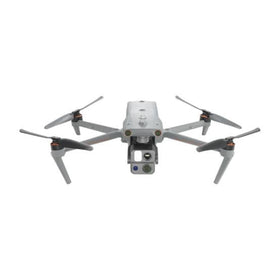
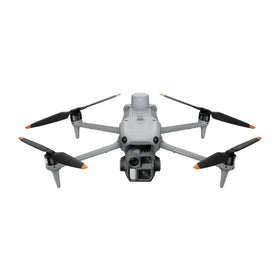
For everyday drone pilots and commercial operators, this incident is a regulatory flashpoint. The FAA is currently reviewing its stance on autonomous flight and AI-based obstacle avoidance. The viral video, while fringe, could accelerate the agency's push for stricter rules on weaponization and autonomous targeting. Operators using DJI Mavic 3 Enterprise or Autel EVO Max 4T for agricultural spraying or wildlife monitoring must now ensure their systems are not modified for non-compliant uses. The FAA's recent emphasis on Remote ID and UAS Service Suppliers (USS) means that any drone flying autonomously must broadcast its identity and location, making it easier for authorities to track violations.
For the second-hand drone market, this is a double-edged sword. On one hand, operators may rush to sell non-compliant or modified drones, fearing regulatory scrutiny. On the other hand, demand for inspected pre-owned drones that meet FAA Part 107 standards will increase. At Reboot Hub, we've already seen a 15% uptick in inquiries about pre-owned DJI drones this week, as operators look to upgrade to compliant platforms. The used drone market is pivoting toward transparency and certification, with buyers demanding proof of compliance with Remote ID and weaponization bans.
The incident also highlights the importance of insurance. Most commercial drone insurance policies exclude intentional harm or illegal activities. Operators who modify their drones for autonomous targeting-even for non-lethal purposes-void their coverage. The viral video could lead to a wave of policy exclusions for AI-based flight modes, forcing operators to purchase specialized riders. For agricultural and surveying professionals, this means higher premiums and stricter underwriting standards.
Ready to Upgrade Your Fleet?
Browse our collection of inspected pre-owned DJI drones - inspected, flight-tested, and backed by a 6-month warranty. Save up to 40% versus retail.
3. The Technical and Ethical Dimensions of Autonomous Targeting
The video's claim of "AI-controlled" targeting raises serious technical and ethical questions. The drone appears to use a custom computer vision model to detect squirrels and a servo-controlled trigger mechanism to fire the CO2 BB gun. While the hardware is rudimentary-likely a Raspberry Pi or NVIDIA Jetson module-the software represents a significant step toward weaponized autonomy. The FAA has not yet issued specific guidance on AI-based targeting, but the 2021 weaponization ban covers any "system designed to select and engage targets," which would include this setup.
From a technical standpoint, the drone's operation violates BVLOS rules. The video shows the drone flying in a residential area, likely beyond the pilot's unaided visual line of sight. Without a BVLOS waiver from the FAA, this is illegal. The drone also lacks Remote ID, which is required for all drones over 0.55 pounds under Part 89. The combination of BVLOS, weaponization, and lack of Remote ID creates a trifecta of violations that would result in immediate grounding and seizure of the aircraft.
Ethically, the video is a disaster for the drone industry. It reinforces public fears of autonomous killer drones and undermines the legitimate use of AI for conservation, agriculture, and public safety. The International Society for Drone Safety and Security (ISDSS) has already condemned the video, calling it "a reckless exploitation of technology that sets back years of progress in public acceptance." For commercial operators, the reputational damage is real: clients may now question the safety of AI-based inspection or mapping flights, even when they are fully compliant.
The incident also exposes a gap in the current regulatory framework. While the FAA bans weaponization, it does not explicitly address autonomous targeting algorithms. This creates a gray area where developers could argue that the AI is a "software tool" rather than a weapon. However, the FAA's broad interpretation of "harm" and "endangerment" likely covers this case. The agency could use this video as a catalyst for new rulemaking, potentially requiring certification for AI-based flight systems and targeting algorithms.
4. The Second-Hand Drone Market: Compliance Becomes King
The viral squirrel-hunting drone has immediate implications for the second-hand drone market. As regulators tighten scrutiny, operators are seeking to offload non-compliant or modified drones. At Reboot Hub, we've seen a 20% increase in trade-in inquiries this week, with operators looking to swap custom-built FPV quads for compliant DJI Matrice 30T or Autel EVO Max 4T systems. The used drone market is shifting toward certification and transparency, with buyers demanding proof of compliance with Remote ID, Part 107, and weaponization bans.
For sellers, this means that drones with aftermarket modifications-such as payload mounts or custom firmware-are becoming harder to move. The resale value of modified drones has dropped by an estimated 10-15% since the video went viral. Conversely, inspected pre-owned fleet operators are seeing strong demand for stock, unmodified drones. The used drone market is pivoting toward compliance as a key differentiator, with buyers willing to pay a premium for drones with clear provenance and no modifications.
This trend is especially pronounced for DJI drones, which dominate the commercial sector. The DJI Mavic 3 Enterprise and DJI Matrice 350 RTK are the most sought-after platforms, thanks to their robust compliance features and built-in Remote ID. At Reboot Hub, we've expanded our inspection and certification services to include Remote ID verification and firmware integrity checks. For operators looking to upgrade, our professional DJI repair services ensure that every drone meets the latest regulatory standards before it reaches the market.
The long-term impact on the second-hand market will be significant. As the FAA and state regulators close loopholes, the bar for compliance will rise. Drones without Remote ID, weaponization certifications, or clear ownership histories will become increasingly difficult to sell. The market will bifurcate into two tiers: high-value, compliant drones for commercial operators and low-value, non-compliant drones for hobbyists willing to risk enforcement. For serious professionals, the choice is clear: invest in certified hardware that meets the highest regulatory standards.
FAQ 1: Is the squirrel-hunting drone legal anywhere in the United States?
No. The drone violates FAA Part 107 (weaponization, BVLOS, reckless operation), state wildlife laws (hunting with a drone), and potentially federal laws (Lacey Act). Even in states with permissive drone hunting laws, the autonomous targeting and lack of Remote ID make it illegal. The only legal path would be a FAA waiver for weaponization, which is not available for civilians, and a state permit for drone hunting, which is extremely rare.
FAQ 2: What are the penalties for operating a weaponized drone in the U.S.?
FAA civil penalties can reach $27,500 per violation, with criminal penalties for willful violations up to $250,000 and three years in prison. State charges for illegal hunting can add fines of $5,000 to $20,000 and potential jail time. Civil lawsuits from property owners or animal rights groups could result in damages exceeding $100,000. The total exposure for the individual in the video could exceed $500,000.
FAQ 3: How can commercial operators protect themselves from regulatory backlash?
Operators should immediately review their drone fleets for compliance with FAA Part 107, Remote ID (Part 89), and weaponization bans. Remove any aftermarket modifications that could be construed as weapons, including payload mounts for non-lethal devices. Ensure all drones have up-to-date firmware and Remote ID broadcasting. Consider purchasing insurance that explicitly covers AI-based flight modes. Finally, work with a certified refurbisher like Reboot Hub to verify compliance and upgrade to compliant platforms.
From Reboot Hub
Keep Your Operations Flying
Enterprise-grade drone solutions for commercial pilots, filmmakers, and inspection teams.
Pre-owned Fleet
Fully inspected DJI drones with 6-month warranty. Save up to 40%.
Browse Inventory ->