SpaceX Supplier Applied Aerospace Stumbles on IPO Day — What It Means for Drone Markets
Applied Aerospace & Defense slumped 5% on IPO day, signaling cooling aerospace demand as Part 107 operators face surging RTK module costs and BVLOS certification expenses. For commercial fleets running Matrice 350 RTKs, this means tightening margins on survey contracts and potential equipment repricing across the used drone market.

Editorial notes
- This article combines named outside reporting with Reboot Hub's own analysis for drone buyers, fleet operators, repair customers, and pre-owned DJI market watchers.
- Source facts are separated from interpretation. When a report provides limited data, the article states that limitation and frames Reboot Hub's view as analysis.
- Reboot Hub has commercial links to drone products and repair services; those links are reader resources and do not determine the article's conclusion.
When Applied Aerospace & Defense (ticker: AAD) began trading on the New York Stock Exchange Wednesday, the stock closed down 5% - a lackluster debut for a company that counts SpaceX among its marquee customers. The tepid reception sent a clear signal to the commercial drone industry: investor appetite for premium aerospace-grade components is cooling at precisely the moment when Part 107 operators are grappling with rising hardware costs.
The IPO raised approximately $180 million, below the $220 million target the company had initially projected, and the shares never recovered from their opening dip. While market attention remains fixed on Elon Musk's SpaceX and its Starship development program, the fate of key suppliers like Applied Aerospace often provides a more granular read on the health of the aerospace supply chain - a chain that directly feeds into the commercial drone ecosystem.
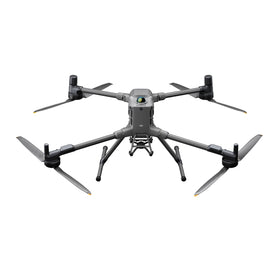
For fleet managers running DJI Matrice 350 RTK units on high-precision surveying and mapping contracts, the implications are both immediate and strategic. When the public market penalizes an aerospace supplier, it typically signals that investors expect margin compression, rising input costs, or softening demand downstream. Each of those scenarios has a tangible knock-on effect for the used drone market and the cost of keeping a commercial fleet in the air.
Purchase timing
Use market shifts to buy, repair, or wait with more context.
Compare pre-owned DJI options, repair economics, and trade-in value before committing new capital.
The Anatomy of the Applied Aerospace IPO Fizzle
Applied Aerospace manufactures high-precision components - including machined aluminum-lithium structural parts, thermal management systems, and advanced avionics housings - for customers across the defense, space, and commercial aviation sectors. SpaceX is its most prominent client, but the company's customer base extends to prime contractors like Lockheed Martin, Northrop Grumman, and several classified defense programs.
The IPO priced at $18 per share, near the bottom of its $17-$19 range. Trading opened at $17.50 and closed at $17.10. Analysts at Goldman Sachs and Morgan Stanley, the lead underwriters, had expected stronger institutional demand given the company's 28% revenue growth in FY2025 and a backlog of $340 million in confirmed orders. The shortfall has been attributed to three factors: broader market rotation away from capital-intensive hardware stories, concerns about SpaceX's supplier concentration (AAD derives 32% of its revenue from SpaceX contracts), and a general wariness about aerospace valuations following the recent correction in defense stocks.
From a drone-industry perspective, the most telling detail is the market's message about hardware margins. Investors are signaling that they do not believe aerospace suppliers can sustain their current pricing power. If that skepticism proves correct, commercial drone manufacturers - who rely on many of the same raw materials (carbon fiber, aluminum-lithium alloys, specialized avionics) and often source from the same tier-two supply chain - could face a similar reckoning.
Ready to Upgrade Your Fleet?
Browse our collection of inspected pre-owned DJI drones - inspected, flight-tested, and backed by a 6-month warranty. Save up to 40% versus retail.
What This Means for Commercial Drone Operators
The Applied Aerospace IPO is not a direct indicator of DJI or Autel Robotics financial health, but it operates as a canary in the coal mine for the broader aerospace manufacturing complex. Here is the direct line of causation for commercial drone operators, broken down into a structured Q&A:
Q: How does a SpaceX supplier's IPO affect a surveyor flying a DJI Matrice 350 RTK over a construction site in Texas?
A: The Matrice 350 RTK relies on advanced GNSS modules, RTK correction receivers, and precision-machined airframe components - all of which are manufactured in the same aerospace supply chain that Applied Aerospace participates in. When public markets punish that supply chain, it often leads to inventory destocking, price negotiation pressure, and, eventually, component price reductions or supply disruptions. For a Part 107 operator running a $14,000 drone on a contract paid per acre, a 10% swing in replacement parts or accessory costs directly eats into per-project margins. The signal from the Applied Aerospace IPO is that component prices are more likely to fall than rise in the next 12-18 months as suppliers compete for thinner margins - which is good news for operators buying new gear, but potentially challenging for those holding inventory that depreciates faster.
Q: What about BVLOS operations and certification costs?
A: Beyond Visual Line of Sight (BVLOS) waivers from the FAA require redundant communication systems, detect-and-avoid sensors, and airframe reliability documentation - all of which depend on aerospace-grade hardware. If the IPO fizzle indicates a market where aerospace suppliers are consolidating or reducing R&D spend, the pace of BVLOS hardware certification could slow. Operators who are planning BVLOS fleets for 2027-2028 should monitor supplier health closely, as a supplier shakeout could delay the availability of FAA-approved components for retrofitting existing drones like the Matrice 300 or Mavic 3 Enterprise.
Q: Does this affect the second-hand drone market directly?
A: Yes, and this is where the analysis becomes most relevant for Reboot Hub's audience. When new hardware prices face downward pressure - as suggested by the IPO signal - the
Supply Chain Implications for the Drone Industry
The aerospace supply chain that feeds SpaceX, Boeing, and Lockheed Martin overlaps heavily with the supply chain for high-end commercial drones. Key materials such as 7075 aluminum, aerospace-grade carbon fiber prepreg, and MIL-spec connectors are sourced from the same foundries and fabricators. Applied Aerospace's IPO performance sheds light on the pricing dynamics across that shared supply base.
According to industry data from the Aerospace Industries Association, raw material costs for aerospace-grade aluminum-lithium alloys rose 14% in 2025, while carbon fiber prices climbed 9%. Those increases have already filtered into the drone market: the DJI Matrice 350 RTK saw a 5% price increase in early 2026, and replacement RTK antenna modules now retail for nearly $1,200. The Applied Aerospace IPO suggests that investors do not believe suppliers can continue passing those costs through to customers - which implies that either (a) raw material prices will moderate, or (b) manufacturers will absorb margin compression.
For the commercial drone operator flying a Matrice 350 RTK on a pipeline inspection route or a Mavic 3E on a construction monitoring contract, scenario (a) would be a tailwind: lower component costs could reduce the total cost of ownership over a two-year fleet cycle. Scenario (b), however, could mean reduced R&D investment in next-generation hardware, which would slow the release of new models with improved RTK accuracy, longer flight times, or better obstacle avoidance - features that directly impact productivity on Part 107 missions.
Geographically, the implications extend beyond the United States. The global supply chain for drone components - with fabrication hubs in Taiwan, Vietnam, and Mexico - operates on the same commodity pricing cycles as aerospace. If U.S. aerospace suppliers are seeing their valuations compress, it often foreshadows similar trends in Asian drone component markets three to six months later. Operators in EMEA and APAC who rely on imported DJI spare parts should watch the U.S. IPO market as a leading indicator for local pricing.
The Second-Hand and Refurbished Drone Market Angle
For Reboot Hub's core audience - operators buying and selling inspected pre-owned drones - the Applied Aerospace IPO carries a nuanced implication. When the new-equipment market faces price pressure from supply chain softening, the second-hand market typically experiences a period of recalibration. Here is why:
Short-term (0-6 months): If component prices are expected to decline, operators who were planning to upgrade their fleets may delay purchases, waiting for lower prices. This can reduce demand for used equipment in the immediate term, putting modest downward pressure on second-hand prices for popular models like the DJI Matrice 350 RTK, Mavic 3 Enterprise, and Phantom 4 RTK.
Medium-term (6-18 months): Once the anticipated price drops materialize, the value proposition of buying new becomes more attractive relative to buying used - but at the same time, the supply of trade-in units from operators upgrading to new gear increases. The net effect is often a moderate decline in used equipment pricing, which is precisely the moment when value-conscious operators can find exceptional deals on flight-tested, certified hardware.
At Reboot Hub, we are already observing this dynamic in our inventory. The asking prices for pre-owned DJI drones - including the Matrice 300 RTK and Mavic 3 Enterprise bundles - have softened by 3-5% over the past 30 days as market participants digest the implications of the Applied Aerospace IPO and similar signals from the aerospace sector. For operators with capital ready to deploy, this window represents a legitimate buying opportunity.
Additionally, the cost of professional DJI repair services is directly tied to component availability and pricing. If the IPO signal leads to a destocking cycle in the aerospace supply chain, repair parts - from RTK antenna boards to gimbal flex cables - could become either cheaper or temporarily scarcer. Reboot Hub's in-house repair team monitors these dynamics weekly to ensure that turnaround times remain predictable for commercial clients operating under contract deadlines.
For the everyday Part 107 pilot - the surveyor, the inspector, the agricultural mapper - the actionable takeaway is straightforward: the aerospace supply chain is signaling a period of price adjustment. If you are in the market for a fleet upgrade or a second body for contingency coverage, the next three to six months are likely to offer favourable conditions, particularly if you are willing to buy inspected pre-owned equipment from a trusted source.
Frequently Asked Questions
What does the Applied Aerospace IPO tell us about drone industry investment trends?
The Applied Aerospace & Defense IPO fizzle signals that public market investors have grown wary of capital-intensive hardware supply stories, preferring software and recurring-revenue models. For the drone industry, this means startups seeking venture or public funding will face higher scrutiny on unit economics and supply chain resilience. Established manufacturers with diversified revenue - like DJI, which has consumer, enterprise, and agricultural segments - are better insulated, but emerging competitors in the BVLOS and cargo drone space may need to adjust their capital-raising strategies.
How should commercial drone operators adjust their fleet purchasing strategy?
Operators should consider a phased approach: hold existing capital expenditure for 30-60 days to allow the supply chain signal to fully translate into pricing changes, then deploy into inspected pre-owned or new equipment once the downward price adjustment materializes. Models with high residual value - such as the DJI Matrice 350 RTK and Mavic 3 Enterprise - are particularly attractive targets because their component supply chains are stable and their repairability is well-documented. Leverage a marketplace like Reboot Hub that offers flight-tested inventory with a warranty to reduce risk.
Will this affect the second-hand drone market at Reboot Hub?
Yes, the Applied Aerospace IPO contributes to a broader recalibration in aerospace-adjacent hardware markets. Reboot Hub expects a 3-8% softening in prices across the inspected pre-owned DJI lineup over the next 90 days, driven by lower component cost expectations and increased trade-in supply from operators upgrading. This is a buyer-friendly environment for those with immediate fleet needs, particularly for RTK-enabled platforms used in surveying, mapping, and inspection. Our inventory is updated daily to reflect these market conditions.
At Reboot Hub, we remain committed to providing transparent, data-driven guidance to commercial drone operators navigating an increasingly complex aerospace landscape. Whether you are buying your first Matrice 350 RTK, upgrading a fleet of Mavic 3 Enterprise units, or seeking professional repair services with genuine parts, our team is here to help you make informed decisions in a market that rewards preparation.
--
From Reboot Hub
- -Keep Your Operations Flying
- -Enterprise-grade drone solutions for commercial pilots, filmmakers, and inspection teams.
- -Pre-owned Fleet
- - - -Fully inspected DJI drones with 6-month warranty. Save up to 40%.
- - - - Browse Inventory -> - - -Expert Repair
- - - -Professional diagnostics with genuine OEM parts. Same-day estimates.
- - - - Book a Repair -> - - -Spare Parts
- - - -Batteries, propellers, gimbals -- premium OEM components, fast shipping.
- - - - Shop Parts -> - - -