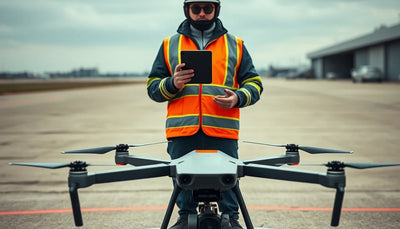
Lowe's Launches 20-Minute Drone Delivery Pilot in North Carolina
Lowe's has launched a drone delivery pilot in Matthews, North Carolina, using Wing drones to bring tools, paint supplies, and household essentials to customers in as little as 20 minutes. The move signals how retail logistics is testing last-mile drone economics at a local scale.

Quick answer
Lowe's has launched a drone delivery pilot in Matthews, North Carolina, allowing eligible customers to order select tools, paint supplies, and household essentials through DoorDash for delivery by Wing drones in as little as 20 minutes.
- Lowe's says it is the first home improvement retailer in the US to offer drone delivery.
- The pilot is limited to a select range of DIY and professional items in Matthews, North Carolina.
- Orders are placed through DoorDash and fulfilled by Wing drones.
- The service targets the 'one more thing' supply run problem for DIY customers and professionals.
Evidence: DroneDJ · DIU Blue UAS
Market context
Turn market news into a buy, repair, or trade-in decision.
Compare pre-owned availability, resale timing, and repair economics before the market moves again.

Verified facts
What the available evidence confirms
| Aspect | Detail |
|---|---|
| Retailer | Lowe's |
| Location | Matthews, North Carolina |
| Delivery partner | Wing drones |
| Ordering platform | DoorDash |
| Delivery window | As little as 20 minutes |
| Product scope | Select tools, paint supplies, household essentials |
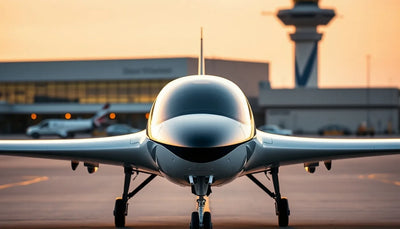
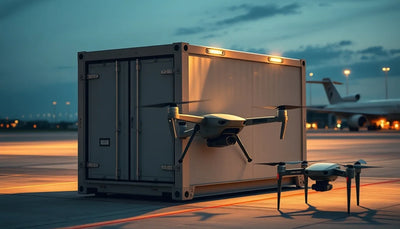
Lowe's is testing whether the last-minute hardware store run can be solved from the air. According to reporting by DroneDJ, the home improvement retailer has launched a drone delivery pilot in Matthews, North Carolina, letting eligible DIY customers and professionals order a limited selection of tools, paint supplies, and household essentials through DoorDash and receive them by Wing drones in as little as 20 minutes.
The pilot positions Lowe's as the first home improvement retailer in the United States to offer drone delivery, based on the company's own framing cited in the report. That is a narrow but meaningful claim: it does not yet signal a national rollout, but it does place a major big-box retailer behind a real-world test of drone logistics for the kind of small, urgent purchases that often derail a project.
What the pilot actually covers
The DroneDJ report describes a deliberately limited scope. The service operates in Matthews, North Carolina, and covers only a selected range of items rather than the full Lowe's inventory. Customers order through DoorDash, while Wing handles the airborne delivery. The 20-minute delivery window is the headline figure, but the report does not detail order volume limits, delivery radius, weather constraints, or the exact product catalog available to customers.
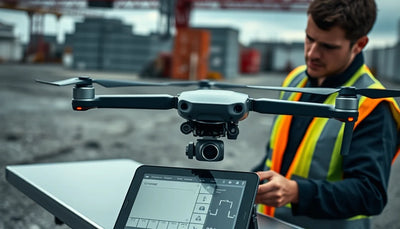
For commercial operators and fleet planners, the restraint in this pilot is instructive. Retail drone delivery remains a logistics problem as much as an aviation problem. The value is concentrated in lightweight, high-urgency items where a 20-minute aerial route beats a 45-minute pickup trip. Paint supplies and small tools fit that profile well. Lumber, large power tools, and bulky building materials do not, at least not under current payload and cost assumptions.
Why retailers keep testing drone delivery
Lowe's move follows years of experimentation across retail, food service, and pharmacy delivery. The underlying economics have not yet produced a clear national winner, but the pattern is consistent: operators test in suburban or semi-suburban markets where single-family homes, short flight distances, and predictable landing zones reduce operational friction. Matthews, North Carolina fits that template.
DroneDJ's reporting frames the pilot around the "I need one more thing" problem, a familiar pain point for contractors and weekend renovators alike. A professional who runs out of a specific paint finish or a fastening component loses time on a return trip. A drone delivery that arrives in 20 minutes can preserve a workday. That use case is more commercially durable than novelty delivery, and it explains why a home improvement retailer would invest in the test.
What this means for drone owners and the market
The pilot does not directly change the regulatory or hardware landscape for individual drone owners, but it does reinforce where commercial demand is heading. Retail logistics is emerging as one of the most visible non-defense applications for small autonomous aircraft. Each successful pilot adds pressure on infrastructure, airspace integration, and maintenance ecosystems to mature. For operators who already fly commercially, that means more potential clients, more airspace activity, and more scrutiny of reliability and safety practices.
For buyers and fleet managers watching the pre-owned and repair side of the market, the signal is more subtle. Delivery drones are not the same hardware as camera or inspection platforms, and this pilot does not imply new demand for consumer DJI models. But the broader normalization of drone operations in suburban environments tends to expand the total addressable market for training, maintenance, spare parts, and support services. Readers tracking those shifts can find context in the Drone Wiki, which Reboot Hub maintains as a reference for operators evaluating equipment and service decisions. For owners evaluating service and lifecycle risk, Drone Wiki explains the relevant repair, parts, resale, or operational path.
The practical takeaway for a pilot or small fleet manager is to treat retail delivery pilots as an early indicator, not an immediate revenue opportunity. The hardware, insurance, and operational requirements for delivery work differ substantially from mapping, inspection, or media work. Watching how Lowe's, Wing, and DoorDash handle routing density, return logistics, and customer acceptance will reveal more about the real economics than the 20-minute headline.
What to watch next
The most important unanswered questions are operational. The DroneDJ report does not specify how many households are eligible, how many daily deliveries the pilot can support, or how Lowe's measures success. Those details will determine whether the pilot expands to additional North Carolina markets or remains a localized experiment. Retailers rarely publicize pilot metrics unless they support a broader rollout decision.
For the second-hand drone market and repair ecosystem, the relevant watch item is whether delivery-specific platforms begin appearing in commercial resale channels. If Wing or similar operators scale, their fleets will eventually generate maintenance demand and, potentially, a secondary market for airframes and components. That is a longer-term development, but it is the kind of supply chain shift that affects parts availability and service pricing for adjacent platforms.
For now, the Lowe's pilot is a measured step, not a market inflection. It adds another data point to the argument that drone delivery works best when the item is small, the need is immediate, and the delivery environment is predictable. Those conditions are easier to meet in a single North Carolina suburb than across a national retail network.
FAQ
Frequently asked questions
Is Lowe's drone delivery available everywhere?
No. Based on the DroneDJ report, the pilot is limited to Matthews, North Carolina, and covers only eligible customers and a selected range of products.
How do customers place a Lowe's drone delivery order?
Eligible customers order through DoorDash, and Wing drones handle the delivery, according to the reporting.
Does this pilot affect consumer drone owners or the pre-owned DJI market?
Not directly. The pilot uses delivery-specific drones, not consumer camera platforms. However, broader commercial drone activity can gradually expand demand for training, maintenance, and support services across the industry.
Which sources support this update?
The visible evidence links identify DroneDJ and DIU Blue UAS; each source is used only for the claim it directly supports.
What remains subject to change?
Retail pricing, availability, product bundles and regulatory timelines can change. Readers should verify the latest terms with the named retailer, manufacturer or regulator before acting.
How should buyers or operators use this analysis?
Use the verified facts as a starting point, then compare mission fit, lifecycle support, maintenance needs and current procurement terms before making a purchase or fleet decision.
Sources consulted
- DroneDJ - primary source
- DIU Blue UAS - official government source
Reboot Hub Editorial adds buyer, repair, resale, and operational analysis for drone owners. If you spot an error, contact us for correction review through our editorial policy.