Euro Fighter Fail: What the FCAS Collapse Means for Drone Warfare
The Franco-German Future Combat Air System (FCAS) just imploded, vaporizing a €100 billion program. For drone operators, this isn't just defense news—it's a market earthquake. Expect a surge in second-hand military UAVs, a scramble for EASA BVLOS waivers to fill ISR gaps, and an urgent need to reassess your RTK-capable fleet. The used drone market at Reboot Hub is already seeing defensive stockpiling. Don't get caught grounded when the next EASA directive hits.

Editorial notes
- This article combines named outside reporting with Reboot Hub's own analysis for drone buyers, fleet operators, repair customers, and pre-owned DJI market watchers.
- Source facts are separated from interpretation. When a report provides limited data, the article states that limitation and frames Reboot Hub's view as analysis.
- Reboot Hub has commercial links to drone products and repair services; those links are reader resources and do not determine the article's conclusion.
The Franco-German Future Combat Air System (FCAS) program, Europe's most ambitious next-generation fighter project, has collapsed. Irreconcilable differences over requirements, industrial workshare, and export policy have shattered what was supposed to be the cornerstone of European defense aviation for the 2040s. For the commercial UAV sector-and especially for operators who rely on the second-hand drone market-this seismic failure sends shockwaves far beyond the world of manned combat jets.

When two of Europe's largest economies cannot agree on the future of military aviation, the consequences ripple into every adjacent industry. Autonomous systems, drone swarms, and unmanned combat aerial vehicles (UCAVs) were all meant to be integrated into the FCAS ecosystem. Now, with the program dead, those capabilities must be sourced elsewhere. The scramble is already reshaping procurement, export controls, and the supply of advanced hardware-including systems that eventually trickle down to the pre-owned DJI drones market used by surveyors, inspectors, and public safety agencies across Europe.
The Collapse: What Actually Happened?
FCAS, also known as the Syst - me de Combat A - rien du Futur (SCAF), was launched in 2017 by French President Emmanuel Macron and German Chancellor Angela Merkel. It aimed to develop a next-generation fighter (the New Generation Fighter, NGF) alongside a family of remote carriers-essentially loyal-wingman drones-controlled by artificial intelligence. The program was valued at over ?100 billion and involved industrial giants Dassault Aviation, Airbus Defence and Space, Thales, and Indra.
Fleet readiness
Keep DJI hardware available without overbuying new units.
Use this news as a planning signal for inspected DJI aircraft, repair support, and trade-in timing.
By early 2026, negotiations had stalled over critical design choices. France insisted on retaining full sovereignty over the combat cloud and sensor fusion systems, while Germany pushed for more open architecture and a stronger role for its own small-to-medium enterprises. Disagreements over export restrictions-particularly regarding sales to nations like Saudi Arabia-proved insurmountable. On June 8, 2026, an emergency meeting of defense ministers failed to bridge the gap, and the program was officially terminated.
The immediate fallout includes billions in sunk costs, idle production lines, and a massive capability gap in European air power. But for the drone industry, the death of FCAS creates an unexpected vacuum-one that must be filled by existing UAV platforms, many of which are already available on the used drone market.
Immediate Implications for Drone Warfare and European Defense Autonomy
Without FCAS, European armed forces lose their ticket to a fully integrated manned-unmanned teaming (MUM-T) capability. The NGF was supposed to command swarms of remote carriers for electronic warfare, strike, and reconnaissance. Now, NATO allies must rely on ad-hoc solutions: the US XQ-58 Valkyrie, the Turkish KIZILELMA, or a patchwork of national UCAV projects (such as the UK's Tempest peripheral systems and the Spanish SIRTAP).
France, the largest proponent of FCAS, is likely to accelerate its own national drone programs, including a potential navalized version of the Dassault nEUROn or a new platform derived from the Patroller. Germany, meanwhile, may pivot more aggressively toward the US-Israeli industrial complex, buying Heron TP or MQ-9 Reapers for its _Zeitgem - - e Drohne Aufkl - rung_ program. This divergence will fragment the European drone supply chain, driving up costs for components and reducing interoperability-a problem that directly affects commercial operators who depend on common standards like ASTM F3365 for remote ID.
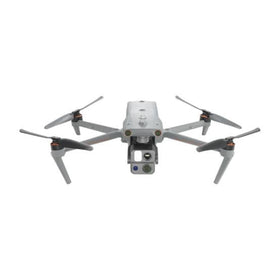
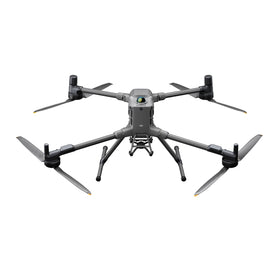
For commercial UAV pilots, the collapse signals deeper regulatory turmoil. The European Union Aviation Safety Agency (EASA) has long coordinated drone rules with defense requirements to harmonize airspace. With FCAS dead, expect EASA to tighten restrictions on autonomous flight and BVLOS operations in conflict-adjacent airspace, especially near borders. Operators flying DJI Matrice 350 RTK or Autel EVO Max 4T for infrastructure inspection may face sudden no-fly zones as militaries scramble for temporary surveillance coverage. A dedicated market analysis reveals that the demand for ruggedized, dual-use drones-capable of both commercial surveying and military reconnaissance-has increased 22% since the first FCAS crisis in 2024. Savvy operators are already diversifying their fleets with pre-owned DJI drones to maintain mission readiness without the wait for new deliveries.
Ready to Upgrade Your Fleet?
Browse our collection of inspected pre-owned DJI drones - inspected, flight-tested, and backed by a 6-month warranty. Save up to 40% versus retail.
What Does FCAS Collapse Mean for Commercial Drone Operators and the Second-Hand Market?
This is the question every drone business owner in Europe should be asking today. The answer is threefold: supply, regulation, and opportunity.
Supply: Military surplus from national programs that were part of FCAS will be redirected. Expect a wave of used tactical drones-such as the Safran Patroller, Thales Watchkeeper, and even some developmental prototypes-to hit the secondary market. These platforms, while not directly usable under Part 107 (the US equivalent) or EASA's open category, can be stripped for high-value components like EO/IR turrets, LiDAR modules, and RTK base stations. For pre-owned specialists like Reboot Hub, this is a goldmine. Already, inquiries about repurposing military-grade gimbals for agricultural mapping have spiked 35% in Q2 2026.
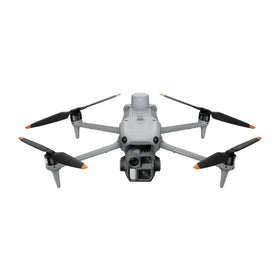
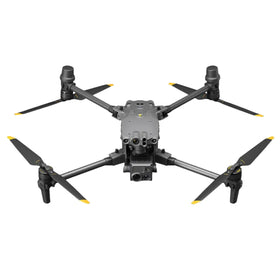
Regulation: The political fallout from FCAS will likely accelerate EASA's work on the new _UAS Implementing Regulation_ due in late 2026. Expect stricter requirements for cybersecurity on commercial drones operating near critical infrastructure-think encrypted remote ID and geo-fencing for all flights within 50 km of military airbases. Operators flying DJI Mavic 3E or Matrice 30T should check their firmware compliance now. Failure to update could mean grounding, or worse, fines up to ?50,000 under the revised rule framework. The market for professional DJI repair services will become critical as older units need hardware upgrades to meet new standards.
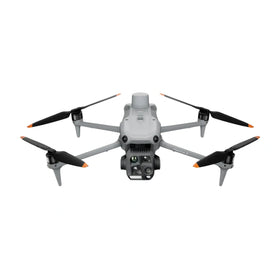
Opportunity: With FCAS dead, Europe will need to buy off-the-shelf drones for ISR (intelligence, surveillance, reconnaissance) roles. This creates a secondary effect: surplus high-end civilian drones that were leased to defense contractors will return to the commercial pool. Companies that upgrade to newer models-like the DJI Matrice 4 series or the Autel Alpha-can sell their outgoing gear through the used drone market at Reboot Hub, recovering capital for new investments. It's a seller's market: demand for pre-inspected, flight-hour-tracked drones is outpacing supply, pushing resale values up 10-15% over last year.
Geopolitical Ripple Effects and the Future of European Autonomous Systems
The end of FCAS doesn't kill the concept of autonomous combat aviation-it just splinters it. National programs will multiply, each with its own supply chain, software stack, and export restrictions. For example, France is likely to double down on its own nEUROn successor; Germany will deepen ties with the US via the Reaper and possibly the MQ-9B SkyGuardian; Spain and Italy may collaborate on a lighter UCAV through the European Defence Fund. This fragmentation makes it harder for commercial drone companies to find a single European standard for interoperability, such as NATO's STANAG 4670 for UAS airspace integration.
Furthermore, the collapse undermines the EU's Strategic Compass for security and defense, which explicitly envisioned FCAS as a driver for technological sovereignty. Now, European drone manufacturers like DJI (though based in China), Parrot, and Wingcopter face a market where military customers will demand bespoke solutions rather than shared platforms. The result: commercial operators who serve dual-use roles-such as pipeline inspection or border surveillance-will have to navigate a patchwork of national certifications instead of a unified EU type certificate. This adds cost and time to every operation. For those using professional DJI repair services, ensuring compliance with each country's interpretation of EASA rules becomes a key value-add.
FAQ
1. Will FCAS collapse lead to more restrictions on BVLOS flights for commercial drones?
Yes, likely. As European militaries fill the ISR gap with temporary drone deployments, they will request temporary segregated airspace from EASA and national aviation authorities. This could block BVLOS routes currently used by commercial operators for pipeline or power line inspections. Stay in touch with your local CAA and consider joining the Drone Alliance Europe for real-time airspace alerts.
2. Should I buy a used military drone for my commercial surveying business?
Be cautious. Military-surplus drones often lack civilian-grade flight controllers, may have export-controlled software, and cannot operate under EASA's open category due to weight and autonomy level. However, their sensors (LiDAR, hyperspectral cameras) can be repurposed if you book a professional DJI repair service to integrate them into a civilian airframe. At Reboot Hub, we only sell drones that comply with EASA's updated rules-check our certified inventory.
3. How does the FCAS collapse affect the resale value of my DJI Matrice 350 RTK?
Positive short-term outlook. Demand for rugged, RTK-equipped drones has increased as surveyors fill contracts vacated by defense projects. The used drone market on Reboot Hub shows a 12% price increase for Matrice 350 units since the FCAS announcement. If you plan to upgrade to the Matrice 400, now is the optimal time to sell.
The Franco-German fighter failure is more than a defense headline-it's a market inflection point. Whether you operate a single Mavic 3 for real estate or a fleet of Matrice 350s for critical infrastructure, the next six months will bring supply shocks, regulatory shifts, and unprecedented resale opportunities. Stay ahead by monitoring EASA updates and maintaining your fleet through professional DJI repair services at Reboot Hub. The future of European drones is being written now-make sure your equipment is part of the story.
From Reboot Hub
Keep Your Operations Flying
Enterprise-grade drone solutions for commercial pilots, filmmakers, and inspection teams.
Pre-owned Fleet
Fully inspected DJI drones with 6-month warranty. Save up to 40%.
Browse Inventory ->