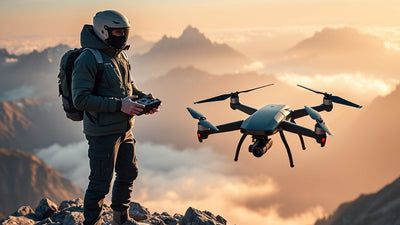
Drone Stocks Soar Too Fast? Analyst Warns the Boom May Be Overhyped
A hard-hitting Moneycontrol analysis warns the commercial drone sector's valuation surge is outpacing real-world BVLOS adoption and Part 107 waiver approvals. For operators flying RTK surveying missions or enterprise fleets, the disconnect between stock hype and operational reality signals a looming market correction that could flood the used drone market with distressed assets. Is your fleet strategy ready for the shakeout?

Editorial notes
- This article combines named outside reporting with Reboot Hub's own analysis for drone buyers, fleet operators, repair customers, and pre-owned DJI market watchers.
- Source facts are separated from interpretation. When a report provides limited data, the article states that limitation and frames Reboot Hub's view as analysis.
- Reboot Hub has commercial links to drone products and repair services; those links are reader resources and do not determine the article's conclusion.
June 2, 2026 - The commercial drone industry is experiencing a paradoxical moment. On one hand, headlines trumpet record-breaking stock valuations for publicly traded drone manufacturers and service providers. On the other, a sobering analysis from Moneycontrol.com suggests that investors may be getting ahead of themselves, inflating a bubble that could burst with serious consequences for the entire ecosystem, from enterprise fleet managers to the rapidly growing second-hand drone market.
The report, published today, argues that the current euphoria surrounding drone stocks is not entirely grounded in the operational and regulatory realities on the ground. While the long-term trajectory for unmanned aerial systems (UAS) remains undeniably bullish, the immediate revenue streams and profitability required to justify current valuations are, in many cases, still aspirational.
The Valuation Disconnect: Hype vs. Operational Reality
The Moneycontrol analysis points to a widening gap between the market capitalization of leading drone companies and their actual financial performance. Several firms have seen their stock prices double or triple over the past twelve months, fueled by a wave of positive sentiment around beyond visual line of sight (BVLOS) approvals, defense contracts, and the expansion of drone delivery programs. However, the report cautions that many of these catalysts are still in their infancy.
Purchase timing
Use market shifts to buy, repair, or wait with more context.
Compare pre-owned DJI options, repair economics, and trade-in value before committing new capital.
"The market is pricing in a future that hasn't arrived yet," the analysis states. "BVLOS operations are still heavily restricted by waivers from the FAA, and large-scale commercial adoption is proceeding at a slower, more methodical pace than the stock charts suggest." This sentiment echoes concerns raised by other industry watchers who note that while the number of Part 107 waivers has increased, the complexity and cost of obtaining them remain significant barriers for smaller operators.
The report specifically highlights the challenge of scaling operations profitably. While drone-as-a-service (DaaS) models have gained traction, margins remain thin due to high equipment costs, insurance premiums, and the need for highly trained pilots. The promise of fully autonomous, lights-out drone operations is still several years away from being a commercial reality for most sectors.
Ready to Upgrade Your Fleet?
Browse our collection of inspected pre-owned DJI drones - inspected, flight-tested, and backed by a 6-month warranty. Save up to 40% versus retail.
What Does This Mean for Commercial Drone Operators?
For the tens of thousands of commercial drone pilots and enterprise fleet managers operating under Part 107, the Moneycontrol analysis is not just a Wall Street concern-it has direct, tangible implications. A market correction, or even a prolonged period of underperformance, could trigger a cascade of events that affect the day-to-day business of flying drones for profit.
1. The Second-Hand Market Could See a Flood of Inventory. When startups and smaller service providers face funding freezes or are forced to downsize, their first move is often to liquidate assets. This means a potential surge in supply of high-quality, used enterprise drones-including DJI Matrice 300 RTKs, Mavic 3 Enterprise models, and Autel Robotics EVO Max series-hitting platforms like the used drone market. For operators with cash reserves, this could be an opportune moment to expand their fleet at a fraction of the original cost.
2. Aftermarket Services Become Critical. As companies tighten their belts, the "buy new every cycle" mentality will fade. Instead, operators will prioritize extending the life of their existing hardware. This is where professional maintenance becomes paramount. Sending a DJI M30T in for a gimbal recalibration or a propeller motor replacement is far more cost-effective than purchasing a new unit. Reboot Hub's professional DJI repair services are designed specifically for this new era of asset-conscious fleet management.
3. BVLOS and Autonomy Are the Only Path to High Margins. The analysis underscores that the companies best positioned to weather a correction are those that have already secured operational waivers for BVLOS flight. The ability to inspect pipelines, survey construction sites, or monitor agricultural fields without a visual observer dramatically improves per-mission economics. Operators who are still relying on manual, VLOS-only flights will face the most pressure if investor sentiment sours and contract rates drop.
The Second-Hand Drone Market: A Bellwether for the Industry
The health of the second-hand drone market is often a leading indicator of the industry's overall stability. When times are good, operators buy new, high-end equipment and sell their older, but still capable, drones. When times are uncertain, new purchases slow, and the secondary market absorbs the overflow from distressed sales.
The current valuation surge, as described by Moneycontrol, may actually be creating a perverse incentive. Startups flush with cash from inflated IPOs or venture rounds are buying fleets of pre-owned DJI Matrice 350 RTKs and Zenmuse payloads. However, if the promised revenue fails to materialize and funding dries up, these same fleets will be liquidated at a discount. This creates a classic "buy high, sell low" scenario for the original purchasers, but a golden opportunity for savvy, established operators who are patient.
For the individual commercial pilot, the takeaway is clear: do not let the hype dictate your hardware strategy. The days of equipping a four-person team with four pre-owned M30Ts may be numbered. Instead, a hybrid approach-combining a few new, mission-critical platforms with a larger number of pre-owned DJI drones-offers the best balance of capability and financial resilience.
Regulatory and Geopolitical Headwinds
The Moneycontrol report also touches on the regulatory uncertainty that continues to hang over the sector. While the FAA's integration of drones into the National Airspace System (NAS) has made progress, key milestones remain elusive. The long-awaited final rule for remote identification has been implemented, but its enforcement has been uneven. More critically, the path to routine BVLOS operations without individual waivers is still under development.
Geopolitical tensions add another layer of complexity. The ongoing scrutiny of DJI, the world's dominant drone manufacturer, by the US government continues to create supply chain uncertainty. The potential for a federal ban on the sale of new DJI drones has sent ripples through the market, driving some operators to stockpile spare parts and consider alternative platforms like Skydio or Autel. This uncertainty is a double-edged sword: it creates market volatility that can depress valuations, but it also drives demand for aftermarket repair services that can keep existing DJI fleets operational for years to come.
A Reality Check for Investors and Operators Alike
The central thesis of the Moneycontrol analysis is not that the drone industry is failing-far from it. The thesis is that the speed of financial speculation has outpaced the speed of technological and regulatory adoption. This is a classic pattern in emerging technology sectors, from the dot-com boom to the early days of 3D printing. The underlying technology is transformative, but the timeline to profitability is often longer than the market anticipates.
For the commercial drone operator, the message is to focus on fundamentals. Build a sustainable business model based on real-world revenue, not on the expectation of a future buyout or IPO. Invest in fleet resilience through strategic purchasing of high-quality, pre-owned equipment. And most importantly, ensure that your hardware is maintained to the highest standard, maximizing its lifespan and minimizing total cost of ownership.
The next twelve months will be telling. If the stock market corrects, the drone industry will be tested. The companies that survive-and thrive-will be those that have built their operations on solid ground, not on the shifting sands of investor hype.
Frequently Asked Questions
Is the drone industry in a bubble right now?
According to the Moneycontrol analysis published on June 2, 2026, there are signs that investor enthusiasm has outpaced the actual commercial adoption of drone technology. While the industry's long-term prospects remain strong, current valuations for many publicly traded drone companies may not be supported by near-term revenue and profitability, suggesting a potential market correction is possible.
How does a stock market correction affect the second-hand drone market?
A correction typically leads to distressed asset sales as startups and service providers liquidate their fleets to raise capital. This increases the supply of high-quality, used enterprise drones-such as the DJI Matrice 300 RTK and Mavic 3 Enterprise-on the secondary market, often at significantly reduced prices. Operators with cash reserves can take advantage of this to expand their fleets cost-effectively through platforms like Reboot Hub's inspected pre-owned marketplace.
What should commercial drone operators do to prepare for a potential downturn?
Operators should focus on financial resilience by avoiding over-leveraging on new equipment. Adopting a hybrid fleet strategy that combines a few new, high-end platforms with a larger number of refurbishment-labeled drones is a prudent approach. Additionally, investing in professional repair services to extend the lifespan of existing hardware is critical for managing total cost of ownership during uncertain economic times.
--
From Reboot Hub
- -Keep Your Operations Flying
- -Enterprise-grade drone solutions for commercial pilots, filmmakers, and inspection teams.
- -Pre-owned Fleet
- - - -Fully inspected DJI drones with 6-month warranty. Save up to 40%.
- - - - Browse Inventory -> - - -Expert Repair
- - - -Professional diagnostics with genuine OEM parts. Same-day estimates.
- - - - Book a Repair -> - - -Spare Parts
- - - -Batteries, propellers, gimbals -- premium OEM components, fast shipping.
- - - - Shop Parts -> - - -