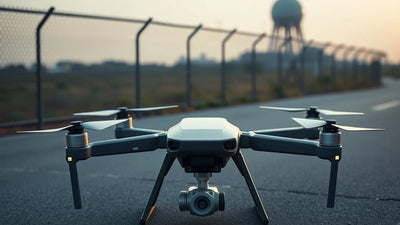
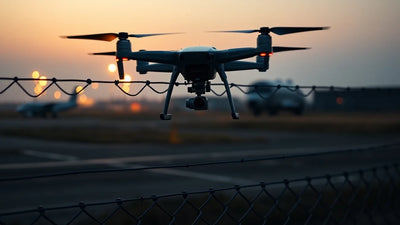
DJI O4 Ground Station: Annihilating Network Dead Zones for Dock 3 Operations
On June 16, 2026, DJI launched the O4 Ground Station, a hardened transmission node purpose-built to eliminate the primary failure mode in enterprise drone programs: catastrophic cellular dropout. By creating a fixed, high-power relay link, this hardware theoretically unlocks continuous BVLOS operations across remote mining, pipeline, and agricultural zones previously considered unreachable. For operators dependent on DJI Dock 3, this fundamentally redefines mission reliability and fleet economics. We analyze the technical implications for RTK surveying, the regulatory pathway under FAA Part 107 waivers, and the immediate disruption to the second-hand drone market as older Dock systems lose their strategic edge.

Editorial notes
- This article combines named outside reporting with Reboot Hub's own analysis for drone buyers, fleet operators, repair customers, and pre-owned DJI market watchers.
- Source facts are separated from interpretation. When a report provides limited data, the article states that limitation and frames Reboot Hub's view as analysis.
- Reboot Hub has commercial links to drone products and repair services; those links are reader resources and do not determine the article's conclusion.
On June 16, 2026, DJI launched a piece of infrastructure that subtly yet powerfully alters the economic calculus of remote drone operations. The DJI O4 Ground Station is not a drone, a sensor, or a software update - it is a fixed, hardened transmission node engineered to solve the single most persistent point of failure for DJI Dock 3 programs: the catastrophic loss of cellular connectivity.

For enterprise operators running pipeline surveillance, mining volumetric surveys, or agricultural NDVI mapping over vast acreages, the routine has always been haunted by a single, dread moment. The video link stutters. The latency spikes. Then, silence. The drone enters a failsafe return-to-home (RTH) protocol, aborting a mission that might have cost thousands in flight time and logistics. The O4 Ground Station is DJI's hardwired answer to this digital fragility. It is a physically installed beacon that ensures Dock 3 can operate in places where the cellular grid simply does not reach.
The Connectivity Catastrophe: Why Dock 3 Programs Stalled Before the O4 Ground Station
Before June 16th, DJI Dock 3 operations were fundamentally tethered to the whims of terrestrial cellular infrastructure. A 4G/LTE modem inside the Dock or the drone itself acted as the sole bridge between the remote operator and the machine. In dense urban environments or well-covered industrial corridors, this worked flawlessly. However, the entire value proposition of docks-24/7 remote presence-is most compelling precisely where cellular coverage is weakest: 50 miles down a pipeline in West Texas, across a 2,000-hectare mine pit in Western Australia, or along a high-voltage transmission line cutting through a mountain pass in Colorado.
Enterprise procurement
Turn this market signal into a fleet requirement.
Discuss mission profile, quantities, configuration, delivery, and lifecycle support with Reboot Hub.
DJI's own internal data, highlighted in the product announcement, reportedly cited connectivity dropout as the primary cause of mission failure for over 60% of long-range BVLOS attempts. The O4 Ground Station, priced as a fixed capital investment alongside the Dock 3, is engineered to flip this statistic. By providing a dedicated, high-gain relay link that bypasses commercial network congestion and voids, DJI is essentially building its own private BVLOS highway. This is not merely an incremental upgrade; it is a fundamental enabler for any organization that relies on remote drone autonomy to generate revenue or ensure safety. The failure mode that ended most long-range missions before they finished-the moment the video link drops-has now been addressed at the hardware level.
Technical Breakdown: How the DJI O4 Ground Station Redefines Remote Relay
While DJI has not yet published the exhaustive technical whitepaper for the O4 Ground Station, the initial specifications paint a clear picture of its role. The unit functions as a fixed mesh node or relay. Instead of relying on a weak drone-to-satellite or drone-to-distant-tower link, the O4 Ground Station is placed at a strategic, elevated point within the operational area. It maintains a high-power, stable connection back to a Networked Ground Control Station (NGCS) via wired or high-gain wireless backhaul. Meanwhile, the DJI Dock 3 drone (most likely the Matrice 4D or a new variant) maintains a steadfast connection to the O4 node.
The crucial advantage here is physical infrastructure. The O4 Ground Station can be weatherproofed, fitted with industrial-grade antennas, and supplied with persistent power from the grid or solar arrays. It is not subject to the battery constraints of a drone or the unpredictable bandwidth sharing of a public LTE tower. For operators, this means the O4 can support real-time high-definition video feeds, RTK correction streams, and command-and-control telemetry without interruption.
Ready to Upgrade Your Fleet?
Browse our collection of inspected pre-owned DJI drones - inspected, flight-tested, and backed by a 6-month warranty. Save up to 40% versus retail.
The O4 Ground Station also implies an enhanced mesh capability. In complex terrain, a single O4 node can relay data to another O4 node, creating a daisy chain of connectivity that stretches deep into valleys or behind geological obstructions. This is a paradigm shift from the "single point of presence" model of a standard dock. For large-scale linear infrastructure projects-think 100+ kilometer pipeline surveys-this daisy-chain capability is the difference between a profitable autonomous contract and a logistical nightmare involving miles of manual driving to swap memory cards.
Market Impact: What the O4 Ground Station Means for Operators and the Used Drone Market
This is where the analysis directly intersects with the mission of Reboot Hub. The release of the DJI O4 Ground Station creates a distinct bifurcation in the secondary market. On one hand, the older DJI Dock 1 and Dock 2 systems, which lack the native integration for the O4's high-bandwidth relay protocol, will begin to see accelerated depreciation. Operators looking to upgrade to the O4 ecosystem will be trading in their older docks and drones. This influx of used hardware creates a robust buying opportunity for price-sensitive operators who do not immediately require the raw BVLOS range of the new system.
On the other hand, the value of the pre-owned DJI drones that *are* compatible with the Dock 3 and O4 ecosystem will hold or even increase. The O4 Ground Station essentially future-proofs the Dock 3 platform. Enterprise operators who were hesitant to invest in a Dock 3 due to connectivity fears now have a clear, hardwired solution. This will drive demand for complete Dock 3 + O4 Station setups. For operators who need to cover multiple sites, a mixed fleet of new and used drone market assets becomes incredibly compelling. You can maintain a lower capital expenditure by purchasing pre-owned flight cells for lower-risk patrols while allocating budget to the critical O4 infrastructure for high-value, long-range sorties.
Furthermore, the O4 Ground Station introduces a new physical component that will require maintenance. Many enterprise teams building their own relay networks will need both the transmission node and the drone payloads inspected regularly. This is where professional DJI repair services become indispensable. Ensuring that the O4's antennas, power systems, and network interfaces are functioning perfectly is just as critical as maintaining the aircraft itself. A failure in the Ground Station can strand a drone just as surely as a rotor malfunction. The second-hand market for the specific radios and antennas used in the O4 system may also emerge as operators look to build out their own private relay infrastructure without paying full retail for every node.
The Path to True BVLOS: O4 Ground Station and the Regulatory Landscape
The DJI O4 Ground Station also carries profound implications for regulatory compliance. Under FAA Part 107, obtaining a BVLOS waiver often requires a robust "mitigation strategy" for loss of link and loss of control. Historically, this has meant stringent operational restrictions, expensive tracking infrastructure (like ADS-B), or the use of visual observers (VOs) stationed along the flight path.
The O4 Ground Station provides a technological mitigation that regulators can understand. By offering a dedicated, redundant, and fixed communications link, the operator can demonstrate a much higher level of control reliability than a standard LTE tether. For utilities and railways conducting linear inspections under BVLOS waivers, the O4 Ground Station is effectively a hardware key that unlocks safer, longer missions. We expect to see the EASA and FAA regulators to look favorably upon systems that move away from consumer-grade cellular networks and towards dedicated, operator-controlled infrastructure. This hardware release might be the catalyst that pushes BVLOS operations past the "pathfinder" stage into standard commercial practice.
The DET (Detect and Avoid) requirements for BVLOS can also be supplemented by the O4 Ground Station's persistent data link. If every second of the flight is streamed to a ground control center without interruption, the operator has a much stronger safety case for the waiver than if they relied on intermittent cellular data dumps. The O4 effectively turns the entire flight into a live, safe, and observable event rather than a "launch and pray" mission.
What is the DJI O4 Ground Station and who is it for?
The DJI O4 Ground Station is a fixed transmission node designed to provide persistent, high-bandwidth connectivity for DJI Dock 3 drone programs. It is primarily aimed at enterprise operators in utilities, mining, oil & gas, agriculture, and public safety who need to fly BVLOS missions in areas with poor or non-existent cellular coverage. Instead of relying on 4G/LTE networks, the O4 creates a private, dedicated relay link, ensuring uninterrupted command-and-control and video streaming for remote drone operations.
How does the O4 Ground Station change the economics of DJI Dock 3 operations?
It fundamentally reduces the risk of mission failure. Previously, a single dead zone could abort a survey costing thousands of dollars per hour. The O4 Ground Station ensures that the mission continues, dramatically improving uptime and return on investment for the Dock 3 hardware. It also allows operators to expand their serviceable area without needing to physically relocate the dock, unlocking new contract opportunities for linear infrastructure monitoring and large-scale mapping that were previously unprofitable due to connectivity risks.
What are the implications of the O4 Ground Station for the second-hand drone market at Reboot Hub?
The O4 Ground Station creates a clear upgrade path within the Dock 3 ecosystem. This will lead to an increased supply of older Dock 1 and Dock 2 systems entering the second-hand market, lowering entry barriers for smaller operators. Simultaneously, demand for high-quality, Dock 3-compatible aircraft will remain strong as operators invest in the O4 system. Reboot Hub is positioned to serve both ends of this market, offering pre-owned DJI drones for those expanding their O4 network, and servicing the wave of trade-ins from legacy dock users. The O4 effectively extends the commercial lifespan of the DJI Matrice platform, making the used drone market a vital resource for scaling enterprise fleets cost-effectively.
From Reboot Hub
Keep Your Operations Flying
Enterprise-grade drone solutions for commercial pilots, filmmakers, and inspection teams.
Pre-owned Fleet
Fully inspected DJI drones with 6-month warranty. Save up to 40%.
Browse Inventory ->