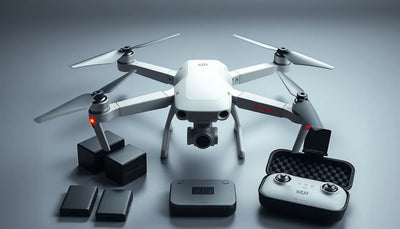
DJI Neo 3 Battery Endurance Questioned in Early Comparison Report
A new industry comparison report raises questions about DJI Neo 3 battery endurance versus the Neo 2, pointing to an 11-minute runtime concern. Commercial operators and pre-owned drone buyers should weigh battery performance before committing to fleet purchases or repair decisions.

Quick answer
A geeky-gadgets.com industry report comparing DJI Neo 3 and DJI Neo 2 highlights an 11-minute battery endurance concern on the newer model, raising practical questions for commercial operators and pre-owned drone buyers.
- The report attributes the central battery comparison to geeky-gadgets.com
- The reported 11-minute runtime concern centers on the DJI Neo 3 versus the DJI Neo 2
- No official DJI specification confirmation is included in the source data
- Commercial operators should treat battery endurance as a key procurement and repair variable
Verified facts
DJI buying context
Match product news to hardware you can actually deploy.
Check inspected DJI aircraft, repair support, and trade-in timing before deciding whether to upgrade, repair, or wait.

What the available evidence confirms
| Model | Reported Battery Concern | Source |
|---|---|---|
| DJI Neo 3 | 11-minute battery endurance concern raised in comparison | geeky-gadgets.com report |
| DJI Neo 2 | Used as the baseline comparison model | geeky-gadgets.com report |
A new industry comparison report from geeky-gadgets.com has put the DJI Neo 3 under scrutiny, focusing on what the publication describes as an 11-minute battery flaw when measured against the DJI Neo 2. The report, surfaced through Google News DJI and framed around regulation and policy implications, raises practical questions for commercial drone operators, fleet managers, and buyers evaluating compact DJI platforms for inspection, mapping, or security work.
The central claim in the source material is narrow but commercially significant: battery endurance on the newer Neo 3 may not deliver the runtime improvement that operators typically expect from a model refresh. Because the source data is limited to the geeky-gadgets.com comparison and does not include official DJI specification confirmation, this analysis treats the 11-minute figure as a reported concern rather than a verified manufacturer specification.
What the source report actually says
The geeky-gadgets.com report frames the DJI Neo 3 versus DJI Neo 2 comparison around an 11-minute battery flaw. The phrase itself suggests a runtime limitation that becomes visible in real-world use, where flight time rarely matches laboratory or marketing conditions. For commercial operators, an 11-minute endurance figure matters because it directly affects mission planning, battery inventory requirements, and the total cost per flight hour.
Reboot Hub analysis notes that compact drone platforms like the Neo series are often deployed in short, repeatable inspection cycles rather than long-duration mapping missions. In that context, an 11-minute runtime may be manageable, but it forces operators to carry more batteries, rotate charging cycles more aggressively, and account for faster battery degradation over time. The source does not provide official DJI endurance specifications, so buyers should treat the reported figure as one data point rather than a confirmed product limitation.
Battery endurance and the cost of compact drone operations
Battery performance is one of the most overlooked cost drivers in commercial drone fleets. A platform that delivers shorter flight times per battery increases the number of batteries required to sustain continuous operations, raises charging infrastructure demands, and accelerates the replacement cycle for worn cells. If the DJI Neo 3 battery concern reported by geeky-gadgets.com proves accurate in field use, operators would need to budget for additional genuine OEM spare batteries and more frequent battery health monitoring.
For repair customers, battery issues also create a diagnostic challenge. A drone that appears to have a flight controller or motor problem may actually be suffering from degraded battery performance. Technicians evaluating DJI Neo 3 units for repair should test battery health before replacing more expensive components, because a weak cell can mimic other electrical faults. The reported 11-minute concern reinforces the value of professional battery diagnostics before any major repair decision.
What this means for drone owners and the market
The pre-owned DJI market is highly sensitive to battery reputation. When a model gains a reputation for shorter-than-expected flight times, resale values adjust quickly because buyers factor in the cost of replacement batteries and the risk of purchasing a unit with degraded cells. If the DJI Neo 3 battery concern reported by geeky-gadgets.com becomes widely accepted, pre-owned Neo 3 units may trade at a discount relative to the Neo 2, especially if the older model is perceived as having more predictable endurance. Buyers evaluating Insta360 Patent Hints At Foldable Drone To Rival Dji Neo 2 or similar compact platforms should ask sellers for battery cycle counts and recent flight time logs before committing to a purchase. For owners evaluating service and lifecycle risk, Insta360 Patent Hints At Foldable Drone To Rival DJI Neo 2 explains the relevant repair, parts, resale, or operational path.
Fleet managers should also consider how a reported battery limitation affects total cost of ownership. A drone that requires three battery swaps per hour instead of two changes labor planning, charging logistics, and the number of spare batteries kept in inventory. The source report does not confirm whether the 11-minute figure applies to standard flight conditions, hover testing, or aggressive maneuvering, so operators should validate real-world endurance in their own mission profiles before making procurement decisions.
What operators should verify before buying or repairing
The most practical step for any buyer, pilot, or repair customer is to verify battery performance directly rather than relying on a single comparison report. Request battery cycle counts, test flight time under realistic payload and wind conditions, and inspect whether the unit ships with original DJI batteries or third-party replacements. Third-party cells often underperform genuine OEM batteries and can produce exactly the kind of shortened runtime that the geeky-gadgets.com report describes.
For repair decisions, the reported battery concern suggests that technicians should prioritize battery health testing on DJI Neo 3 units before replacing motors, ESCs, or flight controllers. A professional diagnostic that isolates battery performance can save operators hundreds of dollars in unnecessary component replacements. The source data does not indicate whether DJI has acknowledged the reported endurance issue, so repair customers should treat the comparison as an early signal rather than a confirmed defect pattern.
FAQ
Frequently asked questions
Is the 11-minute DJI Neo 3 battery figure officially confirmed by DJI?
No. The 11-minute battery concern comes from a geeky-gadgets.com comparison report and is not confirmed by official DJI specifications in the source data. Buyers should treat it as a reported observation that requires field validation.
Should fleet operators avoid the DJI Neo 3 based on this report?
Not necessarily. Compact drones are often used for short inspection cycles where 11 minutes per battery is workable. Operators should test the platform in their own mission conditions and budget for additional genuine OEM batteries if endurance is a concern.
How does battery reputation affect pre-owned DJI drone values?
Models with shorter reported flight times tend to trade at a discount because buyers factor in replacement battery costs and degradation risk. Pre-owned DJI Neo 3 buyers should request battery cycle counts and recent flight logs before purchasing.
Which sources support this update?
The article distinguishes reported information from analysis and does not present an unverified source as official confirmation.
What remains subject to change?
Retail pricing, availability, product bundles and regulatory timelines can change. Readers should verify the latest terms with the named retailer, manufacturer or regulator before acting.
How should buyers or operators use this analysis?
Use the verified facts as a starting point, then compare mission fit, lifecycle support, maintenance needs and current procurement terms before making a purchase or fleet decision.
Sources consulted
- geeky-gadgets.com via Google News - primary source
Additional official documentation was not available at publication time.
Reboot Hub Editorial adds buyer, repair, resale, and operational analysis for drone owners. If you spot an error, contact us for correction review through our editorial policy.