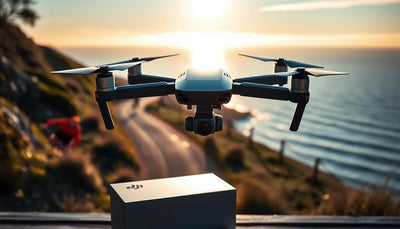
DJI Matrice 30 Thermal Search Finds Missing Autistic Teen in Texas
A Garland, Texas police drone unit located a missing 14-year-old with autism using a DJI Matrice 30 thermal camera, according to DroneXL.co. The case shows how thermal-equipped enterprise drones are becoming routine public safety tools, with direct implications for fleet planning and pre-owned DJI procurement.

Quick answer
A Garland, Texas police drone unit used a DJI Matrice 30 with a thermal camera to locate a missing 14-year-old with autism, as reported by DroneXL.co on November 19, 2026.
- The case was documented in CBS footage showing the M30 flying for the Garland police drone unit
- Thermal imaging was the key sensor that allowed the team to find the missing teenager
- The event reinforces how thermal-equipped enterprise drones are becoming standard public safety tools
- For buyers and fleet operators, thermal capability is now a practical procurement filter rather than an optional upgrade
Evidence: DroneXL.co
Fleet readiness
Keep DJI hardware available without overbuying new units.
Use defense and fleet news as a planning signal for repair support, inspected pre-owned aircraft, and replacement timing.

A missing 14-year-old with autism was found by the Garland, Texas police drone unit using a DJI Matrice 30 equipped with a thermal camera, according to reporting by DroneXL.co published on November 19, 2026. CBS footage showed the M30 in flight during the operation, providing a rare visual record of a thermal drone deployment in an active search-and-rescue scenario.
The case is notable less for the hardware itself than for what it signals about how thermal-equipped enterprise drones have moved from specialized military and industrial use into routine municipal public safety work. For commercial operators, fleet managers, and buyers evaluating pre-owned DJI aircraft, the Garland outcome offers a concrete data point on why thermal payload capability increasingly drives procurement decisions.
The operational detail that matters
The central verified fact is narrow but significant: a DJI Matrice 30 flew for the Garland police drone unit and the team located the missing teenager using thermal imaging. DroneXL.co attributed the account to CBS footage, which documented the M30 in operation. The reporting does not specify flight duration, altitude, time of day, or the exact thermal signature that led to the discovery, so those operational specifics remain outside what this analysis can confirm.
What the source does establish is that a thermal-equipped M30 was the platform in use, and that thermal imaging was the sensor that produced the result. For operators who have debated whether thermal capability justifies the added cost on an enterprise airframe, this is the kind of field outcome that procurement committees cite when approving budgets. Thermal is not a novelty feature in public safety; it is the reason the aircraft gets launched at all in low-light or vegetation-covered search areas.
The Matrice 30 sits in DJI's enterprise line as a compact platform designed for rapid deployment, but this article does not rely on manufacturer specifications beyond what the source directly supports. The relevant commercial point is simpler: agencies are flying thermal-equipped M30 units in live missing-person cases, and those cases are being documented by mainstream broadcast media.
Why thermal capability is reshaping fleet planning
Public safety agencies have been among the most consistent adopters of thermal drone technology, and the Garland case reinforces a pattern that fleet managers should track. When a department demonstrates a successful thermal find, neighboring agencies often accelerate their own drone programs or upgrade existing visual-only aircraft. That dynamic affects both new-unit sales and the pre-owned market, where thermal-equipped enterprise drones tend to hold value differently than camera-only models.
For a commercial operator or municipal buyer, the practical takeaway is that thermal payload compatibility should be evaluated at the point of airframe selection, not added later as an afterthought. A drone purchased without thermal capability may be cheaper upfront, but it can become a stranded asset if the mission set expands into search, inspection, or perimeter security work where heat signatures are the primary data source.
The Garland case also highlights a quieter operational reality: thermal search missions are often time-sensitive and weather-dependent. Agencies that can deploy quickly with a platform already configured for thermal work have a measurable advantage over those that need to reconfigure or borrow equipment. That operational tempo shapes how departments think about spare aircraft, battery stock, and repair turnaround times.
What this means for drone owners and the market
For individual owners and small fleet operators, the Garland outcome is a reminder that enterprise drones with thermal payloads are not confined to large metropolitan departments or federal agencies. Municipal police units in mid-sized Texas cities are flying them, and the results are being reported as routine public safety news rather than experimental technology demonstrations. That normalization has commercial consequences.
Buyers in the pre-owned DJI market should pay close attention to thermal-equipped Matrice and similar enterprise listings, because mission-proven thermal platforms tend to move quickly when public safety budgets are active. A pre-owned M30 or comparable thermal aircraft that has been properly inspected and comes with genuine OEM spare parts availability can be a practical entry point for departments or commercial operators that cannot justify a new-unit purchase. Readers evaluating repair and parts support for thermal enterprise drones can use the Drone Wiki as a reference point for understanding platform-specific maintenance considerations.
The market signal here is not about a single rescue, but about sustained demand. Thermal-equipped enterprise drones are being used in real missions, documented by broadcast media, and absorbed into standard public safety workflows. That visibility supports resale liquidity for thermal platforms and reinforces the case for keeping repair and parts pipelines healthy for the Matrice line and similar enterprise airframes. For owners evaluating service and lifecycle risk, Drone Wiki explains the relevant repair, parts, resale, or operational path.
For a fleet manager or solo operator, the action item after reading this is straightforward: if your mission set includes any scenario where a person, animal, or equipment fault might need to be located by heat signature, evaluate thermal capability as a core requirement rather than an optional upgrade. The cost difference is real, but the Garland case shows what the capability is actually for.
The broader public safety drone trajectory
The Garland event fits into a larger, well-documented trend of U.S. police departments expanding drone units for search and rescue, suspect tracking, and disaster response. DroneXL.co has covered numerous similar deployments, and the Texas case adds another data point to that record. What makes this particular incident commercially relevant is the combination of a specific DJI enterprise model, a thermal sensor, and a successful outcome that was captured on broadcast footage.
For the pre-owned DJI market, public safety adoption has a secondary effect: it creates a pipeline of agency-owned aircraft that eventually cycle into the secondary market as departments upgrade or rotate equipment. Those aircraft often carry the maintenance records and usage patterns that commercial buyers value, provided the units have been properly inspected and supported with genuine OEM spare parts. Buyers should still verify flight hours, sensor condition, and battery health on any pre-owned thermal platform, regardless of the seller's stated history.
The Garland case does not by itself change regulations, pricing, or supply chains. But it adds public evidence that thermal drone capability is operationally valuable in time-critical civilian scenarios. That evidence accumulates over time and shapes how agencies, insurers, and commercial operators think about the cost of thermal-equipped enterprise aircraft.
FAQ
Frequently asked questions
What drone was used in the Garland, Texas missing person case?
According to DroneXL.co reporting on November 19, 2026, the Garland police drone unit used a DJI Matrice 30 equipped with a thermal camera to locate the missing 14-year-old.
Why does thermal capability matter for drone buyers?
Thermal imaging allows operators to locate people, animals, or equipment faults by heat signature in low-light or obscured conditions. The Garland case shows thermal-equipped enterprise drones being used successfully in a real, time-sensitive public safety mission.
Should fleet managers prioritize thermal-equipped enterprise drones?
If the mission set includes search, inspection, or perimeter security, thermal capability should be treated as a core requirement. Aircraft purchased without thermal support may become stranded assets if operational needs expand into heat-signature work.
Which sources support this update?
The visible evidence links identify DroneXL.co; each source is used only for the claim it directly supports.
What remains subject to change?
Retail pricing, availability, product bundles and regulatory timelines can change. Readers should verify the latest terms with the named retailer, manufacturer or regulator before acting.
How should buyers or operators use this analysis?
Use the verified facts as a starting point, then compare mission fit, lifecycle support, maintenance needs and current procurement terms before making a purchase or fleet decision.
Sources consulted
- DroneXL.co - primary source
Additional official documentation was not available at publication time.
Reboot Hub Editorial adds buyer, repair, resale, and operational analysis for drone owners. If you spot an error, contact us for correction review through our editorial policy.