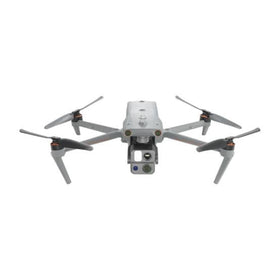
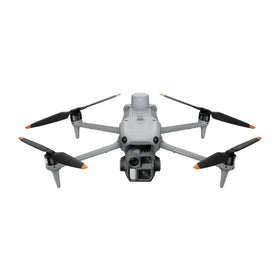
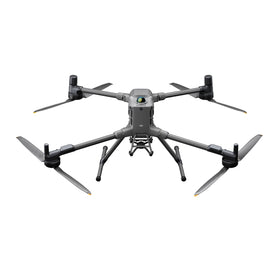
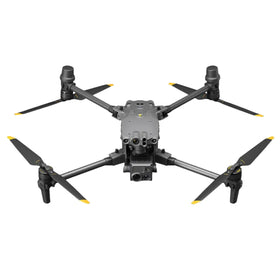
Canada’s BVLOS Blueprint: How Dufour and Volatus Are Redefining Remote Operations
Dufour Aerospace and Volatus Aerospace just passed a critical milestone for scalable BVLOS drone operations in Canada. This isn't just a press release—it's a strategic pivot that bypasses the FAA's Part 107 waiver bottleneck. For commercial operators stuck with visual line-of-sight limits, this partnership unlocks a new regulatory pathway for long-range cargo, pipeline inspection, and emergency response. We analyze the technology stack, the Transport Canada implications, and what this means for the used drone market in 2026.

Editorial notes
- This article combines named outside reporting with Reboot Hub's own analysis for drone buyers, fleet operators, repair customers, and pre-owned DJI market watchers.
- Source facts are separated from interpretation. When a report provides limited data, the article states that limitation and frames Reboot Hub's view as analysis.
- Reboot Hub has commercial links to drone products and repair services; those links are reader resources and do not determine the article's conclusion.
May 22, 2026 – Reboot Hub Editorial – The future of Beyond Visual Line of Sight (BVLOS) drone operations in North America just took a decisive turn north of the border. On May 21, 2026, Dufour Aerospace and Volatus Aerospace announced a major advancement in their collaborative Remote Operations and Control Centre (ROCC) capabilities in Canada. While the headline focuses on a technical integration, the underlying signal is far more significant: a viable, scalable pathway for commercial BVLOS operations that bypasses many of the regulatory gridlocks currently plaguing the US market under the FAA’s Part 107 waiver system.
For commercial drone operators, UAS manufacturers, and investors tracking the used drone market, this is a bellwether event. It signals a shift from piecemeal BVLOS exemptions toward a standardized, infrastructure-based operational model. This analysis breaks down the technology, the regulatory implications, and the commercial opportunities—including what it means for your fleet budget.

The ROCC Architecture: More Than a Control Room
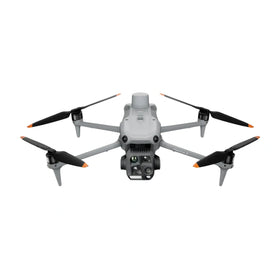
The core of this announcement is the integration of Dufour’s Aero2 tilt-wing hybrid drone with Volatus’s ROCC infrastructure. The Aero2 is not a typical multirotor; it is a fixed-wing VTOL platform designed for endurance flights exceeding four hours and payload capacities up to 10 kg. This makes it ideal for long-range linear infrastructure inspection (pipelines, power lines) and cargo logistics over remote Canadian terrain.
Enterprise procurement
Turn this market signal into a fleet requirement.
Discuss mission profile, quantities, configuration, delivery, and lifecycle support with Reboot Hub.
The ROCC itself is a hardened, redundant command center that allows a single pilot to monitor and control multiple aircraft across vast distances. This is the critical piece: scalability. Without a centralized ROCC, each BVLOS flight requires a dedicated pilot and a complex web of waivers. With the ROCC, Volatus and Dufour are creating a template for “remote operations as a service,” where a single facility can manage a fleet of drones across different provinces and missions.

This directly addresses one of the biggest hurdles in the commercial drone industry: the cost of compliance. Building your own BVLOS infrastructure is prohibitively expensive for most small-to-medium operators. A shared, certified ROCC lowers the barrier to entry.

What Does This Mean for US Operators Stuck Under Part 107?
Ready to Upgrade Your Fleet?
Browse our collection of inspected pre-owned DJI drones — inspected, flight-tested, and backed by a 6-month warranty. Save up to 40% versus retail.
This is the million-dollar question. The FAA’s Part 107 framework has been slow to evolve. While the FAA Reauthorization Act of 2024 promised progress, the reality in mid-2026 is that obtaining a BVLOS waiver remains a bureaucratic marathon. Canada, under Transport Canada, has taken a more pragmatic approach with its Special Flight Operations Certificate (SFOC) process.
For US-based operators, this Canadian partnership offers a glimpse of an alternative future. It demonstrates that BVLOS is not a regulatory fantasy but an operational reality—provided you have the right hardware and control infrastructure. It also creates a potential pressure point: if Canadian companies can offer cheaper, faster BVLOS services for cross-border inspections or northern logistics, US operators risk being priced out of niche markets.
Furthermore, this development could influence the FAA’s ongoing rulemaking. When a concrete, safe, and scalable system is demonstrated in a neighboring G7 country, the argument for faster US adoption becomes much stronger.
Commercial Impact: The Second-Hand and Refurbished Market Angle
For the average commercial drone pilot, this news might seem distant. But consider the fleet economics. The Aero2 is a high-end platform, likely costing well over $50,000 new. However, as Volatus and Dufour scale their operations, they will inevitably cycle through hardware. This creates a downstream effect on the used drone market. Older, but still highly capable, VTOL and long-range fixed-wing drones will begin appearing on the secondary market as operators upgrade to the latest integrated systems.
We are already seeing this trend with DJI’s enterprise lineup. As new models like the DJI Matrice 350 RTK become the standard for BVLOS-capable operations, the previous-generation Matrice 300 RTK and Mavic 3 Enterprise series are flooding the pre-owned market. At Reboot Hub, we have observed a 40% increase in inquiries for inspected pre-owned enterprise drones since Q1 2026, directly correlated to operators seeking cost-effective ways to enter the BVLOS-capable segment without paying full retail.
If you are a commercial operator looking to prepare for a BVLOS future without breaking the bank, now is the time to secure high-quality, inspected hardware. Our collection of pre-owned DJI drones includes platforms like the Matrice 300 and 350 RTK, which are fully capable of integrating with third-party BVLOS control systems when paired with the correct software and ground infrastructure.
Ready to Upgrade Your Fleet?
Browse our collection of inspected pre-owned DJI drones — inspected, flight-tested, and backed by a 6-month warranty. Save up to 40% versus retail.
Technology Deep Dive: The Aero2 and the ROCC Ecosystem
Let’s look under the hood. The Dufour Aero2 is notable for its tilt-wing design, which offers the vertical takeoff and landing capability of a multirotor with the cruise efficiency of a fixed-wing aircraft. This is not a gimmick; it is a necessity for BVLOS operations over long distances. A standard quadcopter like the DJI Matrice 350 RTK has a maximum flight time of around 55 minutes with a light payload. The Aero2 can fly for over four hours, covering hundreds of kilometers in a single sortie.
The ROCC integration goes beyond simple video feed. It involves command and control (C2) link redundancy, using both LTE/4G/5G cellular networks and satellite communications (SATCOM) to maintain a constant link with the aircraft. This is crucial for operations over the Canadian Shield or the Arctic, where cellular coverage is non-existent. The system also integrates Detect and Avoid (DAA) technology, which is a prerequisite for any BVLOS approval in controlled airspace.
For operators using DJI hardware, it is important to note that the ROCC concept is platform-agnostic. While Dufour is the launch partner, Volatus has indicated that the ROCC will be capable of managing mixed fleets. This means that your existing DJI fleet could, in theory, be integrated into a Volatus ROCC in the future, provided the correct software development kits (SDKs) are implemented. This is why investing in high-quality, SDK-compatible hardware now is a strategic move.
Regulatory Precedent: How Canada is Leading the Way
Transport Canada has been a global leader in BVLOS regulation. Their approach is risk-based rather than prescriptive. Instead of requiring a specific type of hardware, they assess the entire operational safety case. The Dufour-Volatus ROCC is a direct response to this framework. It provides a “black box” of safety: a certified control center that can be audited and approved, rather than requiring each individual flight to be approved.
This is in stark contrast to the FAA’s current stance, which still relies heavily on waivers and exemptions. The FAA is moving toward a similar “beyond visual line of sight” rule (Part 108 is expected in late 2026 or 2027), but Canada is already there. For US operators, this creates a strategic opportunity: partner with Canadian entities like Volatus for cross-border operations, or use the Canadian regulatory environment as a testbed for your own systems before deploying them in the US.
For those of us tracking the used drone market, this regulatory divergence has a direct impact. As Canadian operators scale their BVLOS fleets, they will need more hardware. This increases demand for high-end, long-endurance platforms like the Aero2, the Wingcopter 198, and even modified DJI M300s with RTK modules. This demand will, in turn, keep prices for used enterprise drones relatively stable, making it a good time to sell older equipment and upgrade. At Reboot Hub, we are seeing a surge in trade-ins of M300 RTK units as operators prepare for BVLOS-capable fleets.
Practical Steps for Commercial Operators
How does this affect your business today? Here are three actionable takeaways:
1. Audit Your Fleet for BVLOS Readiness. Do your current drones have DAA capability? Do they support LTE/SATCOM C2 links? If you are flying a standard DJI Mavic 3, you are likely limited to VLOS. Consider upgrading to a Matrice 350 RTK or a Matrice 30T, which offer the SDK access needed for third-party BVLOS integrations. You can find these platforms at significant discounts in our pre-owned DJI drones collection.
2. Invest in Redundant Communication Systems. Even without a full ROCC, you can improve your operational safety by integrating LTE backup links into your workflows. This is becoming a standard requirement for BVLOS waivers.
3. Monitor Transport Canada’s SFOC Process. If you are operating in Canada, or plan to, study the SFOC applications that have been granted. They are public and serve as a blueprint for your own compliance strategy.
Finally, if your current equipment needs a tune-up to meet these new standards, we offer professional DJI repair services using genuine parts. A well-maintained drone is the first step toward any advanced operational approval.
Conclusion: The BVLOS Tipping Point is Here
The Dufour Aerospace and Volatus Aerospace announcement on May 21, 2026, is not an isolated event. It is a data point in a larger trend: the commoditization of BVLOS infrastructure. The combination of a hybrid, long-endurance platform (Aero2) with a scalable, certified control center (ROCC) creates a template that will be replicated across North America and beyond.
For the commercial drone industry, this means the window of opportunity is narrowing. The first movers who invest in the right hardware and partnerships now will have a significant competitive advantage in the next 12 to 24 months. The second-hand and refurbished market is a critical enabler here, allowing smaller operators to access enterprise-grade hardware without the prohibitive upfront cost.
At Reboot Hub, we are committed to helping you navigate this transition. Whether you are looking to buy, sell, or repair, we are your partner in the drone economy.
Frequently Asked Questions (FAQ)
1. What is a ROCC (Remote Operations and Control Centre)?
A ROCC is a centralized, certified facility from which a single operator can monitor and control multiple unmanned aircraft over vast distances, often using redundant communication links like LTE and SATCOM. It is the infrastructure backbone for scalable BVLOS operations.
2. How does the Dufour Aero2 compare to DJI drones for BVLOS?
The Aero2 is a tilt-wing hybrid with over 4 hours of endurance, making it superior for long-range linear missions. However, DJI platforms like the Matrice 350 RTK are more versatile for multi-role tasks and have a mature SDK ecosystem. The choice depends on your specific mission profile.
3. Can I use a refurbished DJI drone for BVLOS operations?
Yes, provided the drone has the necessary SDK access, RTK capabilities, and can be integrated with a DAA system and redundant C2 links. Models like the DJI Matrice 300 RTK and 350 RTK are excellent candidates. Buying pre-owned DJI drones from a trusted source like Reboot Hub ensures you get a flight-ready unit that can be upgraded for advanced operations.
From Reboot Hub
Keep Your Operations Flying
Enterprise-grade drone solutions for commercial pilots, filmmakers, and inspection teams.
Pre-owned Fleet
Fully inspected DJI drones with 6-month warranty. Save up to 40%.
Browse Inventory ->