Autel vs. FCC, Michigan Drone Bills Stall, and a Thermal Rescue: Your Weekly UAS News Analysis
Autel Robotics launches a legal counter-offensive against the FCC's Covered List, threatening the commercial viability of its entire US drone fleet. Simultaneously, Michigan passes procurement bills but stalls on critical airspace restrictions, creating regulatory whiplash for Part 107 operators. Plus, a thermal drone saves a life in sub-zero conditions. We dissect the immediate implications for fleet managers, second-hand market valuations, and BVLOS planning.

Editorial notes
- This article combines named outside reporting with Reboot Hub's own analysis for drone buyers, fleet operators, repair customers, and pre-owned DJI market watchers.
- Source facts are separated from interpretation. When a report provides limited data, the article states that limitation and frames Reboot Hub's view as analysis.
- Reboot Hub has commercial links to drone products and repair services; those links are reader resources and do not determine the article's conclusion.
The American drone industry entered a new phase of regulatory turbulence this week. As of May 22, 2026, three distinct yet interconnected stories are reshaping the landscape for commercial operators, public safety agencies, and the secondary market for unmanned aircraft. Autel Robotics has officially launched a legal challenge against the Federal Communications Commission's (FCC) "Covered List," a move that could determine the fate of millions of dollars in existing drone inventory. Simultaneously, the Michigan House has passed two drone procurement bills while inexplicably stalling on a third bill concerning airspace restrictions, creating a confusing patchwork of state-level governance. And in a stark reminder of the technology's life-saving potential, a thermal drone located a missing person in freezing temperatures, underscoring the high stakes of these regulatory debates.
For commercial operators flying under FAA Part 107, the convergence of federal litigation and state-level legislative paralysis represents a critical inflection point. The decisions made in the coming weeks will directly impact fleet valuation, compliance costs, and operational freedom. At Reboot Hub, we track these developments not just as news, but as market signals that affect the pre-owned DJI drones and Autel units that power modern aerial operations.

Autel vs. The FCC: A Legal War for Market Access
Autel Robotics' decision to fight back against the FCC's Covered List is the most consequential industry legal action since the original DJI Section 848 challenges. The FCC's Covered List, which effectively bans the authorization of new equipment from certain foreign adversaries-including Chinese drone manufacturers-threatens to render Autel's entire US product line non-compliant for new sales and network access. Autel's legal strategy appears to center on procedural overreach, arguing that the FCC lacks the statutory authority to impose such sweeping bans without direct congressional mandate.
Operator checklist
Turn policy news into a safer fleet decision.
Before changing aircraft, compare repair paths, available DJI inventory, and trade-in timing against the rule change.
The implications for commercial operators are immediate and severe. Any drone operator who purchased an Autel EVO II or EVO Max series unit in the last 18 months is now facing an uncertain future. If the FCC ban is upheld, these aircraft may become unable to obtain new FCC certifications, potentially blocking firmware updates, remote ID compliance modules, and even basic radio frequency operations. For enterprise fleets that have standardized on Autel hardware for inspection, surveying, and public safety work, this represents a potential multi-million-dollar asset impairment event.

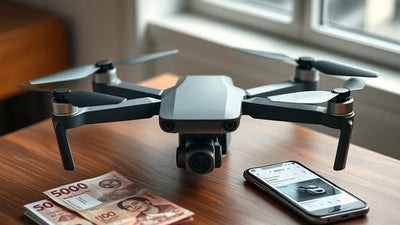
What does this mean for the second-hand market? The uncertainty is already depressing resale values for Autel equipment. Sellers are flooding online marketplaces, while buyers are adopting a wait-and-see approach. This creates a unique arbitrage opportunity for savvy buyers who believe Autel will prevail or that a legislative fix will emerge. At Reboot Hub, we are seeing increased inquiries about trade-in values for Autel units against DJI alternatives. The used drone market is currently pricing in a 15-25% discount on Autel hardware compared to equivalent DJI models, reflecting this regulatory risk premium.
For everyday drone pilots, the key takeaway is diversification. Relying on a single OEM-especially one caught in a geopolitical crossfire-is a high-risk strategy. Commercial operators should be building fleets that include both DJI and non-Chinese alternatives like Skydio or Teal, hedging against regulatory shocks. The Autel fight is a reminder that "compliance" is a moving target in this industry.

Ready to Upgrade Your Fleet?
Browse our collection of inspected pre-owned DJI drones - inspected, flight-tested, and backed by a 6-month warranty. Save up to 40% versus retail.
Michigan's Split Decision: Procurement Passes, Airspace Stalls
Ready to Upgrade Your Fleet?
Browse our collection of inspected pre-owned DJI drones - inspected, flight-tested, and backed by a 6-month warranty. Save up to 40% versus retail.
In Lansing, the Michigan House has created a legislative paradox. Two bills aimed at streamlining state and local government procurement of drones have passed with bipartisan support, signaling a recognition that public agencies need clearer pathways to acquire UAS technology. These bills standardize bidding processes, set minimum performance requirements, and establish vendor qualification criteria-all positive steps for normalizing drone use in government operations.
However, a third bill-focused on defining and restricting state-level airspace-has stalled. This bill would have established no-fly zones over critical infrastructure, prisons, and large public gatherings, while also attempting to regulate altitudes below the FAA's 400-foot ceiling. The stall is a victory for drone advocacy groups who argued that states lack constitutional authority to regulate navigable airspace, a domain preempted by federal law under the Commerce Clause and the FAA Modernization and Reform Act of 2012.
For commercial operators, this split decision creates operational whiplash. On one hand, the procurement bills could open new government contracts for drone service providers, particularly in mapping, inspection, and emergency response. On the other hand, the stalled airspace bill leaves a regulatory vacuum. Operators flying in Michigan must now navigate a patchwork of local ordinances, some of which may attempt to impose their own restrictions in the absence of state-level clarity. This is a recipe for inconsistent enforcement and potential liability.
The Michigan situation is a microcosm of the national debate. As of May 2026, over a dozen states are considering their own drone legislation, creating a compliance nightmare for national operators. The FAA has consistently maintained that it holds sole authority over airspace management, but states are increasingly testing those boundaries. For fleet managers, the safest approach is to maintain a comprehensive legal compliance system that tracks both federal and state-level changes, and to invest in drones with robust remote ID and geofencing capabilities.
Thermal Drone Saves a Life: The Human Stakes of Regulation
Amidst the legal and legislative battles, a story from the field reminds us why this technology matters. A thermal drone equipped with a high-sensitivity infrared camera located a missing person in sub-zero temperatures in the upper Midwest. The subject, who had been lost for over six hours, was found in a wooded area where ground search teams had already passed. The drone's ability to detect the heat signature through dense brush and snow cover was the decisive factor in the rescue.
This incident underscores the critical role that thermal drones play in public safety operations. Agencies that have invested in platforms like the DJI Matrice 350 RTK with H20T thermal payloads or the Autel EVO Max 4T are seeing tangible returns in saved lives. The rescue also highlights the importance of keeping these aircraft operational and compliant. When a drone is grounded due to a hardware failure or a regulatory compliance issue, the consequences can be measured in human lives.
This is where the second-hand market and professional repair services become a matter of public safety. Agencies operating on tight budgets often turn to the refurbished market to acquire thermal-capable platforms at a fraction of the cost of new units. A refurbishment-labeled DJI drone with a thermal payload can provide the same life-saving capability as a new unit, provided it has been properly inspected and maintained. At Reboot Hub, we ensure every pre-owned aircraft undergoes a rigorous 52-point inspection and flight test before it reaches a first responder's hands.
What These Stories Mean for the Drone Industry
The convergence of these three stories-federal litigation, state legislative gridlock, and a life-saving rescue-paints a complex picture of the UAS industry in mid-2026. The Autel-FCC fight is a high-stakes legal battle that will define the boundaries of federal authority over drone technology. The Michigan situation shows that state-level governance is still in its infancy, with unpredictable outcomes. And the thermal rescue demonstrates that the technology's potential is too great to be held hostage by regulatory uncertainty.
For commercial operators, the path forward requires vigilance and flexibility. Fleets should be diversified across multiple OEMs to mitigate regulatory risk. Compliance systems must be robust enough to track both federal and state-level changes. And investment in high-quality, well-maintained equipment-whether new or refurbished-is non-negotiable. At Reboot Hub, we provide professional DJI repair services to keep your fleet mission-ready, whether you're flying a Matrice 300 for critical infrastructure inspection or a Mini 4 Pro for aerial surveying.
The next 90 days will be pivotal. The Autel case is expected to see preliminary rulings by August 2026. Michigan's legislative session will resume in the fall, with the stalled airspace bill likely to be revisited. And as winter approaches, thermal drones will once again prove their worth in search-and-rescue operations. The industry is at a crossroads, and the decisions made now will echo for years to come.
Frequently Asked Questions
What is the FCC's Covered List and how does it affect drone operators?
The FCC's Covered List is a regulatory designation that prohibits the authorization of new equipment from companies deemed to pose a national security risk, including certain Chinese drone manufacturers. For operators, this means that new Autel or DJI drones may not receive FCC certification for radio frequency use, potentially blocking sales, firmware updates, and network connectivity. Existing units are generally grandfathered, but future compliance is uncertain.
How does the Michigan legislative situation affect commercial drone pilots?
The passage of procurement bills in Michigan opens opportunities for drone service providers to win government contracts for mapping, inspection, and public safety work. However, the stalled airspace restrictions bill leaves a regulatory vacuum, meaning operators must still comply with local ordinances and FAA regulations. National operators should monitor Michigan's legislative developments closely and consult legal counsel before operating in the state.
Why is the second-hand drone market relevant to the Autel-FCC legal case?
The uncertainty surrounding Autel's future in the US market is already depressing resale values for Autel drones. Sellers are offering units at 15-25% discounts compared to equivalent DJI models. This creates an opportunity for buyers who believe Autel will prevail or that a legislative fix will emerge. However, it also means that Autel owners may face significant asset depreciation if the ban is upheld. Diversifying fleets across multiple OEMs is the safest strategy.
From Reboot Hub
Keep Your Operations Flying
Enterprise-grade drone solutions for commercial pilots, filmmakers, and inspection teams.
Pre-owned Fleet
Fully inspected DJI drones with 6-month warranty. Save up to 40%.
Browse Inventory ->