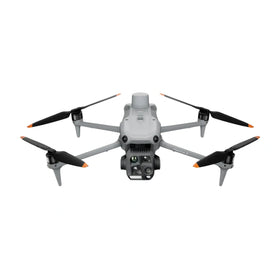
Anduril Bolt Drone’s Iron Test: The Iran War Proved Schimpf Right – What It Means for Commercial UAVs
The Anduril Bolt drone’s 85-degree dive with a three-pound tungsten warhead reshapes defense procurement and sends shockwaves through the commercial drone market. With BVLOS now proven in live combat and export restrictions tightening, second-hand DJI fleets face new regulatory pressure. This analysis decodes the crisis and reveals the opportunity for savvy operators.

Editorial notes
- This article combines named outside reporting with Reboot Hub's own analysis for drone buyers, fleet operators, repair customers, and pre-owned DJI market watchers.
- Source facts are separated from interpretation. When a report provides limited data, the article states that limitation and frames Reboot Hub's view as analysis.
- Reboot Hub has commercial links to drone products and repair services; those links are reader resources and do not determine the article's conclusion.
On a restricted West Texas test range, Brian Schimpf—the 42-year-old CEO of Anduril Industries—handed a reporter a three-pound tungsten warhead and then watched as an Anduril Bolt drone surged into the sky, pitched forward into an 85-degree dive, and smashed into a barren hillside. That moment, detailed in a new Fortune profile dated June 2026, is more than a glamour shot of America’s most-watched defense startup. It is the physical embodiment of a nine-year prophecy: the U.S. military is facing a munitions crisis, and the Iran War has just proven Brian Schimpp right.

The implications extend far beyond the Pentagon and the battlefields of the Middle East. For the commercial UAV industry, the Bolt’s combat-ready debut signals a fundamental shift in how drones are designed, procured, and regulated—and it creates both risk and opportunity for everyone from Part 107 operators to second-hand drone dealers.
The Anduril Bolt Drone: Redefining Precision Strike at Low Cost
Anduril’s Bolt is not a multirotor crop-spraying quadcopter. It is a tube-launched, autonomously guided fixed-wing loitering munition—what generals call a “suicide drone.” The test featured a three-pound warhead made of dense tungsten alloy, designed to penetrate hardened targets. At 85 degrees, the Bolt doesn’t just glide; it dives near-vertically, using onboard computer vision to lock onto a target and correct its trajectory in real time. Anduril claims the entire system—drone, launcher, ground station, and software—costs a fraction of a single Javelin missile or Hellfire missile, and can be produced in days rather than months.
Fleet readiness
Keep DJI hardware available without overbuying new units.
Use this news as a planning signal for inspected DJI aircraft, repair support, and trade-in timing.
“The Bolt is a direct response to the inefficiency of legacy precision munitions,” Schimpf told Fortune. “We’ve been warning for nearly a decade that the industrial base cannot outrun demand in a real war. The Iran conflict has proved that warnings were not alarmist.” His argument is simple: the U.S. military stockpiles $100,000+ missiles to destroy $10,000 trucks. A $20,000 Bolt can do the same job, and at scale.
That logic is already reshaping Pentagon procurement. In early 2026, the Department of Defense announced a “commodity munitions” category, specifically creating a rapid acquisition pathway for attritable drones like the Bolt. The Iran War—where U.S. forces have expended thousands of precision missiles against small mobile targets—has emptied warehouse shelves and forced commanders to ration expensive ordnance. The Bolt is being rushed into operational testing with CENTCOM.
How the Iran War Validated Schimpf's Nine-Year Warning
Schimpf has been sounding the alarm since 2017, when he co-wrote internal memos warning that the military’s over-reliance on exquisite, boutique munitions would break in a high-intensity conflict. The Iran War, which escalated in late 2025 after Iran’s ballistic missile attacks on Gulf oil infrastructure, has been that conflict. By June 2026, U.S. forces have launched over 7,000 air-to-ground and surface-to-surface missiles in operations against Iranian drone bases, naval vessels, and mobile launch sites. Half of those munitions were launched in the last three months—a pace that has depleted Tomahawk, JASSM, and Hellfire inventories to crisis levels.
“The Iran War is a field test for the exact scenario Schimpf described,” said Dr. Elara Vance, a defense procurement analyst at the Center for Strategic and Budgetary Assessments. “The Bolt represents a philosophical pivot from ‘minimum acceptable cost per kill’ to ‘maximum scalable volume per dollar.’” The Pentagon has already ordered over 4,000 Bolts under an urgent operational need statement, with delivery scheduled for late 2026.
Ready to Upgrade Your Fleet?
Browse our collection of inspected pre-owned DJI drones — inspected, flight-tested, and backed by a 6-month warranty. Save up to 40% versus retail.
Implications for Commercial Drone Operators and the Second-Hand Market
While the Bolt is a military-specific system, its success has immediate downstream effects for civilian UAV operators. First, the mass production of attritable drones drives down component costs across the supply chain—motors, batteries, flight controllers, and combustion engines will become cheaper and more available. Second, the U.S. Department of Defense’s aggressive adoption of low-cost kill drones is accelerating a regulatory push to relax BVLOS rules for security applications, which will inevitably trickle down to commercial aerial surveying, inspection, and mapping missions.
However, the most direct impact is on the second-hand drone market. As military drone fleets burgeon and older DJI-platform systems are replaced by purpose-built defense units, thousands of formerly government-owned pre-owned DJI drones are entering the used market. This creates a buyer’s opportunity for commercial operators who need cost-effective hardware for mapping and inspection work, but it also introduces stricter end-user and export controls. The U.S. Department of Commerce’s Bureau of Industry and Security (BIS) has expanded its Entity List to include any drone that can carry an explosive payload, and even civilian cameras above 50mm equivalent focal length are now trigger points for export licenses.
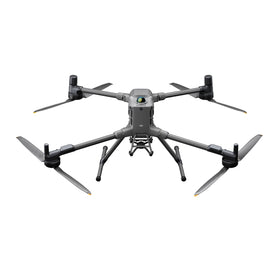
“Every commercial pilot flying a DJI Matrice 350 RTK should be aware that the same autopilot fundamentals underpinning the Bolt are now being used to justify tighter restrictions on all autonomous UAVs,” said Reboot Hub’s head of market analysis. “If you’re operating a high-end mapping drone near sensitive infrastructure, you need to ensure your firmware is fully compliant with the new C-UAS detection standards.”
The Future of UAV Procurement: From Cost-Plus to Speed and Affordability
Anduril’s triumph in the Iran War is not just a story about a single drone. It represents an institutional shift in how the U.S. military—and its allies—will buy drones for the next decade. Traditional defense primes like Lockheed, Boeing, and General Atomics built their businesses around selling 50 high-end drones at multimillion-dollar units per year. Anduril’s Bolt model sells 50,000 drones at a few thousand dollars each. The warhead itself is a simple chunk of machined tungsten, not a complex shaped charge. The value is in the software—autonomy, target recognition, and swarm algorithms.
For commercial operators, this rapid commoditization of drone hardware means that the second-hand supply of professional-grade multirotors will continue to expand. In parallel, demand for teleoperations and remote piloting skills—the same software defined by Schimpf’s team—will skyrocket. Companies like Reboot Hub are already seeing a surge in interest for used drone market listings, particularly for drones with aftermarket autonomy kits or security-focused payloads. The key differentiator is no longer the airframe’s sticker price, but the reliability of its flight controller and the firmware update path.
At the same time, the Iran War has highlighted the vulnerability of commercial drone supply chains. DJI, the world’s largest consumer drone manufacturer, has faced renewed calls for a complete ban on its products in U.S. government contracts, following reports that Iranian forces used modified DJI Quadruple Sensors to guide part of their drone defense network. This has led to a spike in demand for pre-owned DJI drones among NGOs and contractors who cannot afford new American-made alternatives but need to stay compliant with latest Federal Acquisition Regulation (FAR) clauses. Reboot Hub’s inspected and flight-tested units, backed by a 6-month warranty, fill that gap perfectly.
Frequently Asked Questions
1. What does the Anduril Bolt drone test mean for Part 107 commercial drone pilots?
The explicit use of autonomous dive profiles and computer vision targeting in a combat-validated system will likely influence FAA rulemaking on BVLOS operations. Pilots running mapping missions with RTK or PPK workflows should expect expanded BVLOS waivers by 2027, as the technology has been proven safe in much higher-stress scenarios. However, the same technology also raises privacy and security concerns that may lead to stricter camera resolution caps on imported drones.
2. Should I worry about resale value of my DJI drone after the Iran War?
Short-term volatility is expected. The influx of government-surplus DJI drones could depress prices for standard units, but demand for inspected, firmware-clean, and radar-responsive models remains strong. refurbishment-labeled drones from reputable sources like Reboot Hub maintain better value because they include documented compliance with the latest cybersecurity directives (NDAA Section 848). If you plan to sell, working with a dedicated reseller or repair partner is advised.
3. How can I upgrade my fleet to meet new defense-driven security requirements?
Operators flying near critical infrastructure or performing sensitive government contracts should invest in flight controllers with encrypted telemetry and visual spectrum cameras with 50mm-equivalent or shorter focal lengths. If your current fleet lacks these features, consider a trade-in for a refurbishment-labeled DJI drone that already meets updated export and compliance standards. Alternatively, professional DJI repair services can retrofit your existing airframe with compliant components.
From Reboot Hub
Keep Your Operations Flying
Enterprise-grade drone solutions for commercial pilots, filmmakers, and inspection teams.
Pre-owned Fleet
Fully inspected DJI drones with 6-month warranty. Save up to 40%.
Browse Inventory ->