UAS Sentry Shows Portable Dual-Band Remote ID Drone Detector
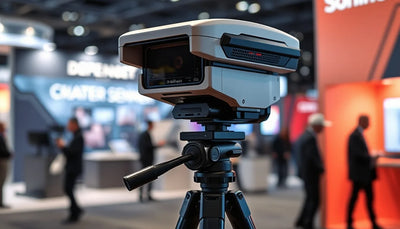
UAS Sentry introduced the Nexus Observer, a portable dual-band detection system for 2.4 GHz and 5.8 GHz Remote ID signals, at Commercial UAV Expo. The launch points to growing demand for mobile counter-UAS awareness tools among security teams and commercial operators.

Quick answer
UAS Sentry unveiled the Nexus Observer, a portable dual-band Remote ID drone detection system, at Commercial UAV Expo.
- The system monitors 2.4 GHz and 5.8 GHz Remote ID signals
- It uses two antennas, two dedicated processors, and scanning algorithms
- The launch was reported by SUAS News from Commercial UAV Expo
- The product targets portable drone detection needs
Evidence: SUAS News · FAA UAS official guidance · DIU Blue UAS
Operator checklist
Turn policy news into a safer fleet decision.
Before changing aircraft, compare repair paths, available DJI inventory, and trade-in timing against the rule change.

Verified facts
What the available evidence confirms
| Feature | Reported Detail |
|---|---|
| Product name | Nexus Observer |
| Frequency bands | 2.4 GHz and 5.8 GHz |
| Hardware | Two antennas, two dedicated processors |
| Event | Commercial UAV Expo |
UAS Sentry used Commercial UAV Expo to introduce the Nexus Observer, a portable dual-band drone detection system built around two antennas, two dedicated processors, and scanning algorithms tuned for Remote ID signals in the 2.4 GHz and 5.8 GHz bands. The launch was reported by SUAS News, which described the system as a portable solution for detecting drones broadcasting Remote ID information.
The announcement matters because it reflects a broader shift in the counter-UAS and airspace awareness segment: detection capability is moving out of fixed installations and into smaller, transportable packages. For commercial operators, security integrators, and fleet managers, that portability changes where and how drone activity can be monitored.
What the Nexus Observer announcement actually says
According to SUAS News, the Nexus Observer combines two antennas and two dedicated processors to scan the 2.4 GHz and 5.8 GHz bands used by Remote ID broadcasts. The report emphasizes the portable form factor and the scanning algorithms as core elements of the design. UAS Sentry presented the system at Commercial UAV Expo, a venue that draws commercial operators, enterprise buyers, and public safety teams.
The source report does not provide detailed specifications on detection range, battery life, weight, or pricing. Reboot Hub analysis: the absence of those figures means buyers should treat the announcement as an early product introduction rather than a fully documented procurement option. The practical takeaway is that dual-band Remote ID detection is becoming a product category, not just a feature inside larger fixed-site counter-UAS platforms.
Why portable Remote ID detection is becoming a market signal
Remote ID compliance has pushed more drones to broadcast identification and location data in the 2.4 GHz and 5.8 GHz bands. That regulatory shift created a detection surface that did not exist at scale a few years ago. A portable system like the Nexus Observer suggests vendors see demand from users who need to understand drone activity at temporary sites, events, or field operations rather than only at permanent facilities.
For commercial drone operators, this cuts two ways. First, security teams and venue operators may increasingly adopt portable detection tools to monitor airspace around sensitive or crowded locations. Second, operators flying compliant Remote ID drones should assume their broadcasts can be received by more than just regulators. The SUAS News report does not confirm specific customer segments, but the product category itself points toward event security, critical infrastructure, and mobile field units as likely early adopters.
What this means for drone owners and the market
The Nexus Observer launch reinforces that Remote ID is not only a compliance requirement; it is also a data layer that third parties can monitor. Drone owners flying pre-owned DJI aircraft with Remote ID capability should understand that their flight activity may be visible to portable detection systems operated by security providers, event staff, or infrastructure managers. That visibility is a normal consequence of compliant operation, but it raises practical questions about where and how flights are conducted near sensitive sites. For owners evaluating service and lifecycle risk, Drone Wiki explains the relevant repair, parts, resale, or operational path.
For fleet managers and repair customers, the announcement is a reminder that airspace awareness tools are becoming more accessible and more mobile. A portable dual-band detector could help a fleet operator verify that its own aircraft are broadcasting Remote ID correctly before or during operations. For buyers evaluating pre-owned DJI drones, the relevant question is whether the specific model and firmware support Remote ID in the operator's region, since detection tools like the Nexus Observer are designed to read those broadcasts. Reboot Hub's Drone Wiki offers model-specific context for operators checking Remote ID readiness and pre-owned equipment considerations.
Reboot Hub analysis: The commercial impact is likely to be gradual. Portable detection systems do not change Remote ID rules, but they expand the number of parties who can observe compliant broadcasts. Operators who already follow airspace rules should see little operational change. Those flying older or non-compliant hardware may face more scrutiny as detection tools become cheaper and more portable.
What operators should watch next
The most important missing information is technical: detection range, sensitivity, false-positive handling, and how the Nexus Observer performs in dense RF environments. SUAS News did not publish those details, so procurement teams should wait for documented specifications or independent testing before comparing the system against fixed-site alternatives.
Operators should also watch whether UAS Sentry positions the Nexus Observer as a standalone product or as part of a larger detection and response ecosystem. The source report describes the hardware and scanning approach but does not confirm integration with alerting platforms, mapping tools, or law enforcement workflows. For commercial buyers, integration capability often matters as much as raw detection performance.
The broader trend is clear: Remote ID has created a new market for drone detection, and that market is now producing portable, dual-band options. Fleet managers, security integrators, and repair providers should treat this as an early signal that airspace monitoring will become more common at temporary sites and field operations, not just at airports and stadiums.
FAQ
Frequently asked questions
What is the Nexus Observer?
The Nexus Observer is a portable dual-band drone detection system introduced by UAS Sentry at Commercial UAV Expo. It uses two antennas, two dedicated processors, and scanning algorithms to detect Remote ID signals in the 2.4 GHz and 5.8 GHz bands.
Does the Nexus Observer change Remote ID rules for drone pilots?
No. The system is a detection tool, not a regulatory change. Drone operators must still follow existing Remote ID requirements in their region. The launch simply means more third parties may have portable tools to observe compliant broadcasts.
Should fleet managers buy portable detection systems now?
Not necessarily. The SUAS News report does not include detection range, pricing, or integration details. Fleet managers should wait for documented specifications and independent testing before comparing the Nexus Observer against fixed-site or integrated detection platforms.
Which sources support this update?
The visible evidence links identify SUAS News and FAA UAS official guidance and DIU Blue UAS; each source is used only for the claim it directly supports.
What remains subject to change?
Retail pricing, availability, product bundles and regulatory timelines can change. Readers should verify the latest terms with the named retailer, manufacturer or regulator before acting.
How should buyers or operators use this analysis?
Use the verified facts as a starting point, then compare mission fit, lifecycle support, maintenance needs and current procurement terms before making a purchase or fleet decision.
Geraadpleegde bronnen
- SUAS News - primary source
- FAA UAS official guidance - official regulator source
De redactie van Reboot Hub voegt analyses toe over aankoop, reparatie, restwaarde en operationele aspecten voor drone-eigenaren. Indien u een fout constateert, neem dan contact met ons op voor een correctiebeoordeling conform ons redactionele beleid.