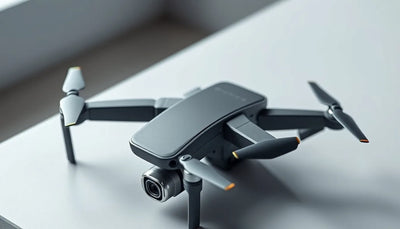
St. Paul Council Withdraws $200K Police Drone Grant Request
St. Paul's city council pulled a $200,000 grant request for expanded police drone operations one week after the deputy chief said no other funding existed. The move leaves the program's near-term growth uncertain and highlights how public drone budgets can shift quickly.

Quick answer
St. Paul's city council withdrew a $200,000 grant request for more police drones one week after the deputy chief said there was no other money to expand the program.
- The withdrawal happened on or around September 10, 2026, according to DroneXL.co.
- The deputy chief had stated there was no alternative funding source for expansion.
- No Plan B funding mechanism was identified in the source report.
- The decision affects near-term growth of St. Paul's police drone fleet.
Evidence: DroneXL.co
Fleet readiness
Keep DJI hardware available without overbuying new units.
Use defense and fleet news as a planning signal for repair support, inspected pre-owned aircraft, and replacement timing.

St. Paul's city council has withdrawn a $200,000 grant request that would have funded additional police drones, according to reporting by DroneXL.co. The decision came roughly one week after the department's deputy chief told the council there was no other money available to expand the program. The withdrawal leaves the city's police drone initiative without a stated near-term funding path for growth.
The development matters beyond Minnesota. Public safety agencies across the United States have been among the most consistent buyers of small unmanned aircraft, and their procurement cycles often shape demand for airframes, batteries, sensors, training, and maintenance. When a city council pulls a grant request after a senior official says no backup funding exists, it signals that even established public drone programs can face abrupt budget friction.
The source report does not identify a replacement funding source, a revised timeline, or a specific fleet size affected. Reboot Hub analysis should therefore treat the operational details as limited. What is clear is that the council's action removed a concrete funding vehicle from the table, and the department's own leadership had already indicated there was no Plan B.
What the St. Paul decision actually changes
DroneXL.co reported that the council withdrew the $200,000 grant request a week after the deputy chief said there was no other money to expand the police drone program. That sequence is important. It suggests the funding gap was known internally before the council acted, and the withdrawal formalized what the department had already signaled.
For commercial operators and fleet managers, the practical lesson is that public drone budgets are rarely locked in until a grant agreement is signed and funds are allocated. A request can be pulled at the council level, a procurement can be delayed, or a program can be paused without a replacement line item. Buyers who assume that announced public safety expansions will automatically convert into orders may be overestimating near-term demand.
The report does not specify which drone models St. Paul uses or intended to purchase, nor does it detail the size of the existing fleet. Without that information, Reboot Hub cannot confirm whether the withdrawn grant would have affected DJI airframes, domestic alternatives, or a mix of platforms. Operators should avoid assuming a direct impact on any specific manufacturer's order book.
What this means for drone owners and the market
Public safety agencies are a meaningful segment of the commercial drone market, but they are also subject to political review in ways that private enterprises are not. A city council can withdraw a grant request, question a procurement, or redirect funds based on public comment, budget priorities, or shifting oversight. That makes public-sector demand less predictable than corporate fleet expansion.
For individual drone owners and small operators, the St. Paul decision is a reminder that institutional buyers do not always follow through on announced plans. A pulled grant does not reduce the supply of used or pre-owned aircraft, but it can soften expectations for downstream inventory from public fleets. When agencies pause expansion, they also tend to hold onto existing airframes longer, which can reduce the flow of surplus equipment into the second-hand market.
Buyers evaluating pre-owned DJI drones or OEM-pulled parts should watch how public fleet decisions affect regional supply. A city that cancels a purchase today may delay replacement cycles tomorrow, and that can shift what becomes available on the secondary market. For a closer look at how fleet decisions and maintenance intersect, the Drone Wiki offers context on ownership and repair planning. For owners evaluating service and lifecycle risk, Drone Wiki explains the relevant repair, parts, resale, or operational path.
The St. Paul case also highlights a broader pattern: public drone programs often depend on grants rather than stable operating budgets. When a grant is withdrawn, the program may continue with existing equipment but lose the ability to add units, upgrade sensors, or expand coverage. Operators who service public agencies should anticipate uneven procurement cycles rather than steady, recurring orders.
Budget risk is a procurement risk
The deputy chief's statement that there was no other money to expand is the most operationally significant detail in the source report. It indicates that the department's growth plan was tied to a single funding source. When a program depends on one grant, the entire expansion is exposed to a single decision point.
Fleet managers in any sector can apply the same logic. A drone program funded through a single grant, a one-time capital allocation, or a discretionary budget line is more fragile than one supported by recurring operational funding. The St. Paul withdrawal is a case study in that fragility, even if the specific dollar amount is modest by enterprise standards.
For repair customers and parts buyers, the implication is indirect but real. Public agencies that cannot expand may extend the service life of existing aircraft. That can increase demand for batteries, propellers, gimbal components, and other consumables, even as new unit sales stall. A paused expansion is not necessarily a paused program.
What buyers and operators should watch next
The source report does not indicate whether the city will pursue a revised grant request, reallocate funds from another line item, or leave the program at its current size. Those next steps will determine whether the withdrawal is a temporary setback or a longer-term cap on the police drone fleet.
Operators who sell to public agencies should track council agendas, grant cycles, and procurement notices rather than relying on initial announcements. A grant request is an intention, not a contract. The St. Paul sequence shows how quickly an intention can be reversed when the funding source is narrow and the political environment shifts.
For the broader pre-owned market, the key variable is whether paused public expansions lead to longer retention of existing aircraft. If agencies hold airframes longer, fewer units enter the secondary market, and pricing for inspected pre-owned DJI drones may stay firmer in regions with active public safety programs. If agencies eventually replace fleets through new funding, the opposite dynamic could occur.
FAQ
Frequently asked questions
Why did St. Paul withdraw the police drone grant?
According to DroneXL.co, the city council withdrew a $200,000 grant request for more police drones about one week after the deputy chief said there was no other money to expand the program. The report does not identify a replacement funding source.
Does this affect DJI drone prices or availability?
The source report does not name any drone manufacturer or model. Reboot Hub cannot confirm a direct impact on DJI pricing or inventory. However, paused public fleet expansions can influence regional secondary market supply over time.
What should fleet managers learn from this decision?
A drone program that depends on a single grant is exposed to a single decision point. Fleet managers should assess whether their expansion plans rely on recurring operational funding or one-time allocations, and plan for procurement delays when funding is narrow.
Which sources support this update?
The visible evidence links identify DroneXL.co; each source is used only for the claim it directly supports.
What remains subject to change?
Retail pricing, availability, product bundles and regulatory timelines can change. Readers should verify the latest terms with the named retailer, manufacturer or regulator before acting.
How should buyers or operators use this analysis?
Use the verified facts as a starting point, then compare mission fit, lifecycle support, maintenance needs and current procurement terms before making a purchase or fleet decision.
Geraadpleegde bronnen
- DroneXL.co - primary source
- DIU Blue UAS - official government source
De redactie van Reboot Hub voegt analyses toe over aankoop, reparatie, restwaarde en operationele aspecten voor drone-eigenaren. Indien u een fout constateert, neem dan contact met ons op voor een correctiebeoordeling conform ons redactionele beleid.