St. Louis Police Drones Arrive Before Officers in 18 of 58 Flights
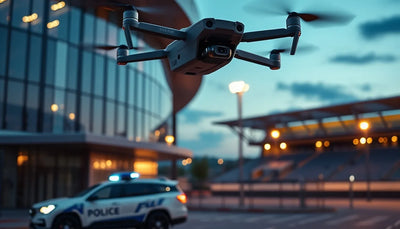
St. Louis police drones beat officers to the scene in 18 of 58 logged flights since early November, according to DroneXL.co reporting on the department's public portal. The data raises fresh questions about video retention policy and operational clarity for municipal drone programs.

Quick answer
St. Louis Metropolitan Police Department logged 58 drone flights since November 4, with drones arriving before officers in 18 cases, and the drone commander is now asking where retention rules could be clearer.
- 58 drone flights logged on the SLMPD public portal since November 4
- Drones beat officers to the scene on 18 of those flights
- The drone commander is asking where rules could be clearer
- Drone video retention policy is one area flagged for review
Evidence: DroneXL.co
Fleet readiness
Keep DJI hardware available without overbuying new units.
Use defense and fleet news as a planning signal for repair support, inspected pre-owned aircraft, and replacement timing.

The St. Louis Metropolitan Police Department has logged 58 drone flights on its public transparency portal since November 4, and in 18 of those flights the drone reached the scene before responding officers. That is the central finding reported by DroneXL.co on November 21, 2026, based on the department's own flight data and public statements from its drone commander.
The detail matters because it moves the conversation past whether police drones are useful and into how they are being deployed, documented, and governed. For municipal fleet operators, the St. Louis data offers a rare window into the operational tempo of a real police drone program, including the gaps between deployment speed, policy clarity, and evidence handling.
What the St. Louis flight data shows
According to DroneXL.co, the SLMPD portal shows 58 drone flights since November 4. The department's drone commander confirmed that drones arrived before officers on 18 of those flights, meaning roughly one in three deployments put an aerial sensor on scene ahead of ground units. That is a meaningful operational pattern, not an outlier.
The reporting also notes that the commander is asking where rules could be clearer, with drone video retention identified as one area of concern. This is not a claim that the department violated policy. It is an internal signal that the program is moving faster than some of its administrative guardrails. For public safety agencies, that gap between flight tempo and retention standards is becoming a recurring theme as drone programs scale.
What remains unclear from the source data is the type of incidents involved, the drone models used, the flight durations, and whether the 18 early-arrival flights shared common characteristics. DroneXL.co does not provide that breakdown, and Reboot Hub has not independently verified the portal data. The value here is the pattern itself: a municipal agency is now generating enough flight volume that deployment speed and evidence governance are being discussed in the same breath.
Why retention policy is the pressure point
Drone video retention is not a dry administrative detail. It determines how long footage is stored, who can access it, when it must be deleted, and whether it can be used in court, public records requests, or internal reviews. When a drone arrives before officers, it may capture the earliest available footage of an incident. That footage can become the most important evidence in a case, and the most contested record in a public disclosure request.
The St. Louis commander's question about clearer rules reflects a broader tension in municipal drone programs. Agencies want to deploy quickly for officer safety and situational awareness, but retention policies often lag behind operational reality. A drone that beats officers to a scene is doing exactly what it was designed to do. The question is whether the agency's storage, tagging, and deletion rules are built for that tempo.
For commercial operators watching this space, the retention discussion has indirect but real relevance. Public safety drone programs influence how regulators, insurers, and enterprise clients think about data governance. When a police department publicly flags retention clarity as an open question, it reinforces the need for every fleet operator to have a written, defensible policy for footage lifecycle management, regardless of sector.
What this means for drone owners and the market
Reboot Hub analysis: For individual drone owners and small commercial operators, the St. Louis story is a reminder that flight data is increasingly public. The department's portal shows flight counts and arrival outcomes, which means municipal drone activity is becoming visible in ways that private operations are not. That transparency trend is likely to expand, and it will shape public expectations about how drones are used in urban airspace.
For fleet managers and procurement teams, the operational detail matters. A program that logs 58 flights in roughly two and a half weeks is running at a pace that demands reliable hardware, spare parts, and repair support. Drones used in public safety roles accumulate hours quickly, and downtime has direct operational consequences. Operators evaluating pre-owned DJI drones or genuine OEM spare parts for municipal or enterprise fleets need to think about sustainment, not just acquisition. The Reboot Hub Drone Wiki offers reference material for operators weighing repair and parts decisions across different DJI platforms.
The pre-owned DJI market is also relevant here, though indirectly. Public safety agencies often run DJI airframes because of their sensor quality, ecosystem maturity, and parts availability. When those agencies scale flight volume, they generate demand for replacement batteries, propellers, gimbal components, and airframe repairs. That demand flows through the same parts and service channels used by commercial operators and individual buyers. A police drone program logging frequent flights is, in market terms, a high-utilization fleet that will need ongoing maintenance. For owners evaluating service and lifecycle risk, Drone Wiki explains the relevant repair, parts, resale, or operational path.
What should a buyer, pilot, or fleet manager do differently after reading this? The practical step is to treat video retention and flight logging as core operational requirements, not afterthoughts. If a public agency with legal staff and policy resources is asking where its retention rules could be clearer, a small commercial operator with no formal policy is exposed to far more ambiguity. Write down how long footage is kept, where it is stored, who can access it, and when it is deleted. That single document is worth more than any hardware upgrade when a client, insurer, or regulator asks questions.
The broader signal for municipal drone programs
The St. Louis data point is small in absolute terms: 58 flights, 18 early arrivals, one commander asking a policy question. But it reflects a maturation pattern that is repeating across public safety drone programs. Agencies start with a pilot project, expand to regular deployment, and then discover that their policies were written for a slower operational tempo.
DroneXL.co's reporting frames the retention question as one of several areas where the commander sees room for clearer rules. That framing matters because it suggests the department is not resisting transparency or policy review. It is actively identifying where its own governance needs to catch up. For vendors, integrators, and service providers working with municipal clients, that is a signal to build policy support into drone program offerings, not just hardware and training.
The commercial drone industry has spent years focused on hardware capability, flight time, camera quality, and regulatory compliance. The St. Louis story is a reminder that the next wave of friction will be administrative: retention schedules, public portal accuracy, data access rules, and audit trails. Operators who treat those as core competencies will be better positioned than those who treat them as paperwork.
FAQ
Frequently asked questions
How many drone flights has St. Louis police logged since November 4?
According to DroneXL.co reporting on the SLMPD public portal, the department has logged 58 drone flights since November 4, 2026.
In how many flights did the drone arrive before officers?
The drone commander reported that drones beat officers to the scene in 18 of the 58 flights, or roughly one in three deployments.
What policy issue did the drone commander flag?
The commander asked where rules could be clearer, with drone video retention identified as one specific area of concern, according to DroneXL.co.
Which sources support this update?
The visible evidence links identify DroneXL.co; each source is used only for the claim it directly supports.
What remains subject to change?
Retail pricing, availability, product bundles and regulatory timelines can change. Readers should verify the latest terms with the named retailer, manufacturer or regulator before acting.
How should buyers or operators use this analysis?
Use the verified facts as a starting point, then compare mission fit, lifecycle support, maintenance needs and current procurement terms before making a purchase or fleet decision.
Geraadpleegde bronnen
- DroneXL.co - primary source
Ten tijde van publicatie was geen aanvullende officiële documentatie beschikbaar.
De redactie van Reboot Hub voegt analyses toe over aankoop, reparatie, restwaarde en operationele aspecten voor drone-eigenaren. Indien u een fout constateert, neem dan contact met ons op voor een correctiebeoordeling conform ons redactionele beleid.