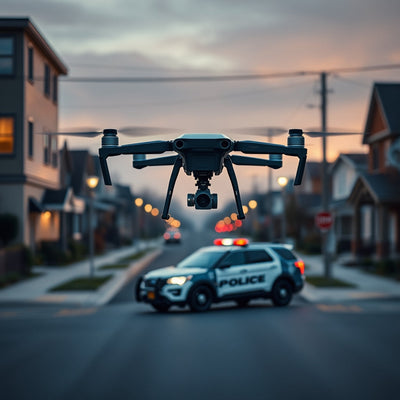
South Korea Farmland Survey Data Shows 91% DJI Drone Share
A South Korean parliamentary audit has revealed that 91% of drones used in national farmland surveys are Chinese-made DJI units, raising procurement and data security questions for commercial operators and fleet buyers.

Quick answer
A South Korean parliamentary audit reported that 91% of drones used in the country's farmland survey operations are Chinese-made DJI units, triggering security concerns among lawmakers.
- The finding came during a parliamentary audit reported by BigGo Finance via Google News DJI.
- DJI dominates the farmland survey fleet despite broader security debates around Chinese-made drones.
- The report does not confirm any specific restriction, penalty, or policy change.
- Commercial operators should monitor procurement rules and data handling requirements.
South Korea's national farmland survey program has become the latest flashpoint in the global debate over Chinese-made drone hardware. According to a report cited by BigGo Finance through Google News DJI, 91% of drones used in South Korea's farmland survey operations are DJI units manufactured in China. The figure emerged during a parliamentary audit, where lawmakers raised security concerns about the concentration of Chinese-made equipment in government-linked agricultural work.
Fleet readiness
Keep DJI hardware available without overbuying new units.
Use defense and fleet news as a planning signal for repair support, inspected pre-owned aircraft, and replacement timing.

The disclosure matters beyond agriculture. It shows how deeply DJI hardware is embedded in public-sector and quasi-public workflows even in countries that are otherwise cautious about Chinese technology in defense and critical infrastructure. For commercial drone buyers, fleet operators, and repair customers, the South Korean case offers a real-world signal about how procurement scrutiny can shift without warning.
What the parliamentary audit actually reported
The central finding, as attributed to BigGo Finance, is that 91% of drones used in South Korea's farmland survey program are Chinese-made DJI units. The report frames this as a security concern raised during a parliamentary audit. No specific agency confirmation, restriction, penalty, or policy change is included in the source data. Reboot Hub analysis should treat this as a reported data point rather than a confirmed regulatory action.
South Korea has historically maintained close security ties with the United States while remaining economically integrated with China. That dual position makes drone procurement politically sensitive. Agricultural survey drones are not combat systems, but they collect geospatial data, operate over rural infrastructure, and often connect to cloud-based flight and mapping platforms. Lawmakers questioning the fleet composition are effectively asking whether data generated by Chinese-made platforms should flow through non-domestic software ecosystems.
The source does not specify which DJI models are used, what percentage are enterprise platforms versus consumer aircraft, or whether the survey program uses third-party flight software. Those operational details remain unconfirmed. What is confirmed is the headline concentration: nine out of ten drones in the program are DJI units.
Why DJI dominance persists in survey work
DJI's position in agricultural and survey applications is not accidental. The company has spent years building accessible mapping workflows, reliable flight controllers, and a parts ecosystem that makes field repairs practical. For government programs and contractors operating on tight budgets, DJI hardware often represents the lowest-friction option. Pilots are familiar with the controls, spare batteries are widely available, and third-party repair knowledge is mature.
That operational convenience creates a procurement lock-in effect. Even when security questions arise, switching to alternative platforms involves retraining pilots, rebuilding mapping pipelines, and accepting higher hardware costs. The South Korean farmland survey figure suggests that these practical factors have outweighed security concerns in at least one public-sector workflow.
For commercial operators watching this story, the lesson is not that DJI equipment is suddenly unusable. The lesson is that fleet composition is becoming a governance question. A business that standardizes entirely on one manufacturer, especially one facing political scrutiny, carries a different risk profile than a mixed fleet. That risk can materialize as procurement restrictions, data handling requirements, or reputational pressure from enterprise clients.
What this means for drone owners and the market
The South Korean disclosure does not change the legal status of DJI drones in most commercial markets. But it adds another data point to a pattern that fleet managers should track carefully. Governments in multiple regions have debated restrictions on Chinese-made drones for public-sector use, and each new audit or hearing normalizes the idea that fleet composition is a policy issue rather than a purely technical choice.
For owners of pre-owned DJI drones, the immediate impact is likely limited. The source does not report any ban, recall, or restriction on resale. However, procurement uncertainty can shift demand in the second-hand market over time. If public-sector buyers in certain regions begin avoiding DJI hardware, some pre-owned inventory may flow toward private operators who face fewer compliance constraints. That dynamic could affect pricing and availability in different market segments.
Repair customers should also pay attention. DJI's large installed base means that genuine OEM spare parts and professional repair services remain broadly available, even as political debates continue. A drone that is already in service is not automatically devalued by a parliamentary audit elsewhere. What matters is whether the operator's own clients, insurers, or regulators begin asking questions about data handling and fleet provenance. For operators who want to understand how pre-owned DJI units fit into a changing procurement environment, the Drone Wiki provides practical reference material on ownership, maintenance, and market considerations. For owners evaluating service and lifecycle risk, Drone Wiki explains the relevant repair, parts, resale, or operational path.
The operator-facing takeaway is straightforward: document your fleet, understand where your data flows, and monitor procurement language in the regions where you bid for work. A parliamentary audit in South Korea may not affect a drone service provider in North America or Europe today, but the same questions are being asked in multiple jurisdictions. Operators who can explain their fleet composition and data practices will be better positioned when clients or agencies start asking.
The broader defense and procurement context
South Korea's parliamentary scrutiny fits a wider pattern. Defense and security agencies in several countries have restricted or discouraged Chinese-made drone use for sensitive operations. Agricultural survey work sits in a gray zone: it is not defense, but it involves systematic data collection over national territory. That gray zone is where procurement debates often start, because the security argument is easier to make than for purely recreational use.
The source does not indicate whether South Korean lawmakers proposed specific legislation, budget changes, or replacement timelines. Without that detail, the story is best understood as an early-stage policy signal. Early-stage signals matter because they shape vendor expectations, contractor behavior, and long-term fleet planning. A commercial operator who waits until a formal ban is announced may already be behind competitors who diversified earlier.
For the pre-owned DJI market, early-stage signals are double-edged. On one side, they create uncertainty that can soften demand from risk-averse institutional buyers. On the other side, they reinforce DJI's role as the default platform for private operators who prioritize cost and reliability over geopolitical optics. Both effects can coexist, which is why blanket predictions about DJI resale value are unreliable. The smarter approach is to watch specific procurement decisions in specific regions.
FAQ
Frequently asked questions
Does the South Korean audit mean DJI drones are banned in South Korea?
No. The source reports that lawmakers raised security concerns during a parliamentary audit, but it does not confirm any ban, restriction, or policy change affecting DJI drones in South Korea.
Should commercial operators stop buying DJI drones because of this report?
Not based on this source alone. The report highlights procurement scrutiny in one public-sector program. Operators should monitor their own region's rules and client requirements, but the source does not support a blanket recommendation to avoid DJI hardware.
How could this affect the pre-owned DJI drone market?
The immediate impact is unclear. If public-sector buyers in some regions reduce DJI purchases, pre-owned inventory may shift toward private operators. That could change pricing dynamics in specific segments, but no resale restriction is reported in the source.
Which sources support this update?
The article distinguishes reported information from analysis and does not present an unverified source as official confirmation.
What remains subject to change?
Retail pricing, availability, product bundles and regulatory timelines can change. Readers should verify the latest terms with the named retailer, manufacturer or regulator before acting.
How should buyers or operators use this analysis?
Use the verified facts as a starting point, then compare mission fit, lifecycle support, maintenance needs and current procurement terms before making a purchase or fleet decision.
Geraadpleegde bronnen
- BigGo Finance via Google News - primary source
Ten tijde van publicatie was geen aanvullende officiële documentatie beschikbaar.
De redactie van Reboot Hub voegt analyses toe over aankoop, reparatie, restwaarde en operationele aspecten voor drone-eigenaren. Indien u een fout constateert, neem dan contact met ons op voor een correctiebeoordeling conform ons redactionele beleid.