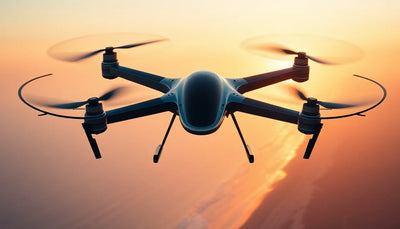
SkyDrive and Verty Target South Korea eVTOL Flights by 2028
Japanese eVTOL developer SkyDrive has signed a memorandum of understanding with South Korea's Verty to study commercial Advanced Air Mobility routes using the three-seat SKYDRIVE aircraft. The partners are targeting 2028 for operations focused on tourism and regional transportation, according to DRONELIFE reporting.

Quick answer
SkyDrive and South Korea's Verty signed a memorandum of understanding to prepare for commercial Advanced Air Mobility operations in South Korea using the three-seat SKYDRIVE aircraft, targeting 2028.
- Partnership will study tourism and regional transportation routes
- Aircraft is the three-seat SKYDRIVE, also known as SD-05
- Commercial operations are targeted for 2028
- Reported by DRONELIFE on September 17, 2026
Evidence: DRONELIFE
Market context
Turn market news into a buy, repair, or trade-in decision.
Compare pre-owned availability, resale timing, and repair economics before the market moves again.

Verified facts
What the available evidence confirms
| Aspect | Detail |
|---|---|
| Partners | SkyDrive (Japan) and Verty (South Korea) |
| Aircraft | Three-seat SKYDRIVE / SD-05 |
| Agreement type | Memorandum of understanding |
| Target year | 2028 |
| Focus areas | Tourism and regional transportation routes |
Japanese eVTOL developer SkyDrive has signed a memorandum of understanding with South Korea's Verty to lay the groundwork for commercial Advanced Air Mobility operations in the country, according to reporting from DRONELIFE. The agreement centers on the planned introduction of SkyDrive's three-seat SKYDRIVE aircraft, also designated SD-05, with a target of 2028 for commercial service.
The partnership will initially focus on studying viable tourism and regional transportation routes. For commercial drone operators, fleet planners, and aviation service providers watching the advanced air mobility segment, the announcement offers an early signal of where eVTOL infrastructure and operational demand may concentrate in the Asia-Pacific region over the next two years.
The SkyDrive-Verty partnership in context
SkyDrive is a Japanese eVTOL developer working to bring its three-seat SKYDRIVE aircraft to commercial service. Verty, based in South Korea, brings local market knowledge and route planning capability to the collaboration. The memorandum of understanding reported by DRONELIFE does not by itself confirm regulatory approval, aircraft certification, or committed launch dates. It establishes a framework for studying how the aircraft could operate on tourism and regional transportation routes in South Korea.
The 2028 target gives the partners roughly two years to align aircraft readiness, infrastructure planning, and regulatory pathways. For industry observers, this timeline is notable because it suggests both companies see South Korea as a market where commercial eVTOL operations could mature relatively quickly compared with regions facing more fragmented airspace coordination.
Why South Korea matters for advanced air mobility
South Korea has invested in urban air mobility planning and has a dense, tech-forward transportation ecosystem that makes it a logical testbed for regional eVTOL services. Tourism routes, particularly those connecting mainland hubs with coastal and island destinations, are often cited as early commercial use cases because they can operate on predictable schedules with lower airspace complexity than dense urban cores.
Reboot Hub analysis: The SkyDrive-Verty study will examine those route types directly. If the partnership progresses toward operational service, it could create demand for ground support, charging infrastructure, maintenance personnel, and certified pilots with eVTOL-specific training. None of those operational details are confirmed in the source reporting, but the route study phase is precisely where those requirements begin to take shape.
What this means for drone owners and the market
For most commercial drone operators and pre-owned DJI buyers, a 2028 eVTOL launch in South Korea will not change day-to-day operations immediately. The SKYDRIVE is a crewed passenger aircraft, not a small unmanned system, and it occupies a different regulatory and operational category than the drones used for mapping, inspection, agriculture, or security work.
The more relevant signal is directional. Advanced air mobility programs tend to pull investment into vertiport infrastructure, airspace management systems, and regional aviation services. Those same investments can improve the operating environment for larger commercial drone fleets, particularly in logistics and infrastructure inspection. Operators who track eVTOL route planning may get early visibility into corridors where regulators are building comfort with low-altitude commercial aviation. For buyers and fleet managers evaluating long-term equipment decisions, the Drone Wiki is a useful reference point for understanding how different aircraft categories and service models fit into the broader commercial market. For owners evaluating service and lifecycle risk, Drone Wiki explains the relevant repair, parts, resale, or operational path.
One practical takeaway is to monitor whether South Korea's eVTOL route studies produce publicly available airspace or infrastructure planning documents. Those documents often reveal where charging, maintenance, and staging facilities will be needed, which can inform decisions for operators considering expansion into regional aviation support services.
What to watch between now and 2028
The memorandum of understanding is an early-stage agreement. The next milestones to watch include aircraft certification progress for the SKYDRIVE, any formal route announcements from the study, and whether South Korean regulators publish specific eVTOL operational frameworks. Each of those steps would move the partnership from planning toward commercial reality.
For repair and service businesses, the long-term opportunity lies in the specialized maintenance ecosystem that crewed eVTOL aircraft will require. Battery systems, electric propulsion units, and airframe inspection protocols for passenger-carrying aircraft are more demanding than those for small commercial drones. Companies that build expertise in high-voltage electric aviation systems now may be positioned to serve eVTOL operators as the market matures.
The SkyDrive-Verty announcement is best read as a market development signal rather than a near-term operational event. It confirms that credible eVTOL developers are actively working with local partners in Asia to identify commercial routes and prepare for service launches. For the broader drone economy, it reinforces that advanced air mobility is moving from concept demonstrations toward route-specific planning, which is the phase where real infrastructure and service demand begins to emerge.
FAQ
Frequently asked questions
What did SkyDrive and Verty announce?
SkyDrive and South Korea's Verty signed a memorandum of understanding to prepare for commercial Advanced Air Mobility operations in South Korea using the three-seat SKYDRIVE aircraft, with a target of 2028 for commercial service.
What type of aircraft is involved in the partnership?
The partnership centers on the SKYDRIVE, also known as SD-05, a three-seat electric vertical takeoff and landing aircraft developed by SkyDrive.
What routes will the partnership study?
The companies will study tourism and regional transportation routes in South Korea, according to DRONELIFE reporting. Specific route details have not been publicly confirmed at this stage.
Which sources support this update?
The visible evidence links identify DRONELIFE; each source is used only for the claim it directly supports.
What remains subject to change?
Retail pricing, availability, product bundles and regulatory timelines can change. Readers should verify the latest terms with the named retailer, manufacturer or regulator before acting.
How should buyers or operators use this analysis?
Use the verified facts as a starting point, then compare mission fit, lifecycle support, maintenance needs and current procurement terms before making a purchase or fleet decision.
Geraadpleegde bronnen
- DRONELIFE - primary source
Ten tijde van publicatie was geen aanvullende officiële documentatie beschikbaar.
De redactie van Reboot Hub voegt analyses toe over aankoop, reparatie, restwaarde en operationele aspecten voor drone-eigenaren. Indien u een fout constateert, neem dan contact met ons op voor een correctiebeoordeling conform ons redactionele beleid.