Oshkosh Defense enters drone manufacturing with Grid Aero partnership
Oshkosh Defense is partnering with Grid Aero to scale production of the Lifter aircraft, marking the defense giant's first move into aircraft manufacturing. The deal signals how traditional ground vehicle contractors are entering the military drone supply chain.

Quick answer
Oshkosh Defense partnered with startup Grid Aero to scale production of the Lifter aircraft, marking the defense contractor's first entry into aircraft manufacturing.
- The partnership was reported by Defense News on November 2, 2026.
- Oshkosh Defense is known primarily for ground vehicles and tactical trucks.
- Grid Aero is the startup behind the Lifter aircraft platform.
- The deal signals traditional defense contractors moving into drone airframe production.
Evidence: Defense News
Fleet readiness
Keep DJI hardware available without overbuying new units.
Use defense and fleet news as a planning signal for repair support, inspected pre-owned aircraft, and replacement timing.

Verified facts
What the available evidence confirms
| Entity | Role in reported partnership | Sector background |
|---|---|---|
| Oshkosh Defense | Scaling production of the Lifter aircraft | Defense ground vehicles and tactical trucks |
| Grid Aero | Startup developing the Lifter aircraft | Drone and aircraft technology |
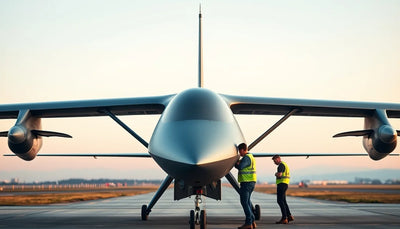
Oshkosh Defense, a company long associated with tactical ground vehicles, is moving into aircraft manufacturing for the first time. According to reporting by Defense News, the defense contractor has partnered with startup Grid Aero to scale production of the Lifter aircraft, a development that places a major traditional supplier directly inside the military drone production chain.
The reported partnership matters beyond the two companies involved. It shows how established defense manufacturers are responding to growing demand for uncrewed aircraft by acquiring production capacity through startups rather than building drone programs from scratch. For commercial operators, fleet buyers, and repair-focused businesses watching the defense supply chain, the move is a signal about where industrial drone manufacturing capacity and component demand may concentrate next.
The reported partnership and what it covers
Defense News reported the Oshkosh Defense and Grid Aero partnership on November 2, 2026, describing the arrangement as a production-scaling effort for the Lifter aircraft. The report frames the deal as Oshkosh Defense's first foray into aircraft manufacturing, a notable expansion for a company whose defense identity has been built around vehicles such as tactical trucks and mobility systems.
Grid Aero is identified in the source as the startup behind the Lifter aircraft. The reporting does not provide detailed technical specifications, delivery timelines, or contract values, and Reboot Hub has not independently verified those operational details. What is clear from the source is the strategic direction: a legacy defense prime is attaching its manufacturing scale and supply chain experience to a newer aircraft platform rather than developing an in-house drone airframe from zero.
For procurement analysts, the structure of the deal is as important as the aircraft itself. Partnerships like this often let established contractors enter a new product category faster while giving startups access to production capacity, quality systems, and government contracting relationships that are difficult to build independently. The source does not confirm specific government customers or program awards tied to the Lifter, so those details should be treated as unverified until further reporting emerges.
Why a ground vehicle contractor is entering drone manufacturing
Oshkosh Defense's reported move reflects a broader defense industry pattern: uncrewed aircraft demand is pulling in suppliers that previously had no airframe production role. Defense News describes the partnership as the company's first aircraft manufacturing entry, which suggests a deliberate expansion rather than a minor supplier arrangement. For a contractor with deep experience in military vehicle production, the step into drone airframes represents a bet that uncrewed systems will remain a durable procurement category.
The source does not detail the Lifter's payload class, range, or intended mission set, so Reboot Hub will not speculate on those specifications. However, the reporting is enough to confirm that the defense industrial base is broadening. When ground vehicle primes move into aircraft production through startup partnerships, it can accelerate consolidation of component sourcing, testing standards, and maintenance networks across previously separate vehicle and aircraft supply chains.
That convergence has practical consequences. Drone repair and parts businesses that currently focus on commercial platforms may see defense-adjacent suppliers standardize certain manufacturing processes, quality controls, and documentation practices. Fleet managers who already track OEM parts availability for commercial drones should watch whether defense manufacturing partnerships tighten the labor pool for certified aviation technicians and specialized component suppliers in their regions.
What this means for drone owners and the market
The most immediate takeaway for commercial drone operators is that defense manufacturing capacity is becoming more competitive. When a company with Oshkosh Defense's production footprint enters aircraft manufacturing, it can absorb skilled labor, precision machining capacity, composite fabrication resources, and avionics testing infrastructure that might otherwise serve commercial or adjacent industrial demand. Defense News reported the partnership as a production-scaling effort, which implies real manufacturing activity rather than a paper agreement.
For pre-owned DJI drone buyers and repair customers, the connection is indirect but real. Defense supply chain expansion can shift component pricing and lead times for batteries, motors, gimbal assemblies, and flight controllers when suppliers allocate capacity toward higher-margin defense work. Operators who rely on genuine OEM spare parts for DJI platforms may want to monitor lead times more closely if defense drone production scales quickly in the same supplier ecosystem. For context on drone platforms, parts, and repair considerations, Reboot Hub maintains a Drone Wiki covering practical ownership and maintenance topics. For owners evaluating service and lifecycle risk, Drone Wiki explains the relevant repair, parts, resale, or operational path.
The reporting also matters for fleet planning. Organizations that operate mixed fleets of commercial and industrial drones should track defense manufacturing partnerships as an early indicator of where certified repair capacity, avionics expertise, and airframe maintenance skills may concentrate. If defense primes continue absorbing drone production startups, the commercial repair market could face both tighter technician availability and new cross-trained service providers emerging from defense supply chains.
What to watch next in the defense drone supply chain
Defense News did not report specific production volumes, facility locations, or program timelines for the Lifter aircraft, and those omissions leave meaningful questions open. Buyers and operators should watch for follow-on reporting that clarifies whether the Oshkosh Defense and Grid Aero partnership is tied to a specific government contract, a broader multi-year production framework, or an initial pilot manufacturing run. Each scenario carries different implications for supply chain pressure and component demand.
Another signal to monitor is whether other ground vehicle contractors follow Oshkosh Defense into aircraft manufacturing. The source frames this as a first for the company, but the underlying logic applies to other defense primes with large manufacturing footprints. If similar partnerships emerge, the drone industrial base could consolidate faster than expected, affecting everything from parts pricing to repair turnaround times across commercial and defense-adjacent platforms.
For now, the responsible read is measured. The reported partnership is a meaningful strategic signal, but the source does not support claims about specific aircraft capabilities, production scale, or immediate market disruption. Fleet managers, repair providers, and pre-owned drone buyers should treat this as an early indicator of defense supply chain expansion rather than a confirmed shift in commercial parts availability or pricing.
FAQ
Frequently asked questions
What did Oshkosh Defense and Grid Aero announce?
According to Defense News reporting, Oshkosh Defense partnered with Grid Aero to scale production of the Lifter aircraft. The report describes the arrangement as Oshkosh Defense's first entry into aircraft manufacturing.
Does this partnership affect commercial drone parts or repair pricing?
The source does not provide data on commercial parts pricing or repair costs. However, defense manufacturing expansion can influence supplier capacity and technician availability over time, so operators should monitor lead times for OEM parts and certified repair services.
What should drone buyers or fleet managers do after reading this?
Treat the reported partnership as an early supply chain signal rather than an immediate market change. Track follow-on reporting for contract details and production timelines, and keep an eye on parts lead times if defense drone manufacturing scales in shared supplier ecosystems.
Which sources support this update?
The visible evidence links identify Defense News; each source is used only for the claim it directly supports.
What remains subject to change?
Retail pricing, availability, product bundles and regulatory timelines can change. Readers should verify the latest terms with the named retailer, manufacturer or regulator before acting.
How should buyers or operators use this analysis?
Use the verified facts as a starting point, then compare mission fit, lifecycle support, maintenance needs and current procurement terms before making a purchase or fleet decision.
Geraadpleegde bronnen
- Defense News - primary source
Ten tijde van publicatie was geen aanvullende officiële documentatie beschikbaar.
De redactie van Reboot Hub voegt analyses toe over aankoop, reparatie, restwaarde en operationele aspecten voor drone-eigenaren. Indien u een fout constateert, neem dan contact met ons op voor een correctiebeoordeling conform ons redactionele beleid.