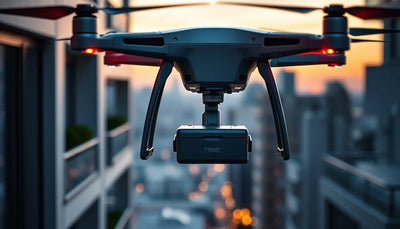
FCC Proposes Retroactive LiDAR Drone Ban, Threatening DJI Air 3S and Mini 5 Pro
The FCC is proposing a retroactive ban on LiDAR-equipped drones, potentially affecting DJI’s Air 3S and Mini 5 Pro. Operators and buyers should understand the compliance risk and market implications before their next purchase.

The Federal Communications Commission has proposed a retroactive ban on LiDAR-equipped drones, a move that could directly threaten DJI’s Air 3S and Mini 5 Pro models already in the hands of US operators. According to a report from finance.biggo.com, the proposal targets drones carrying LiDAR sensors, and the retroactive nature of the rule means units sold before any final decision could face compliance questions. For commercial fleet operators, repair customers, and the pre-owned DJI market, this development introduces a new layer of regulatory risk that was not on the table just weeks ago.
The report, sourced from Google News DJI and categorized under Regulation & Policy, does not provide a timeline for the FCC’s decision or specify which agencies would enforce the ban. What is clear from the source is that the FCC is actively considering a rule that would apply to drones already in circulation, not just future models. This is a significant departure from typical equipment authorization changes, which usually grandfather existing products. The named models, DJI Air 3S and Mini 5 Pro, are both consumer-oriented drones that have gained traction among small business operators and hobbyists, making the scope of the proposal unusually broad.
What the FCC proposal actually says
Based solely on the source report, the FCC’s proposal is centered on LiDAR technology integrated into drones. LiDAR, or Light Detection and Ranging, is used for mapping, obstacle avoidance, and precision measurement, and its inclusion in consumer drones has grown in recent years. The source names DJI’s Air 3S and Mini 5 Pro as specific models that could be affected, but it does not clarify whether the ban would apply to the LiDAR sensor itself, the drone as a whole, or the radio frequencies used by the sensor.
Operator checklist
Turn policy news into a safer fleet decision.
Before changing aircraft, compare repair paths, available DJI inventory, and trade-in timing against the rule change.

For operators, the distinction matters. A retroactive ban could mean the drone can no longer be legally operated in US airspace, or it could mean the LiDAR function must be disabled, or it could mean the drone cannot be imported, sold, or resold. The source does not provide these operational details, and Reboot Hub analysis should not invent them. What is certain is that the FCC is treating LiDAR on drones as a regulatory concern, and the retroactive framing signals that the agency is willing to revisit equipment that was previously authorized.
This is not a certification recall or a firmware update. It is a proposed rule change that, if enacted, would alter the legal status of hardware that many operators purchased under existing rules. The commercial impact could be substantial for fleets that standardized on the Air 3S for mapping work or the Mini 5 Pro for lightweight inspection tasks.
What this means for drone owners and the market
For drone owners, the immediate takeaway is to avoid making large fleet purchases or long-term repair commitments until the FCC clarifies the scope of the proposal. If the ban moves forward retroactively, the resale value of affected DJI models could drop sharply, and repair investments in those platforms might not be recoverable. Fleet managers who rely on Air 3S units for recurring jobs should consider whether their contracts allow for equipment substitution if the rule is enacted.
For buyers in the pre-owned DJI market, this proposal introduces a new due diligence step. A drone that is perfectly functional today could become a regulatory liability tomorrow. Sellers may face pressure to discount Air 3S and Mini 5 Pro units, while buyers may hesitate to acquire hardware with uncertain legal status. Repair shops and parts suppliers should also monitor the rulemaking, because demand for OEM-pulled parts and professional DJI repair services could shift toward models that are not named in the proposal. For owners evaluating service and lifecycle risk, Wiki Dji Mini 5 Pro explains the relevant repair, parts, resale, or operational path.
At Reboot Hub, we track regulatory developments closely because they directly affect the value of pre-owned DJI drones, the availability of genuine OEM spare parts, and the decisions repair customers make every week. The practical guidance for now is straightforward: do not panic-sell, do not panic-buy, and do not commit to long-term fleet expansion based on models that may face a retroactive ban. Instead, review your current inventory, document your purchase dates, and wait for the FCC to publish the formal rule language before making any structural changes.
Commercial and repair implications
Commercial operators who use LiDAR-equipped drones for surveying, agriculture, or construction should treat this proposal as a trigger for contingency planning. If the Air 3S or Mini 5 Pro becomes non-compliant, the cost of replacing a fleet is not just the purchase price of new drones; it includes retraining pilots, revalidating workflows, and potentially renegotiating client contracts that specified particular equipment. The source report does not indicate whether the FCC would provide a grace period for existing operators, so planning for the worst case is the prudent move.
Repair customers face a different but related issue. If a drone is under repair when a retroactive ban takes effect, the repaired unit may have no legal path back to operation. Repair shops should advise customers to hold off on non-essential repairs for affected models until the rule is finalized. Conversely, if the ban is limited to new sales, existing units could see a spike in demand for maintenance and parts as operators look to extend the life of their current hardware.
The pre-owned DJI market is particularly exposed. Retroactive regulation is the single biggest risk to used drone values because it invalidates the assumption that a legally purchased drone remains legal to operate. Sellers who list Air 3S or Mini 5 Pro units should be transparent about the pending rule, and buyers should factor regulatory uncertainty into their offers. This is not a reason to abandon the market, but it is a reason to be more careful about which models you acquire and at what price.
What operators should do now
For individual pilots and fleet managers, the first step is to confirm which of your drones actually carry LiDAR sensors. The source names the Air 3S and Mini 5 Pro, but other models in your fleet may also be affected if they use similar technology. Next, document your purchase dates, serial numbers, and any authorization records you have. This paperwork will be essential if the FCC requires proof of ownership or if you need to claim an exemption during the rulemaking process.
Buyers should pause any pending purchases of the named models until the FCC publishes its formal notice. The proposal, as reported, is not yet a final rule, and there is a possibility that the agency narrows the scope or grandfathers existing units. Acting before the rule language is public means taking on risk without full information. For repair customers, the advice is to ask your service provider whether the repair is essential and whether the drone’s legal status could change before the work is complete.
The broader lesson is that regulatory risk is now a permanent factor in drone fleet management. The FCC’s willingness to propose a retroactive ban signals that no current model is guaranteed to remain compliant indefinitely. Operators who build flexibility into their procurement and repair strategies will be better positioned than those who commit to a single platform. This is not a reason to exit the market, but it is a reason to treat every drone purchase as a decision that could be revisited by regulators.
Will the FCC ban apply to drones already purchased?
According to the source report, the FCC is proposing a retroactive ban, which means it could apply to drones already sold and in operation. The final scope will depend on the rule language the FCC publishes, which was not available in the source data.
Should I sell my DJI Air 3S or Mini 5 Pro now?
There is no urgency to sell based on the current proposal. The rule is not final, and selling now could mean accepting a discount for a drone that may remain legal. Monitor the FCC’s rulemaking process and make a decision when the formal language is published.
How will this affect the pre-owned DJI drone market?
The proposal introduces regulatory uncertainty, which typically pressures resale values for the named models. Buyers may demand lower prices, and sellers may need to provide more documentation. The market will stabilize once the FCC clarifies whether the ban applies to existing units or only future sales.
Geraadpleegde bronnen
- FCC Covered List - official regulator source
Ten tijde van publicatie was geen aanvullende officiële documentatie beschikbaar.
De redactie van Reboot Hub voegt analyses toe over aankoop, reparatie, restwaarde en operationele aspecten voor drone-eigenaren. Indien u een fout constateert, neem dan contact met ons op voor een correctiebeoordeling conform ons redactionele beleid.