Edison NJ Buys Flock Thermal Drone, Claims 45-Second Response
Edison, New Jersey is spending $589,000 in forfeiture funds on 92 Flock cameras and a thermal drone. The mayor's 45-second response claim outpaces Flock's own public figure, raising questions about deployment expectations for municipal drone programs.

Quick answer
Edison, New Jersey is spending $589,000 in forfeiture money on 92 Flock cameras and a thermal DFR drone, with the mayor claiming a 45-second response time that exceeds Flock's own public figure.
- $589,000 in forfeiture funds allocated
- 92 Flock cameras plus one thermal DFR drone
- Mayor claims 45-second response, faster than Flock's figure
- Reported by DroneXL.co on September 25, 2026
Evidence: DroneXL.co
Fleet readiness
Keep DJI hardware available without overbuying new units.
Use defense and fleet news as a planning signal for repair support, inspected pre-owned aircraft, and replacement timing.

Verified facts
What the available evidence confirms
| Entity | Claim or Figure | Source |
|---|---|---|
| Edison NJ mayor | 45-second drone response | DroneXL.co report |
| Flock | Own public response figure, slower than 45 seconds | DroneXL.co report |
| Edison NJ program | $589,000 for 92 cameras and thermal drone | DroneXL.co report |
Edison, New Jersey is moving forward with a municipal drone and camera expansion funded by forfeiture money, according to a September 25, 2026 report from DroneXL.co. The township is spending $589,000 on 92 Flock cameras and a thermal drone designed for drone-as-first-responder, or DFR, operations. The mayor's office has publicly claimed the system will deliver a 45-second response time, a figure that DroneXL.co reports is faster than Flock's own stated performance benchmark.
The gap between the mayor's promise and the vendor's published figure is the most commercially relevant detail in the announcement. Municipal drone programs often market ambitious response windows to justify spending, but operators and procurement officers should treat vendor-verified numbers as the baseline for planning. When a local official quotes a faster time than the manufacturer, the realistic deployment outcome usually lands somewhere between the two, depending on airspace, weather, staffing, and sensor readiness.
DroneXL.co is the primary reporting source for this development. Reboot Hub has not independently confirmed the contract terms, the delivery schedule, or the specific thermal drone model involved. The analysis below is grounded in the reported figures and the broader market context for municipal security drone programs.
What the Edison program actually includes
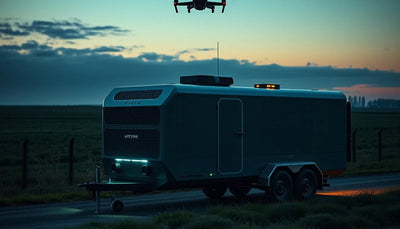
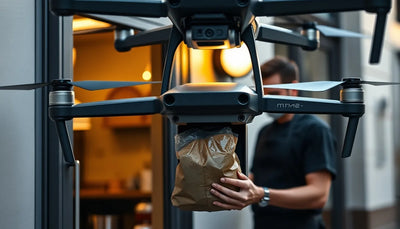
According to DroneXL.co, the Edison expenditure covers two distinct layers of surveillance infrastructure. The first is 92 Flock cameras, which are fixed license-plate-reading and situational-awareness devices commonly used by law enforcement agencies across the United States. The second is a thermal DFR drone, which would launch from a fixed location and fly toward an incident before officers arrive on scene.
The $589,000 price tag is funded through forfeiture money, not a general tax appropriation. That matters for procurement watchers because forfeiture-funded programs often face different oversight and reporting requirements than budget-line purchases. For drone manufacturers, integrators, and service providers, forfeiture-funded municipal deals can move faster but may also carry less predictable long-term maintenance funding.
The thermal payload is the operational centerpiece. A thermal sensor allows the drone to locate people, vehicles, or heat signatures in low-light conditions, which is the core value proposition for night patrol, search operations, and perimeter response. DroneXL.co does not specify the drone airframe, the sensor resolution, or the docking station manufacturer in the source summary, so Reboot Hub will not speculate on those details.
Why the 45-second claim matters for fleet planning
The mayor's 45-second response claim is the most scrutinized number in the DroneXL.co report. The source states that this figure beats Flock's own public response time. For a fleet operator or municipal buyer, that discrepancy is a planning signal, not a trivial marketing detail. If a vendor says a system can realistically achieve a certain response window, and a buyer publicly promises a faster one, the buyer is likely compressing the time from alert to launch, not the full flight time to the incident.
Response time in DFR programs is typically measured from the moment a call or alert is received to the moment the drone is airborne. It does not include travel time to the scene, sensor stabilization, or the time required for a remote pilot or automated system to establish a stable video feed. A 45-second claim may describe launch readiness under ideal conditions: warm hardware, clear airspace, pre-approved flight corridors, and an operator already on station.
For commercial operators watching this program, the lesson is to define response time in writing before signing a municipal or enterprise drone contract. Buyers should ask whether the quoted figure includes human review, airspace authorization, weather checks, and payload boot time. If those steps are excluded, the real-world response window will be longer. DroneXL.co's reporting does not indicate whether Edison has published those definitions.
What this means for drone owners and the market
Edison is one of many U.S. municipalities layering fixed cameras with aerial drones, and each new program adds pressure on the broader market for thermal-capable airframes, docking infrastructure, and ongoing maintenance. The pre-owned DJI market is not directly affected by a Flock camera purchase, but the trend matters. As more towns and counties allocate forfeiture or grant money to DFR programs, demand for thermal payloads and enterprise airframes rises, which can tighten supply for used commercial units that operators might otherwise buy as backups or training platforms.
For individual drone owners and small fleet operators, the Edison story is a reminder that municipal procurement is moving toward integrated, vendor-locked systems. Flock cameras and a Flock-connected drone create a closed data environment, which means repair, parts, and software updates flow through a single vendor channel. That is different from the open, multi-vendor repair ecosystem that many DJI operators rely on. Buyers evaluating pre-owned DJI drones for commercial work should consider whether their target clients are moving toward closed municipal systems or remaining on open platforms. Reboot Hub's Drone Wiki tracks these ownership and repair implications for operators who need to plan around shifting procurement patterns. For owners evaluating service and lifecycle risk, Drone Wiki explains the relevant repair, parts, resale, or operational path.
The forfeiture funding source also has a downstream effect. When equipment is purchased outside the normal budget cycle, maintenance and repair line items are sometimes absent in the following fiscal year. A drone that launches on day one still needs batteries, propellers, sensor calibration, and eventual component replacement. Municipal programs that do not plan for those costs can end up grounding hardware early, which creates a secondary market for pulled parts and lightly used airframes. That is a supply signal worth watching for pre-owned buyers.
What buyers and operators should watch next
The most important next step is whether Edison publishes the actual deployment timeline and the vendor's own performance specifications. DroneXL.co's report identifies the 45-second gap, but the source does not include a formal statement from Flock or the township clarifying the measurement. If Flock issues a correction or a clarification, that will tell buyers whether the mayor's number was a launch-readiness figure, a marketing shorthand, or a full response-time estimate.
Operators evaluating DFR programs should also watch for Federal Aviation Administration airspace authorizations. A thermal drone flying beyond visual line of sight over a populated New Jersey township requires specific waivers or a structured airspace framework. DroneXL.co does not report on the regulatory status of the Edison program, so Reboot Hub will not assume the operational approvals are in place. The absence of that detail is itself a planning consideration.
For repair customers and fleet managers, the practical takeaway is to document response-time claims and tie them to maintenance readiness. A drone that must launch in 45 seconds needs batteries kept at storage charge, sensors that boot quickly, and a docking station that is cleaned and inspected regularly. Those are service-level requirements, not just hardware features. If a program promises speed but does not fund the maintenance cadence to support it, the hardware will underperform regardless of the vendor's specifications.
FAQ
Frequently asked questions
What is Edison, New Jersey buying with the $589,000?
According to DroneXL.co, Edison is buying 92 Flock cameras and a thermal DFR drone, funded through forfeiture money rather than a standard budget appropriation.
Why is the 45-second response claim notable?
The mayor's 45-second claim is faster than Flock's own public figure, according to DroneXL.co. The discrepancy raises questions about how response time is measured and whether the figure reflects launch readiness or full arrival time.
What should a drone buyer or fleet operator take away from this?
Buyers should define response time in writing and confirm whether it includes airspace checks, sensor boot time, and human review. Municipal programs moving toward closed vendor systems also affect demand for thermal payloads and the availability of pre-owned commercial airframes.
Which sources support this update?
The visible evidence links identify DroneXL.co; each source is used only for the claim it directly supports.
What remains subject to change?
Retail pricing, availability, product bundles and regulatory timelines can change. Readers should verify the latest terms with the named retailer, manufacturer or regulator before acting.
How should buyers or operators use this analysis?
Use the verified facts as a starting point, then compare mission fit, lifecycle support, maintenance needs and current procurement terms before making a purchase or fleet decision.
Geraadpleegde bronnen
- DroneXL.co - primary source
Ten tijde van publicatie was geen aanvullende officiële documentatie beschikbaar.
De redactie van Reboot Hub voegt analyses toe over aankoop, reparatie, restwaarde en operationele aspecten voor drone-eigenaren. Indien u een fout constateert, neem dan contact met ons op voor een correctiebeoordeling conform ons redactionele beleid.