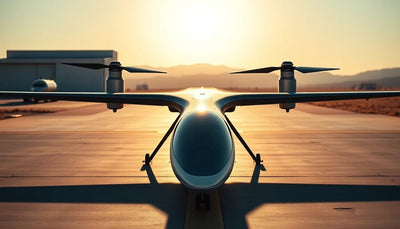
DJI Production Scale Now Dwarfs US Drone Output 300 to 1
A widely shared industry slide suggests DJI alone produces roughly 300 times the current annual drone output of the United States. The figure highlights how concentrated commercial drone manufacturing has become and what that means for pricing, parts availability, and long-term fleet planning.

Quick answer
A widely shared industry slide reported by Dealroom suggests DJI alone produces roughly 300 times the current annual drone output of the United States.
- The production gap is an industry report figure, not an official government confirmation.
- Concentration in DJI manufacturing affects parts availability and pricing for commercial operators.
- The comparison matters for fleet planning, repair decisions, and pre-owned DJI drone market expectations.
- Source-limited reporting means the exact measurement basis behind the 300x figure is not fully detailed.
Verified facts
Market context
Turn market news into a buy, repair, or trade-in decision.
Compare pre-owned availability, resale timing, and repair economics before the market moves again.

What the available evidence confirms
| Entity | Reported production position | Source basis |
|---|---|---|
| DJI | Roughly 300x current US annual drone output | Dealroom industry slide, as reported by Google News DJI |
| United States | Current annual drone output used as the comparison baseline | Same Dealroom industry slide |
A single slide from an industry presentation has reignited a familiar conversation about drone manufacturing concentration. The slide, highlighted by Dealroom and circulated through Google News DJI, suggests that DJI alone produces roughly 300 times the current annual drone output of the United States. That is a striking comparison, and it has spread quickly among operators, procurement teams, and market analysts who track where commercial drone hardware actually comes from.
It is important to be precise about what this figure is and what it is not. The 300x comparison is an industry report claim attributed to Dealroom, not an official government statistic or a verified production audit. The underlying measurement basis, whether it counts units, revenue, or a specific product category, is not fully detailed in the available source material. Still, the direction of the gap is consistent with what most commercial operators already observe in the field: the overwhelming majority of small and mid-sized commercial drones in active service are DJI airframes.
Why the production gap matters for commercial operators
The practical consequence of concentrated manufacturing is not abstract. When one company accounts for such a large share of global production, it shapes the entire downstream ecosystem: the availability of spare parts, the speed of repair turnarounds, the depth of third-party service knowledge, and the resale liquidity of used equipment. A fleet manager evaluating a drone program is not just choosing an airframe; they are choosing a supply chain. The Dealroom slide, even with its limitations, puts that reality into sharp focus.
For operators running multi-aircraft programs, the production gap translates into a few concrete dynamics. First, parts availability for dominant platforms tends to be stronger simply because there are more units in circulation and more service providers familiar with them. Second, repair pricing is more competitive when independent shops can source OEM-pulled parts and maintain deep familiarity with common failure points. Third, pre-owned equipment holds value better when the platform remains widely supported and actively produced. These are not speculative points; they follow directly from scale.
What this means for drone owners and the market
Reboot Hub analysis: The 300x figure also has implications for anyone holding DJI hardware today. A production base of that scale means the pre-owned DJI drone market is likely to remain liquid and active for the foreseeable future. Buyers looking at inspected pre-owned DJI drones are effectively buying into the largest installed base in commercial aviation history, which means service knowledge, spare parts, and community support are unlikely to disappear quickly. For owners considering whether to repair or replace an aging airframe, the calculation tilts toward repair when parts remain accessible and independent service providers have deep platform experience. Readers evaluating those options can reference the Drone Wiki for platform-level service context without committing to a specific vendor path. For owners evaluating service and lifecycle risk, Drone Wiki explains the relevant repair, parts, resale, or operational path.
There is also a less comfortable implication. Concentration of this magnitude creates dependency. If a single manufacturer controls such a large share of production, any disruption to its supply chain, export policies, or product roadmap has outsized effects on commercial operators worldwide. Procurement teams that rely on a single airframe family should at least model what a parts delay or import restriction would mean for their operations. That is not fear-mongering; it is basic supply chain hygiene in a market where the production gap is this wide.
The limits of the comparison and what buyers should verify
Source-limited reporting requires caution here. The Dealroom slide is a compelling data point, but the available source material does not specify whether the 300x figure compares unit volumes, dollar value, or a narrower category such as consumer camera drones. It also does not clarify which US production activities are included in the baseline. Those details matter for anyone trying to turn the slide into a procurement decision or a policy argument. Reboot Hub analysis would treat the figure as directional evidence of manufacturing concentration rather than a precise, audited production statistic.
For a buyer or fleet manager, the actionable takeaway is not to react to a viral slide. It is to recognize that the commercial drone market is structurally concentrated, plan around that reality, and make equipment decisions with the full lifecycle in mind. That means considering parts availability, repair depth, resale value, and the risk of supply disruption alongside the usual factors of camera quality, flight performance, and software support. A drone is not a disposable gadget; it is a depreciating asset inside a supply chain that is far more concentrated than most operators realize.
What should change after reading this
The operator-facing question is straightforward: what should a buyer, pilot, repair customer, or fleet manager do differently after seeing this production gap? The answer is to treat supply chain continuity as a first-class purchasing criterion. Before adding a new platform, ask whether OEM-pulled parts are realistically available, whether independent repair providers know the airframe well, and whether the pre-owned market for that model is deep enough to support resale later. If the answer is yes across all three, the platform is likely a safer long-term bet. If the answer is no, the lower upfront cost may be misleading.
For repair customers specifically, the production gap reinforces the value of choosing a service provider that works with genuine OEM spare parts and has hands-on experience with the platform in question. A dominant installed base means more repair volume, more diagnostic knowledge, and more opportunities for cost-effective fixes rather than premature replacement. That is good news for operators who want to extend the life of their current fleet instead of absorbing the cost of new hardware every two or three years.
The Dealroom slide may be a single data point, but it captures a structural truth that every commercial drone operator already feels: the market runs on DJI hardware to an extraordinary degree. Understanding that concentration, planning around it, and making lifecycle decisions accordingly is the practical difference between a drone program that stays operational and one that gets surprised by supply chain reality.
FAQ
Frequently asked questions
Is the 300x production figure an official government statistic?
No. The figure comes from an industry slide highlighted by Dealroom and circulated through Google News DJI. It is not presented as an official government audit, and the exact measurement basis behind the comparison is not fully detailed in the available source material.
How does DJI's production scale affect pre-owned drone values?
A large installed base tends to support pre-owned liquidity because parts remain available, independent repair knowledge is widespread, and demand for used airframes stays consistent. That dynamic generally helps preserve the value of inspected pre-owned DJI drones compared with platforms that have smaller production runs.
Should fleet managers change procurement plans based on this slide?
Not based on the slide alone. Fleet managers should treat the figure as directional evidence of manufacturing concentration and evaluate any new platform on parts availability, repair depth, resale liquidity, and supply disruption risk alongside performance and price.
Which sources support this update?
The article distinguishes reported information from analysis and does not present an unverified source as official confirmation.
What remains subject to change?
Retail pricing, availability, product bundles and regulatory timelines can change. Readers should verify the latest terms with the named retailer, manufacturer or regulator before acting.
How should buyers or operators use this analysis?
Use the verified facts as a starting point, then compare mission fit, lifecycle support, maintenance needs and current procurement terms before making a purchase or fleet decision.
Geraadpleegde bronnen
- Dealroom via Google News - primary source
Ten tijde van publicatie was geen aanvullende officiële documentatie beschikbaar.
De redactie van Reboot Hub voegt analyses toe over aankoop, reparatie, restwaarde en operationele aspecten voor drone-eigenaren. Indien u een fout constateert, neem dan contact met ons op voor een correctiebeoordeling conform ons redactionele beleid.