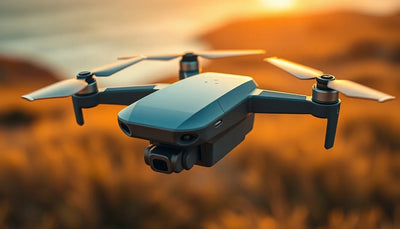
DJI Osmo 360 II Brings 1-Inch Sensors and Swappable Lenses
Early reporting on the DJI Osmo 360 II points to 1-inch sensors, 8K60 capture, and user-replaceable lenses. For commercial operators and pre-owned buyers, the design shift raises practical questions about durability, repair economics, and how current 360-degree camera values may hold up.

Quick answer
Early industry reporting indicates the DJI Osmo 360 II features 1-inch sensors, 8K60 video capture, and user-replaceable lenses, a design shift with direct implications for repair economics and pre-owned camera values.
- 1-inch sensors and 8K60 capture are the headline reported upgrades.
- User-replaceable lenses could reduce downtime and repair dependency for operators.
- The modular lens design may shift how pre-owned 360 cameras are inspected and valued.
- Commercial buyers should watch for real-world durability data before committing fleets.
Early reporting from DroneXL on the DJI Osmo 360 II points to a meaningful step forward for the company's 360-degree camera line, with 1-inch sensors, 8K60 video capture, and a user-replaceable lens system among the headline details. The report, surfaced through Google News DJI coverage, frames the device as a test of whether DJI can push image quality and repairability forward in a single consumer-focused body. For commercial operators who use 360-degree capture for inspection documentation, virtual tours, or site mapping, the reported changes are not just spec bumps. They touch on how long a camera stays in service, what it costs to fix, and what a used unit is actually worth.
DJI buying context
Match product news to hardware you can actually deploy.
Check inspected DJI aircraft, repair support, and trade-in timing before deciding whether to upgrade, repair, or wait.

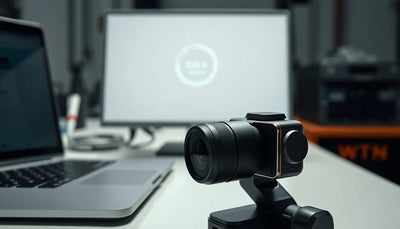
What makes this development commercially interesting is the lens architecture. A user-replaceable lens system changes the ownership equation. Instead of treating a scratched or damaged lens as a reason to replace the entire camera, operators may be able to swap the affected module and keep the body in rotation. That has direct consequences for fleet budgeting, repair lead times, and the second-hand market, where buyers have historically been cautious about cameras with exposed optics.
What the early reporting actually says
According to the DroneXL review summary, the DJI Osmo 360 II is reported to include 1-inch sensors and 8K60 video capture, alongside user-replaceable lenses. These are the three details that anchor the early coverage. The move to 1-inch sensors would represent a notable increase in light-gathering surface area compared to smaller sensor designs commonly found in compact 360 cameras. For operators shooting in low-light environments such as industrial interiors, tunnels, or early-morning site inspections, larger sensors generally translate to cleaner footage and more usable detail in shadows.
The 8K60 capture figure matters for a different reason. Higher frame rates at high resolution give editors more flexibility when slowing footage or extracting still frames for inspection reports. A 360-degree camera that can hold 8K at 60 frames per second is more useful for documenting fast-moving equipment or capturing smooth walkthroughs of active job sites. Reboot Hub analysis suggests that these reported specifications, if confirmed in production units, would position the Osmo 360 II as a more serious tool for commercial documentation rather than a purely consumer-oriented capture device.
It is important to note that this is source-limited reporting. The DroneXL summary provides the central claims, but independent verification of production hardware, firmware behavior, and real-world thermal performance has not yet been established in the available source data. Operators should treat the reported specifications as early indicators, not as confirmed benchmarks.
Why replaceable lenses change the repair conversation
The user-replaceable lens detail is the most operationally significant element in the early report. On a traditional 360-degree camera, the lenses are fixed components. A scratch, crack, or coating failure typically means sending the entire unit in for service or replacing it outright. That creates downtime and unpredictable costs, especially for operators who rely on 360 capture as part of a documented workflow.
A modular lens design shifts that burden. If a lens module can be removed and replaced by the user, the repair path becomes faster and potentially less expensive. Fleet managers can keep spare lens modules on hand rather than spare cameras. That is a meaningful change for anyone running multiple units across field teams. The pre-owned market also benefits. A used 360 camera with replaceable lenses is easier to inspect and easier to restore to serviceable condition. Buyers can evaluate the body and the lens modules separately, and sellers can replace a worn lens before listing a unit. For those considering a Pristine Pre Owned Dji Osmo 360, the modular design may make inspected pre-owned inventory more attractive than it was for fixed-lens predecessors.
That said, modularity introduces its own risks. A user-replaceable lens system requires precise alignment and sealing. Dust, moisture, or misalignment at the lens mount could degrade image quality or compromise weather resistance. The early reporting does not yet provide detail on sealing standards, alignment tolerances, or whether DJI will offer replacement lens modules through standard retail channels. Until those details emerge, operators should view the replaceable lens claim as a promising design direction rather than a fully validated repair solution.
What this means for drone buyers
Drone buyers and camera operators evaluating the Osmo 360 II should think about this device in terms of total ownership cost, not just the headline specifications. A camera with 1-inch sensors and 8K60 capture may command a higher initial price, but the reported lens modularity could reduce long-term service expenses. For buyers who have been burned by expensive repairs on fixed-lens 360 cameras, that is a meaningful shift in the value proposition.
The practical takeaway is to wait for confirmed production details before making fleet commitments. Early reporting is useful for planning, but procurement decisions should hinge on verified durability data, replacement lens availability, and real-world thermal performance. Operators who already use 360-degree capture should map their current failure points. If scratched lenses are a recurring cost, the Osmo 360 II's reported design could justify an earlier upgrade. If the current fleet is holding up well, there is less urgency to move before independent testing emerges.
Reboot Hub analysis: For the pre-owned DJI market, this launch creates a watch-and-see dynamic. As new units reach operators, older 360-degree models may begin to appear on the second-hand market in larger numbers. Buyers should pay close attention to lens condition, since that is the component most likely to show wear. The reported replaceable lens design on the Osmo 360 II may also reset expectations for what a serviceable used 360 camera looks like, putting more emphasis on body integrity and sensor health than on cosmetic lens wear. For buyers comparing ownership options, Pristine Pre-Owned DJI Osmo 360 provides a practical next step for model, condition, and replacement timing.
The broader market signal for DJI camera hardware
Beyond the Osmo 360 II itself, the reported design choices signal where DJI appears to be heading with its camera hardware. The combination of larger sensors, high-resolution high-frame-rate capture, and user-serviceable components suggests a product strategy aimed at operators who treat cameras as working tools rather than disposable consumer gadgets. That aligns with the broader commercial drone and imaging market, where downtime and repair costs often outweigh the initial purchase price over a multi-year service life.
For repair providers and parts suppliers, the user-replaceable lens report is a signal to prepare for modular component demand. If DJI follows through with retail availability of lens modules, the repair ecosystem could shift from whole-unit service toward component-level replacement. That would be a positive development for operators who prefer to keep units in service rather than waiting on depot repairs. It also creates a clearer path for inspected pre-owned units to enter the market with fresh optics and verified sensor performance.
Reboot Hub analysis views the Osmo 360 II as a product that could quietly reshape expectations for compact 360-degree cameras in commercial workflows. The reported specifications are strong, but the replaceable lens design is the detail that may matter most over a two- or three-year ownership period. Operators who prioritize uptime and predictable repair costs should watch this space closely as production units reach reviewers and early adopters.
FAQ
Frequently asked questions
Is the DJI Osmo 360 II confirmed to have 1-inch sensors and 8K60 video?
Early reporting from DroneXL indicates that the DJI Osmo 360 II features 1-inch sensors and 8K60 video capture, but these details have not yet been independently verified in production hardware. Operators should treat them as reported specifications pending further testing.
What does a user-replaceable lens mean for repair costs?
A user-replaceable lens system could reduce repair costs and downtime by allowing operators to swap damaged lens modules without replacing the entire camera. However, details on sealing, alignment, and replacement lens availability have not yet been confirmed in the source reporting.
Should commercial operators buy the Osmo 360 II based on early reporting?
Commercial operators should use the early reporting for planning but wait for confirmed production details, durability testing, and replacement lens availability before committing fleet budgets. The reported design is promising, but procurement decisions should rest on verified data rather than preliminary coverage.
Which sources support this update?
The article distinguishes reported information from analysis and does not present an unverified source as official confirmation.
What remains subject to change?
Retail pricing, availability, product bundles and regulatory timelines can change. Readers should verify the latest terms with the named retailer, manufacturer or regulator before acting.
How should buyers or operators use this analysis?
Use the verified facts as a starting point, then compare mission fit, lifecycle support, maintenance needs and current procurement terms before making a purchase or fleet decision.
Geraadpleegde bronnen
- DroneXL via Google News - primary source
Ten tijde van publicatie was geen aanvullende officiële documentatie beschikbaar.
De redactie van Reboot Hub voegt analyses toe over aankoop, reparatie, restwaarde en operationele aspecten voor drone-eigenaren. Indien u een fout constateert, neem dan contact met ons op voor een correctiebeoordeling conform ons redactionele beleid.