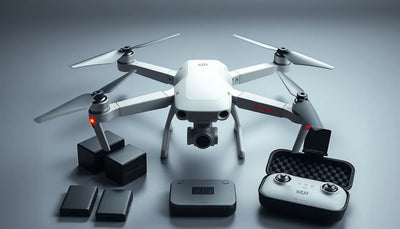
DJI Neo 3 Battery Concern Surfaces in Early Coverage
Early coverage of the DJI Neo 3 points to a short flight-time concern that could reshape buyer expectations, repair planning, and pre-owned market positioning for compact DJI drones.

Quick answer
Early coverage of the DJI Neo 3 highlights an 11-minute battery concern that may affect how buyers and operators evaluate the compact drone against the previous Neo 2.
- The report points to a short flight-time limitation in the DJI Neo 3.
- The concern centers on battery endurance rather than a confirmed hardware defect.
- Commercial operators may need to plan for more frequent battery swaps.
- The finding could influence pre-owned DJI Neo 2 demand and pricing.
Early reporting on the DJI Neo 3 has surfaced a battery endurance concern that could matter more to commercial operators than the headline specifications suggest. According to a report published by Geeky Gadgets and aggregated through Google News DJI, the DJI Neo 3 is being compared against the previous Neo 2 around what the outlet describes as an 11-minute battery flaw. The framing is not a formal recall or regulatory action, but the early coverage is enough to shape how buyers, repair customers, and fleet planners approach the model during its initial market window.
DJI buying context
Match product news to hardware you can actually deploy.
Check inspected DJI aircraft, repair support, and trade-in timing before deciding whether to upgrade, repair, or wait.

For a compact drone positioned around accessibility and short-duration flights, an 11-minute endurance figure is not automatically disqualifying. But it does change the operational math. Pilots who fly back-to-back jobs, inspection teams covering multiple points in a single session, and training programs that rely on repeated sorties will all need to account for battery turnover more carefully than they might with a longer-running platform. The concern, as reported, is not that the Neo 3 is unsafe; it is that the battery window may be tight enough to create friction in real-world workflows.
What the early coverage actually reports
The Geeky Gadgets piece frames the Neo 3 discussion around an 11-minute battery limitation when compared with the DJI Neo 2. The report does not, based on the available source data, attribute the figure to an official DJI specification sheet or a regulatory filing. It is presented as an early product observation, and Reboot Hub is treating it as source-limited reporting rather than a confirmed manufacturer disclosure. That distinction matters because battery performance can vary with temperature, payload, flight mode, and battery age.
Still, the practical takeaway is straightforward. If the Neo 3 delivers meaningfully less usable flight time than operators expect from the Neo 2, then the total cost of ownership shifts. A pilot who needs 60 minutes of cumulative flight time per day would need more batteries, more charging cycles, and more attention to battery health than a platform that delivers longer per-charge endurance. For repair shops and parts suppliers, that also means more frequent inquiries about battery replacement, connector wear, and charging hardware.
Battery endurance and the commercial operator calculation
Commercial drone decisions rarely hinge on a single specification. Endurance interacts with charging time, battery cost, spare availability, and how quickly a team can rotate packs in the field. If the Neo 3 requires more frequent swaps, operators should evaluate whether their existing charging infrastructure can keep up. A compact drone that spends more time on the charger than in the air can quietly erode the productivity gains that justified the purchase in the first place.
There is also a maintenance angle. Batteries that are cycled more often tend to reach replacement thresholds sooner. For operators who track battery health through charge counts, the Neo 3 could accelerate the timeline for sourcing replacement packs. That has downstream implications for parts planning, especially if OEM battery availability is tight during the early post-launch period. Fleet managers who standardize on one compact platform may want to hold additional spares specifically because the reported endurance window leaves less buffer for unexpected downtime.
What this means for drone owners and the market
Reboot Hub analysis: The immediate market effect is likely to be felt in how buyers weigh the Neo 3 against the Neo 2 and against competing compact platforms. If the Neo 2 offers a more forgiving battery window, some operators may choose to hold onto existing units rather than upgrade. That dynamic can support demand for inspected pre-owned DJI drones, particularly among pilots who prioritize endurance over the newest hardware. Buyers who are sensitive to battery logistics may find that a well-maintained Neo 2 remains a more practical choice for their workflow than a newer model with a tighter flight window.
For repair customers, the report is a reminder that battery-related service demand tends to follow endurance limitations. Shorter flight times mean more charge cycles, more heat exposure, and more physical handling of batteries and connectors. Reboot Hub analysis suggests that operators evaluating the Neo 3 should factor battery replacement cadence into their total cost model before committing to a fleet-wide rollout. Readers tracking the compact drone segment can also follow how competing designs respond, including the foldable platform hinted at in Insta360 Patent Hints At Foldable Drone To Rival Dji Neo 2, which may offer an alternative for buyers who want more flexibility without accepting a shorter endurance window. For owners evaluating service and lifecycle risk, Insta360 Patent Hints At Foldable Drone To Rival DJI Neo 2 explains the relevant repair, parts, resale, or operational path.
The pre-owned market impact is worth watching closely. If the Neo 3 battery concern becomes a persistent theme in user reviews, the Neo 2 could hold its resale value better than a typical previous-generation model. Sellers with well-documented battery health records may find buyers willing to pay a premium for a known quantity. Conversely, early Neo 3 units that enter the second-hand market with heavily cycled batteries could face steeper depreciation, especially if replacement packs are not yet widely available at stable prices.
What buyers and operators should watch next
The most useful next step for any buyer is to wait for independent battery testing under controlled conditions. Early coverage can identify a concern, but it cannot replace measured flight time across different temperatures, payloads, and flight modes. Operators who need to make a purchasing decision before independent testing matures should build a conservative battery plan into their budget. That means assuming more packs, more chargers, and more frequent replacement than they would for a platform with a longer endurance track record.
Fleet managers should also review how the Neo 3 fits into their existing battery ecosystem. If the platform uses a new battery form factor, the cost of switching is higher than the sticker price of the drone alone. Chargers, storage cases, and field power systems may all need to be updated. For repair providers, the early signal is to prepare for increased battery diagnostics and connector inspections as more Neo 3 units accumulate flight hours. The 11-minute figure may prove conservative in practice, but the operational planning should account for the possibility that it is not.
FAQ
Frequently asked questions
Is the DJI Neo 3 battery issue a confirmed defect?
No. The available reporting describes an endurance concern in early coverage, not a confirmed manufacturer defect or recall. Independent testing will be needed to establish consistent real-world battery performance.
Should commercial operators avoid the DJI Neo 3?
Not necessarily. Operators should evaluate whether the reported battery window fits their mission profile. Those needing longer continuous flight time may prefer the Neo 2 or a different platform, while short-duration use cases may still be viable.
How could this affect the pre-owned DJI market?
If the Neo 3 endurance concern persists, the DJI Neo 2 could hold value better than a typical previous-generation model. Buyers may seek inspected pre-owned Neo 2 units with documented battery health as a practical alternative.
Which sources support this update?
The article distinguishes reported information from analysis and does not present an unverified source as official confirmation.
What remains subject to change?
Retail pricing, availability, product bundles and regulatory timelines can change. Readers should verify the latest terms with the named retailer, manufacturer or regulator before acting.
How should buyers or operators use this analysis?
Use the verified facts as a starting point, then compare mission fit, lifecycle support, maintenance needs and current procurement terms before making a purchase or fleet decision.
Geraadpleegde bronnen
- Geeky Gadgets via Google News - primary source
Ten tijde van publicatie was geen aanvullende officiële documentatie beschikbaar.
De redactie van Reboot Hub voegt analyses toe over aankoop, reparatie, restwaarde en operationele aspecten voor drone-eigenaren. Indien u een fout constateert, neem dan contact met ons op voor een correctiebeoordeling conform ons redactionele beleid.