Chinese Team Claims Laser-Charged Drone with Unlimited Flight Endurance
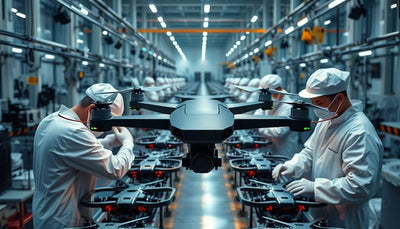
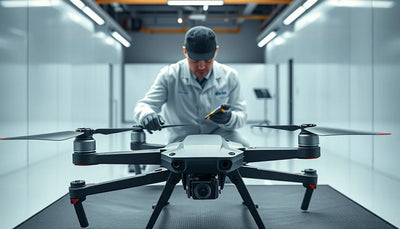
A Chinese research team has reportedly demonstrated a drone that stays airborne indefinitely using laser-based energy delivery. The claim, carried by Sina Mobile, points to a possible shift in how commercial operators think about flight time, battery wear, and long-duration mission planning.

Quick answer
A Chinese research team has reportedly demonstrated a drone that uses laser-based energy delivery to stay airborne without landing, according to a Sina Mobile report.
- The reported system uses laser energy transmission to keep the drone powered in flight.
- The claim suggests unlimited endurance for certain drone missions.
- Commercial operators should treat the report as early-stage research rather than an available product.
- The development could eventually reduce battery replacement and charging downtime costs.
A research team in China has reportedly demonstrated a drone that can remain airborne indefinitely by receiving energy through a laser-based charging system. The development was carried in a Sina Mobile report, which framed the breakthrough as a challenge to existing assumptions about drone endurance and battery limits. The report, which circulated through Google News, describes the work as a "never-landing" drone concept that has drawn attention from industry observers, including a reference to Elon Musk's reaction.
Market context
Turn market news into a buy, repair, or trade-in decision.
Compare pre-owned availability, resale timing, and repair economics before the market moves again.

For commercial UAV operators, fleet managers, and repair-focused buyers, the claim matters less as a finished product and more as a signal. If laser-charged flight moves from laboratory demonstration to field deployment, the economics of drone ownership could shift in ways that affect battery purchasing, charging infrastructure, maintenance intervals, and the resale value of current-generation aircraft.
What the source actually reports
The Sina Mobile article, which Reboot Hub is treating as a source-limited industry report, describes Chinese scientists as having overcome a core obstacle in drone endurance: the need to land for refueling or battery replacement. The reported approach uses laser energy transmission to deliver power to the aircraft while it remains in flight. The source frames this as a step toward "unlimited endurance," a phrase that should be read carefully in a commercial context.
Reboot Hub has not independently verified the technical details, the research institution involved, or the specific performance figures behind the claim. The source does not provide verified specification data, and no official confirmation from a named agency or company is included in the available material. What is clear is that the report positions laser-charged flight as a credible research direction with potential implications for long-duration aerial work.
For readers evaluating this news, the key distinction is between a laboratory demonstration and a deployable commercial system. Many endurance breakthroughs reported in academic and state media never reach the point where they affect purchasing decisions, repair workflows, or fleet planning. Still, the direction of research is worth tracking, because sustained flight without battery swaps would change how operators think about mission design.
Why endurance claims matter to commercial operators
Flight time is one of the most expensive constraints in commercial drone operations. Every battery swap costs labor time, every charging cycle contributes to battery degradation, and every landing introduces operational risk. A drone that could remain aloft for hours or days without returning to base would reduce those costs directly. That is why the Chinese laser-charging claim, even in early form, deserves attention from procurement teams and service providers.
Current commercial drones, including DJI platforms commonly used in inspection, mapping, and public safety work, operate within flight windows measured in minutes. Operators compensate by carrying multiple batteries, rotating aircraft, and planning missions around charging logistics. If laser energy delivery matures, the demand for spare batteries could decline, while the demand for ground-based power transmission equipment could rise. That is a meaningful shift for anyone holding inventory in batteries or planning long-term fleet purchases.
The pre-owned DJI market would also feel the effect over time. A large share of the value in a used drone transaction is tied to the condition and cycle count of the batteries included. If future platforms reduce or eliminate battery dependence, older aircraft with conventional power systems could see faster depreciation. That does not mean current drones lose value tomorrow, but it does mean buyers and sellers should watch how endurance research progresses before making large commitments.
What this means for drone owners and the market
For now, the practical takeaway is caution. The Sina Mobile report describes a research milestone, not a product announcement, and no verified specifications, pricing, availability, or certification details are available. Operators should not change their equipment plans based on this single report. However, the claim reinforces a broader market trend: endurance, energy delivery, and total cost of operation are becoming the central battlegrounds for commercial drone innovation.
Reboot Hub analysis: Fleet managers evaluating long-term budgets should consider how much of their current spending goes toward batteries, charging hardware, and downtime between flights. Those line items are the ones most likely to be disrupted if laser-charged or other extended-endurance systems reach commercial maturity. Buyers in the pre-owned market may want to prioritize aircraft with well-documented battery health and service history, since power system condition will remain a key value driver until new energy delivery methods are proven. For repair customers, the message is simpler: battery diagnostics and power system maintenance remain the highest-value services in the current market, and that is unlikely to change in the near term. Readers who want to understand how battery health affects resale value and repair decisions can review the Drone Wiki for context on power system care and inspection standards. For owners evaluating service and lifecycle risk, Drone Wiki explains the relevant repair, parts, resale, or operational path.
The commercial implication of the Chinese claim is not that operators should buy anything new. It is that the assumptions behind fleet planning may be shifting. If endurance stops being the primary constraint, mission design, insurance, airspace coordination, and maintenance scheduling all change. Companies that track these research signals early will be better positioned to adapt when verified products emerge.
What buyers and repair customers should watch next
The most useful next step for a drone buyer, pilot, or repair customer is to separate verified product developments from research headlines. A useful filter is to ask whether a claimed breakthrough is accompanied by independent test data, a named commercial partner, a regulatory filing, or a production timeline. None of those elements are present in the Sina Mobile report, which means the appropriate response is monitoring rather than action.
At the same time, the report is a reminder that the drone industry's cost structure is not static. Battery prices, charging technology, and energy delivery methods are all evolving. For operators who own or buy pre-owned DJI drones, the practical discipline remains the same: maintain batteries properly, document flight cycles, and treat power system condition as a core asset. Repair providers that can diagnose battery health accurately will continue to hold a strong position in the service market, even as new endurance technologies move through the research pipeline.
The laser-charging claim from China is best understood as an early indicator of where the industry is heading. It does not change what a buyer should do this quarter, but it does suggest that the long-term economics of drone ownership will look different as energy delivery improves. Operators who keep their fleets well-maintained and their procurement flexible will be in the strongest position to benefit when verified endurance systems reach the market.
FAQ
Frequently asked questions
Is the laser-charged drone available for purchase?
No. The Sina Mobile report describes a research demonstration, not a commercially available product. No pricing, availability, certification, or production timeline has been provided.
Should I delay buying a drone because of this report?
No. Current commercial drones remain fully capable for inspection, mapping, and other missions. The laser-charging claim is early-stage research, and operators should not change purchasing plans based on an unverified report.
How could this affect the pre-owned DJI market?
If extended-endurance systems eventually reach commercial use, drones that depend on conventional batteries could depreciate faster. For now, battery health and documented service history remain the key value drivers for pre-owned DJI aircraft.
Which sources support this update?
The article distinguishes reported information from analysis and does not present an unverified source as official confirmation.
What remains subject to change?
Retail pricing, availability, product bundles and regulatory timelines can change. Readers should verify the latest terms with the named retailer, manufacturer or regulator before acting.
How should buyers or operators use this analysis?
Use the verified facts as a starting point, then compare mission fit, lifecycle support, maintenance needs and current procurement terms before making a purchase or fleet decision.
Geraadpleegde bronnen
- Source material - primary source
Ten tijde van publicatie was geen aanvullende officiële documentatie beschikbaar.
De redactie van Reboot Hub voegt analyses toe over aankoop, reparatie, restwaarde en operationele aspecten voor drone-eigenaren. Indien u een fout constateert, neem dan contact met ons op voor een correctiebeoordeling conform ons redactionele beleid.