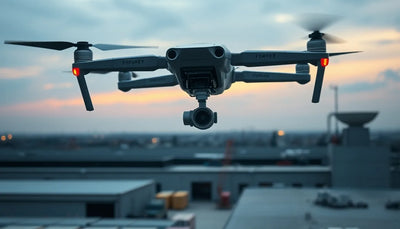
Automated Drone Missions Carry Hidden Risks on Construction Sites
Automated drone flights on construction sites promise efficiency, but an industry report from sUAS News highlights overlooked risks that can disrupt schedules, damage equipment, and complicate repair and resale decisions for commercial operators.

Quick answer
An sUAS News industry report highlights hidden risks in automated drone missions on construction sites, including operational blind spots and planning gaps that can affect flight reliability and equipment longevity.
- Automated missions can create operational blind spots on dynamic construction sites
- Planning gaps may increase the chance of flight interruptions or equipment stress
- Operators should audit automated workflows and maintenance intervals
- Pre-owned DJI fleet buyers should assess how automated use affects airframe condition
Automated drone missions have become a standard tool on construction sites, used for progress tracking, site mapping, and inspection workflows that once required manual flight hours. The appeal is straightforward: repeatable flight paths, consistent image capture, and reduced pilot workload across large or complex job sites. But according to an industry report published by sUAS News, the shift toward automation is introducing risks that many commercial operators have not fully accounted for in their planning, maintenance, or equipment lifecycle decisions.
Market context
Turn market news into a buy, repair, or trade-in decision.
Compare pre-owned availability, resale timing, and repair economics before the market moves again.

The report, titled The Hidden Risks of Automated Drone Missions on Construction Sites, examines how automated workflows can create blind spots that manual operations previously exposed. While automation reduces the chance of human error during routine flight execution, it can also mask problems that only become visible after a mission fails, a drone is damaged, or a data set is unusable. For drone buyers, fleet managers, and repair customers, the report raises practical questions about how automated mission profiles affect airframe wear, battery cycling, and long-term equipment value.
What the sUAS News report identifies
The sUAS News report frames automated drone missions as a double-edged tool for construction operators. On one side, automation allows a single pilot to manage repeatable flights across a job site with less direct control input. On the other side, the report suggests that automated flight planning can overlook site-specific variables that a human pilot would normally catch during pre-flight inspection or manual operation. These variables include shifting site conditions, temporary obstacles, and changes in terrain that occur between scheduled flights.
The central concern is not that automated drones are inherently unsafe, but that operators may place too much confidence in mission templates that were built for a site at a single point in time. Construction environments change daily. A flight path that was clear on Monday may be obstructed by new scaffolding, crane movement, or material staging by Wednesday. The report from sUAS News highlights this as a hidden risk because automated systems execute the mission as programmed, and the pilot monitoring the flight may not recognize the conflict until the drone is already in the air.
For commercial operators, this has direct implications. A collision or near-miss on a construction site can damage gimbal assemblies, arms, propellers, or sensor payloads. Even when damage is minor, it can trigger repair downtime that halts scheduled mapping or inspection work. Fleet managers who rely on automated missions should treat each flight profile as a living document that requires review against current site conditions, not as a fixed routine that can run indefinitely without adjustment.
Operational blind spots and equipment stress
Beyond obstacle conflicts, the sUAS News report points to a less visible category of risk: the cumulative stress that automated mission profiles place on drone hardware. Automated flights often follow identical paths at identical speeds, which can concentrate wear on specific motors, gimbal axes, and battery cells. A manual pilot varies flight behavior naturally, but an automated mission repeats the same movements dozens or hundreds of times. Over a long construction project, that repetition can accelerate wear in ways that are not obvious during routine pre-flight checks.
The report does not provide specific failure rates or hardware data, but the operational logic is clear for anyone managing a commercial drone fleet. A drone that flies the same automated grid every day will experience different wear patterns than a drone used for varied manual operations. This matters for repair planning because certain components may need replacement earlier than expected, even if the drone has not been involved in a crash or hard landing. It also matters for resale value, because a pre-owned drone with a history of intensive automated use may have hidden fatigue in motors, gimbals, or battery packs that a visual inspection will not reveal.
For operators buying pre-owned DJI drones, this is a useful filter. A drone that came from a construction fleet running daily automated missions may look clean on the outside but carry more internal wear than a drone used for occasional manual flights. Buyers should ask about the previous owner's mission profile, flight hours, and maintenance history rather than relying on cosmetic condition alone. This is where the broader market conversation around inspected pre-owned equipment and genuine OEM spare parts becomes relevant for commercial buyers who need predictable uptime.
What this means for drone owners and the market
The sUAS News report matters because it challenges a common assumption in the commercial drone market: that automation always reduces risk. In practice, automation shifts risk from pilot error to planning error, and planning errors on construction sites can be expensive. A damaged drone interrupts project timelines, creates repair costs, and forces operators to either maintain backup aircraft or accept downtime. For fleet managers, the report is a reminder that automated mission software is only as good as the site data and human oversight behind it.
For the pre-owned DJI market, the report adds a new dimension to how buyers should evaluate equipment. A drone that has been used for automated construction missions may have a different risk profile than one used for manual inspections or creative work. Buyers who understand this distinction can make better procurement decisions, and sellers who document their mission history and maintenance records can command more trust. Operators who need reliable equipment for construction work should consider working with suppliers that offer inspected pre-owned drones and genuine OEM spare parts, because the hidden wear patterns described in the sUAS News report are exactly the kind of issues that a thorough inspection and documented repair history can help surface. Reboot Hub's Drone Wiki provides additional context for operators evaluating equipment condition and repair options. For owners evaluating service and lifecycle risk, Drone Wiki explains the relevant repair, parts, resale, or operational path.
The report also has implications for insurance and warranty planning. If automated missions concentrate wear on specific components, operators may need to adjust their maintenance intervals or budget for earlier component replacement. This is not a reason to avoid automation, but it is a reason to treat automated flight hours differently from manual flight hours when calculating equipment lifecycle costs. A construction firm that flies 20 automated missions per week is putting different stress on its fleet than a firm that flies 20 varied manual missions, even if the total flight time is identical.
Practical steps for operators and buyers
The most useful takeaway from the sUAS News report is that operators should audit their automated mission workflows before scaling them further. That audit should include a review of how often mission templates are updated against current site conditions, whether pilots are trained to recognize when an automated flight should be aborted, and whether maintenance schedules account for the repetitive stress of automated flight profiles. These are operational questions, but they have direct financial consequences in the form of repair costs, downtime, and equipment resale value.
For buyers in the pre-owned market, the report suggests a more rigorous set of questions before purchase. What was the drone used for? How many automated missions did it fly? Were batteries cycled on a predictable schedule? Has the gimbal or motor assembly ever been replaced? These questions are harder to answer in a private sale, which is why many commercial buyers prefer suppliers that inspect equipment and provide documented condition reports. A drone that has been through a professional inspection is a safer purchase than one with an unknown mission history, especially for buyers who plan to use it in demanding construction environments.
Repair customers should also take note. If automated missions accelerate wear on specific components, then repair shops may see more gimbal, motor, and battery issues from construction fleets than from other commercial segments. That pattern, if it holds, could affect parts availability and repair turnaround times for certain DJI models. Operators who want to avoid extended downtime should consider keeping critical spare parts on hand or working with repair providers that stock genuine OEM components rather than relying on slower third-party supply chains.
The sUAS News report does not call for abandoning automated drone missions on construction sites. Automation remains a valuable tool for efficiency, consistency, and data quality. But the report makes a strong case that automation should be treated as a managed risk, not a set-and-forget solution. Operators who review their mission templates, monitor equipment wear, and plan for maintenance will get more value from automation than those who assume the software will handle everything.
FAQ
Frequently asked questions
What are the main hidden risks of automated drone missions on construction sites?
According to the sUAS News report, the main risks include outdated mission templates that do not reflect changing site conditions, reduced pilot awareness during automated flights, and cumulative hardware stress from repeated identical flight paths.
Should construction drone operators stop using automated missions?
No. The report does not recommend abandoning automation. Instead, operators should audit mission templates regularly, train pilots to recognize when an automated flight should be aborted, and adjust maintenance schedules for the repetitive stress of automated operations.
How does automated mission use affect pre-owned drone value?
Drones used intensively for automated construction missions may have hidden wear in motors, gimbals, and batteries that is not visible in cosmetic condition. Buyers should ask about mission history, flight hours, and maintenance records before purchasing pre-owned equipment.
Which sources support this update?
The article distinguishes reported information from analysis and does not present an unverified source as official confirmation.
What remains subject to change?
Retail pricing, availability, product bundles and regulatory timelines can change. Readers should verify the latest terms with the named retailer, manufacturer or regulator before acting.
How should buyers or operators use this analysis?
Use the verified facts as a starting point, then compare mission fit, lifecycle support, maintenance needs and current procurement terms before making a purchase or fleet decision.
Geraadpleegde bronnen
- sUAS News via Google News - primary source
Ten tijde van publicatie was geen aanvullende officiële documentatie beschikbaar.
De redactie van Reboot Hub voegt analyses toe over aankoop, reparatie, restwaarde en operationele aspecten voor drone-eigenaren. Indien u een fout constateert, neem dan contact met ons op voor een correctiebeoordeling conform ons redactionele beleid.