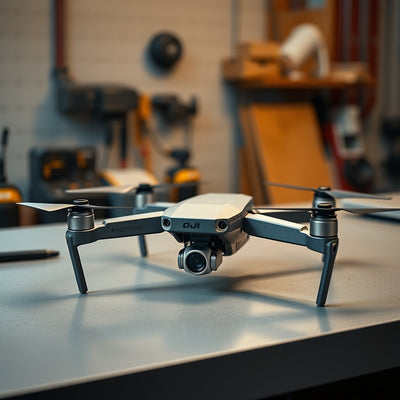
Southeast Asia Drone Adoption Shifts From Pilots to Industrial Scale
Southeast Asia's drone sector is moving from innovation pilots into real-world industrial deployment, according to a new industry report. The shift carries direct consequences for fleet planning, repair logistics, and pre-owned equipment demand across the region.

Quick answer
An Asian Military Review industry report says Southeast Asia's drone sector is transitioning from innovation-stage pilots into real-world industrial applications across multiple industries.
- The report frames the regional shift as a move from demonstration projects to operational deployment.
- Commercial operators should expect growing demand for fleet-level maintenance and spare parts planning.
- The trend may strengthen the pre-owned DJI market as cost-conscious operators expand fleets.
- Repair logistics and OEM-pulled parts become more relevant as utilization rates rise.
Verified facts
Market context
Turn market news into a buy, repair, or trade-in decision.
Compare pre-owned availability, resale timing, and repair economics before the market moves again.

What the available evidence confirms
| Phase | Operational focus | Maintenance implication |
|---|---|---|
| Innovation pilot | Limited deployments, proof of concept | Ad hoc repairs, low parts demand |
| Industrial scale | Continuous operations across industries | Scheduled maintenance, spare parts planning |
Southeast Asia's commercial drone sector is crossing a threshold. According to an industry report published by Asian Military Review, the region's drone activity is moving from innovation-stage demonstrations into real-world industrial applications. That transition, while gradual, changes what drone ownership and fleet operation actually look like on the ground.
The report frames the development as a regional shift rather than a single product launch or regulatory event. For commercial operators, repair customers, and buyers in the pre-owned DJI market, the signal is straightforward: drones are becoming working tools, not experimental assets. That has practical consequences for how equipment is maintained, financed, and replaced.
The reported shift from pilots to industrial use
Asian Military Review's reporting describes Southeast Asia's drone ecosystem as moving beyond early-stage innovation toward deployment in established industrial workflows. The source does not tie the shift to one specific company, agency, or contract. Instead, it presents a regional trend in which drones are being absorbed into agriculture, infrastructure inspection, logistics, and security operations.
For fleet managers, this is a meaningful distinction. Innovation pilots often tolerate downtime, custom modifications, and irregular maintenance schedules. Industrial deployment does not. When a drone becomes part of a daily inspection route or a recurring agricultural survey, unscheduled repairs turn into operational losses. The report's framing suggests that more Southeast Asian operators are now facing that reality.
What this means for drone owners and the market
As utilization rates rise, the economics of drone ownership shift. A drone flown occasionally for a pilot program can survive with reactive maintenance. A drone flown daily across industrial sites needs scheduled service, predictable access to spare parts, and a clear replacement path. The Asian Military Review report does not provide fleet-level statistics, but the directional change it describes aligns with what commercial operators already report in maturing markets. For owners evaluating service and lifecycle risk, Drone Wiki explains the relevant repair, parts, resale, or operational path.
For buyers in the pre-owned DJI market, the implication is twofold. First, higher regional demand for reliable airframes may tighten the supply of well-maintained used units. Second, operators expanding fleets under cost pressure often look for inspected pre-owned equipment rather than absorbing full retail pricing on every additional airframe. Reboot Hub analysis suggests that Southeast Asia's industrial shift could reinforce that behavior, particularly for operators who need standardized fleets without paying new-unit premiums across the board. Readers evaluating maintenance and parts options can consult the Drone Wiki for reference material on repair and ownership considerations.
Repair logistics also change. Industrial operators tend to prefer genuine OEM spare parts over third-party substitutes, because downtime from a failed component is more expensive than the part itself. That preference supports a more disciplined parts supply chain, which benefits repair providers who stock OEM-pulled components and can document provenance.
Regional demand signals for fleet planning
The Asian Military Review report highlights Southeast Asia as a region where drone adoption is no longer confined to early adopters. The source describes applications across multiple industries, which implies a broadening customer base. That broadening matters for procurement teams because it suggests demand for mid-range commercial platforms, not just high-end enterprise systems.
Operators planning fleet expansion in the region should consider standardization. A mixed fleet of different airframes creates training overhead, parts complexity, and repair delays. A standardized fleet, even if assembled partly from inspected pre-owned units, simplifies maintenance scheduling and reduces the number of spare part SKUs a team must hold. The report does not recommend specific platforms, but the logic applies across DJI's commercial lineup and competing systems.
For repair customers, the regional trend points toward preventive maintenance rather than break-fix service. When drones are embedded in industrial operations, inspections, firmware updates, and component replacement happen on a calendar, not after a failure. That is a different service model, and it rewards repair providers who can offer consistent turnaround times and documented parts sourcing.
Commercial implications for the pre-owned DJI market
The Southeast Asia development is not a DJI-specific announcement, but DJI's commercial platforms remain widely used across the region's agriculture, inspection, and mapping sectors. As industrial adoption grows, the pre-owned DJI market absorbs some of that demand. Cost-sensitive operators often choose inspected pre-owned airframes to expand capacity while preserving capital for sensors, batteries, and training.
Reboot Hub analysis suggests that buyers should pay closer attention to flight-hour history and maintenance records as the regional market matures. A pre-owned drone that spent its life in a low-utilization pilot program may be a better purchase than one pulled from continuous industrial service, even if both carry the same model name. The Asian Military Review report does not address resale conditions directly, but the operational shift it describes makes usage history a more important variable.
For fleet operators, the practical takeaway is to build replacement planning into the budget. Industrial drones accumulate wear on gimbals, motors, and landing gear at a faster rate than hobby or occasional-use aircraft. A disciplined operator will plan for component replacement before failure, which means having a parts source identified in advance.
FAQ
Frequently asked questions
What did the Asian Military Review report actually say?
The report describes Southeast Asia's drone sector moving from innovation-stage activity into real-world industrial applications across multiple industries. It frames this as a regional trend rather than a single company announcement or regulatory change.
How does this affect pre-owned DJI drone buyers?
As industrial adoption grows, demand for reliable pre-owned DJI airframes may increase, especially among operators expanding fleets under budget constraints. Buyers should prioritize maintenance history and flight-hour records when evaluating used equipment.
What should a fleet operator do differently after this report?
Operators should shift from reactive repair to scheduled maintenance, standardize airframes where possible, and identify a dependable source for genuine OEM spare parts before downtime becomes a problem.
Which sources support this update?
The article distinguishes reported information from analysis and does not present an unverified source as official confirmation.
What remains subject to change?
Retail pricing, availability, product bundles and regulatory timelines can change. Readers should verify the latest terms with the named retailer, manufacturer or regulator before acting.
How should buyers or operators use this analysis?
Use the verified facts as a starting point, then compare mission fit, lifecycle support, maintenance needs and current procurement terms before making a purchase or fleet decision.
참고 문헌
- Asian Military Review via Google News - primary source
발행 시점에 이용 가능한 추가 공식 문서는 없었습니다.
Reboot Hub 편집팀은 드론 소유자를 위해 구매, 수리, 재판매 및 운영 분석을 제공합니다. 오류를 발견하신 경우, 편집 정책에 따라 수정 검토를 요청해 주시기 바랍니다.
본 기사는 드론 운영자와 구매자를 위한 시장 논평이며, 투자 조언이 아닙니다. Reboot Hub는 금융 자문을 제공하거나 증권 거래를 권장하지 않습니다.