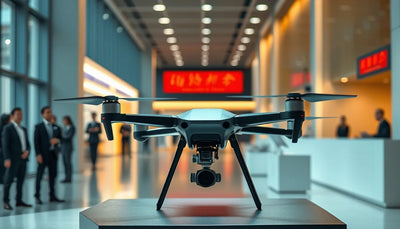
Shandong Pushes Vertical AI to Give Commercial Drones a Smarter Brain
Shandong News reports that a Ruihang low-altitude large model is being positioned as a smart brain for drones in the province. The development signals a shift toward AI-assisted flight, data processing, and operational decision-making for commercial UAV fleets.

Quick answer
Shandong News reports that a Ruihang low-altitude large model is being developed to give drones a smart brain for improved operational intelligence.
- The report comes from Shandong News and focuses on vertical-domain AI for low-altitude drone operations.
- The Ruihang model is described as equipping drones with smarter decision-making and data processing.
- The development points to growing commercial demand for AI-integrated UAV platforms in China.
- Operators should watch how AI-enabled flight systems affect fleet planning, maintenance, and resale value.
Shandong News reports that a Ruihang low-altitude large model is being positioned as a "smart brain" for drones in the province, part of a broader push into vertical-domain artificial intelligence for commercial UAV operations. The report frames the development around equipping drones with more advanced onboard intelligence, allowing them to process data and make operational decisions with less direct human intervention.
Market context
Turn market news into a buy, repair, or trade-in decision.
Compare pre-owned availability, resale timing, and repair economics before the market moves again.

For commercial operators, fleet managers, and repair customers, the announcement matters less as a single product launch and more as a signal. Chinese regional industry players are now treating AI integration as a core layer of drone capability, not an optional add-on. That shift has downstream consequences for how drones are flown, maintained, insured, and eventually resold.
What the Shandong report actually says
According to the Shandong News report, the Ruihang low-altitude large model is being developed as a vertical-domain AI system specifically for low-altitude drone operations. The source describes the model as giving drones a "smart brain," which suggests a focus on real-time data processing, flight decision support, and possibly autonomous mission adjustments.
The report does not provide detailed technical specifications, compatibility lists, or deployment timelines. Reboot Hub analysis would caution against reading too much into the operational readiness of the system based on this single source. What is clear is that Shandong is treating low-altitude AI as a strategic industrial category, and commercial drone activity is the primary use case being discussed.
For buyers and operators, the practical takeaway is that AI-enabled flight systems are moving from research labs into regional commercial planning. Even if the Ruihang model is still in development, the direction of travel is unmistakable: drones are being expected to do more cognitive work on their own.
Why AI integration changes fleet economics
If low-altitude large models become standard in commercial drone platforms, fleet operators will face new calculations around hardware longevity, software updates, and repair costs. A drone that relies on an AI model for mission planning or obstacle response may require more frequent software maintenance, even if its physical airframe remains unchanged.
The Shandong report does not address repair or aftermarket implications directly. However, Reboot Hub analysis suggests that AI-heavy drone platforms tend to shift value toward software and sensor integrity. A drone with a degraded camera, gimbal, or onboard processing unit may lose more operational value than a simpler platform would, because the AI layer depends on clean data inputs.
For pre-owned DJI drone buyers, this dynamic is worth watching. As AI-assisted flight becomes more common in enterprise and industrial segments, the resale value of older platforms may depend less on flight hours and more on whether their sensor and processing components remain fully functional. Inspected pre-owned units with verified camera and gimbal performance could hold value better in a market that increasingly treats data quality as the primary asset.
What this means for drone owners and the market
The Shandong development reinforces a broader commercial trend: drone value is shifting from the airframe to the intelligence stack. Operators who currently evaluate drones primarily on flight time, range, or payload capacity may need to add a new evaluation layer: how well the platform can integrate with AI-driven mission software and whether its onboard sensors can feed clean data to those systems.
For repair customers, this trend has a concrete implication. A drone that returns from a hard landing with a slightly misaligned gimbal or a scratched camera lens may still fly, but its usefulness in an AI-assisted workflow could be compromised. The cost of ignoring minor sensor damage rises when the platform is expected to make autonomous decisions based on visual data. Professional DJI repair that restores sensor and gimbal integrity becomes more commercially important, not less. Operators and buyers who want to understand how AI integration affects drone maintenance and resale can consult the Drone Wiki for reference material on platform upkeep and market considerations. For owners evaluating service and lifecycle risk, Drone Wiki explains the relevant repair, parts, resale, or operational path.
Fleet managers should also consider how AI-assisted drones affect pilot training and oversight. If a drone can adjust its own flight path or processing priorities, the human operator's role shifts toward mission supervision and exception handling. That may reduce the need for hands-on stick time but increase the need for diagnostic literacy, especially when the AI layer behaves unexpectedly.
The regional angle and what to watch next
Shandong is one of several Chinese provinces investing in low-altitude economy infrastructure, and the Ruihang model fits into that broader policy environment. The report from Shandong News does not name specific enterprise customers, government contracts, or commercial launch dates, so the immediate market impact is uncertain.
What operators should watch next is whether the Ruihang model moves from demonstration to deployment in actual commercial drone fleets. If regional logistics, inspection, or agricultural operators begin adopting AI-assisted flight systems at scale, that would create a clearer signal for procurement and aftermarket planning. Until then, the Shandong report is best read as an early indicator of where commercial drone technology is heading.
For now, the most sensible response for drone buyers and fleet operators is to keep AI readiness on the evaluation checklist. Ask whether a platform's sensors, processing hardware, and software ecosystem can support future AI integration. And for those holding pre-owned DJI inventory, pay closer attention to sensor and gimbal condition, because clean data inputs are becoming the foundation of drone value.
FAQ
Frequently asked questions
What is the Ruihang low-altitude large model?
According to Shandong News, the Ruihang low-altitude large model is a vertical-domain AI system designed to give drones a "smart brain" for improved operational intelligence in low-altitude commercial applications.
How could AI integration affect drone repair and maintenance?
AI-assisted drones depend on clean sensor and camera data to make decisions. Minor damage to gimbals, lenses, or onboard processing components could reduce operational value more than it would on a simpler platform, making professional repair and inspection more commercially important.
Should drone buyers change their evaluation criteria now?
Buyers and fleet managers should add AI readiness to their evaluation checklist, including sensor condition, processing capability, and software ecosystem compatibility. The Shandong report is an early signal, but the commercial direction is clear.
Which sources support this update?
The article distinguishes reported information from analysis and does not present an unverified source as official confirmation.
What remains subject to change?
Retail pricing, availability, product bundles and regulatory timelines can change. Readers should verify the latest terms with the named retailer, manufacturer or regulator before acting.
How should buyers or operators use this analysis?
Use the verified facts as a starting point, then compare mission fit, lifecycle support, maintenance needs and current procurement terms before making a purchase or fleet decision.
참고 문헌
- Source material - primary source
발행 시점에 이용 가능한 추가 공식 문서는 없었습니다.
Reboot Hub 편집팀은 드론 소유자를 위해 구매, 수리, 재판매 및 운영 분석을 제공합니다. 오류를 발견하신 경우, 편집 정책에 따라 수정 검토를 요청해 주시기 바랍니다.