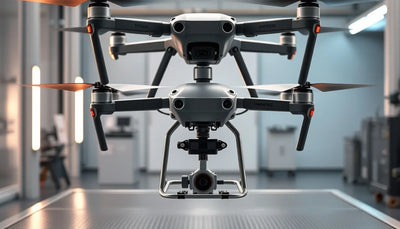
Shandong AI Model Gives Commercial Drones a Smarter Operating Brain
A Shandong-based vertical AI model is being positioned as a smart brain for low-altitude drone operations. The development points to faster data processing and more autonomous commercial workflows for fleet operators and drone service buyers across China's expanding low-altitude economy.

Quick answer
A Shandong-based vertical large model called Ruihang is being developed to give drones a smart brain for low-altitude operations, according to Jinan News.
- The model targets low-altitude drone operations in Shandong
- It is described as equipping drones with a smart brain
- The report frames this within China's vertical large model push
- Commercial implications center on autonomy and data processing
Shandong is emerging as a testbed for vertical-domain artificial intelligence in China's low-altitude economy. According to a report from Jinan News, the Ruihang low-altitude large model is being positioned as a smart brain for drones, a development that signals how regional AI infrastructure is starting to shape commercial drone operations.
Market context
Turn market news into a buy, repair, or trade-in decision.
Compare pre-owned availability, resale timing, and repair economics before the market moves again.

The report frames the initiative within a broader push for vertical large models in Shandong. Rather than a general-purpose AI system, the Ruihang model is tailored to low-altitude flight scenarios, suggesting a focus on the specific data, routing, and decision-making demands that commercial drone fleets face in real-world deployment.
What the Ruihang model represents for low-altitude operations
The core idea behind the Ruihang low-altitude large model is to move drones beyond basic remote piloting or pre-programmed routes. By equipping drones with a smart brain, the model aims to improve how unmanned aircraft interpret their environment, process flight data, and respond to changing conditions. Jinan News describes this as part of Shandong's vertical large model era, a regional strategy that treats AI as infrastructure rather than a standalone product.
For commercial operators, this matters because smarter onboard or ground-linked processing can reduce the manual workload required for complex missions. Inspection flights, agricultural surveys, logistics runs, and security patrols all generate large volumes of visual and sensor data. A vertical model trained specifically on low-altitude operations could help operators extract useful information faster and with less human intervention.
Reboot Hub analysis: the commercial value of such a model lies less in the AI itself and more in how it changes fleet economics. If drones can complete missions with fewer manual corrections, operators may be able to run more flights per day with the same team size. That shifts the cost equation for drone service providers and enterprise buyers alike.
Why regional AI infrastructure matters for drone adoption
Shandong's investment in a low-altitude large model reflects a broader pattern in China's drone sector, where provincial governments and industrial parks are building specialized AI capabilities to support commercial unmanned aviation. The Jinan News report positions Ruihang within this regional strategy, suggesting that the model is intended to serve local operators and enterprises rather than function as a global consumer product.
This regional approach has practical implications. Drone operators working in Shandong or with partners there may gain access to AI tools that are tuned to local airspace conditions, weather patterns, and regulatory workflows. For fleet managers, that could mean faster mission planning and more consistent operational performance across different flight environments.
However, the report does not provide specific technical benchmarks, deployment timelines, or commercial terms. Operators should treat the announcement as a directional signal rather than an immediately available capability. The absence of confirmed performance data means procurement decisions should not hinge on this model until more operational evidence emerges.
What this means for drone owners and the market
The emergence of vertical AI models like Ruihang points to a future where drone hardware is only one part of the operational stack. Software, data processing, and regional AI infrastructure are becoming equally important to mission success. For commercial buyers, this means evaluating drones not just on flight time or camera quality, but on how well they integrate with the data and AI tools available in their operating region.
For owners of pre-owned DJI drones, this shift has a subtle but real implication. As AI-driven operations become more common, the resale value of a drone will increasingly depend on its ability to feed data into downstream processing systems. A well-maintained aircraft with clean sensor output and reliable connectivity may hold value better than one with worn components, even if both still fly. Operators who keep their drones in strong condition through professional DJI repair and genuine OEM spare parts are better positioned to participate in AI-enabled workflows, whether through direct integration or through service providers that process flight data. For a clearer picture of how maintenance and component choices affect long-term drone value, the Drone Wiki offers practical reference material for owners and fleet managers. For owners evaluating service and lifecycle risk, Drone Wiki explains the relevant repair, parts, resale, or operational path.
Reboot Hub analysis: The low-altitude economy in China is expanding rapidly, and AI models tailored to drone operations are likely to become a differentiator for service providers. Companies that can offer faster data turnaround or more autonomous mission execution may win contracts over competitors that rely on manual flight operations. That competitive pressure will eventually filter down to equipment choices, maintenance budgets, and fleet refresh cycles.
What operators should watch next
The Ruihang announcement is best understood as an early signal rather than a finished product. Jinan News does not detail the model's architecture, training data, or integration requirements, which leaves open questions about how operators will actually access and use the system. Fleet managers should monitor whether Shandong publishes follow-up information on pilot deployments, partner companies, or performance results.
One practical step for operators is to audit their current data workflows. If your team still relies on manual image review or spreadsheet-based mission logs, the gap between your operation and AI-enabled competitors may widen as tools like Ruihang mature. Investing in structured data collection and clean sensor maintenance now can make future AI integration smoother.
Reboot Hub analysis: For buyers in the pre-owned market, the key takeaway is that software readiness is becoming part of drone value. An aircraft that has been inspected, maintained, and kept in strong working condition is more likely to serve as a reliable data source for AI-driven analysis. That makes condition history and component quality more important than ever in second-hand purchases.
FAQ
Frequently asked questions
What is the Ruihang low-altitude large model?
According to Jinan News, the Ruihang low-altitude large model is a vertical-domain AI system being developed in Shandong to give drones a smart brain for low-altitude operations. It is part of the region's broader push into vertical large models.
How could this affect commercial drone operators?
If deployed successfully, the model could reduce manual workload in data-heavy missions such as inspection, surveying, and logistics. Operators may be able to run more efficient flights and extract actionable information from drone data more quickly.
Should drone buyers change their purchasing decisions now?
Not immediately. The report does not include confirmed technical specifications or deployment timelines. However, buyers should pay closer attention to software integration potential and drone condition, since AI-enabled workflows may increase the value of well-maintained aircraft with clean sensor output.
Which sources support this update?
The article distinguishes reported information from analysis and does not present an unverified source as official confirmation.
What remains subject to change?
Retail pricing, availability, product bundles and regulatory timelines can change. Readers should verify the latest terms with the named retailer, manufacturer or regulator before acting.
How should buyers or operators use this analysis?
Use the verified facts as a starting point, then compare mission fit, lifecycle support, maintenance needs and current procurement terms before making a purchase or fleet decision.
참고 문헌
- Source material - primary source
발행 시점에 이용 가능한 추가 공식 문서는 없었습니다.
Reboot Hub 편집팀은 드론 소유자를 위해 구매, 수리, 재판매 및 운영 분석을 제공합니다. 오류를 발견하신 경우, 편집 정책에 따라 수정 검토를 요청해 주시기 바랍니다.