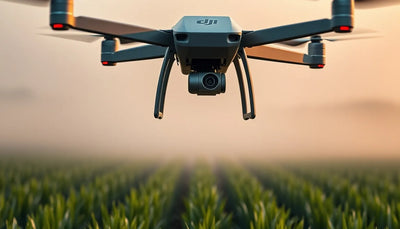
Medicine Hat to Host Canada’s Top Student Drone Contest in 2027
The Aerial Evolution Association of Canada selected Medicine Hat, Alberta for the 18th annual student UAS competition, May 14–16, 2027. The decision keeps the national contest in a region that is steadily building a drone talent pipeline and secondary market.

On June 27, 2026, the Aerial Evolution Association of Canada (AEAC) announced that Medicine Hat, Alberta will host the 18th edition of its Student Uncrewed Aircraft Systems Competition, scheduled for May 14 to 16, 2027. The choice keeps the country’s premier university and college drone contest within the same southeast Alberta corridor that hosted the 2025 event. For commercial fleet operators, repair businesses, and buyers active in the pre-owned DJI drone market, this decision is more than a travel itinerary update. It signals that the Canadian drone ecosystem is deepening its roots in a region with strong ties to energy, agriculture, and public safety—industries that increasingly rely on unmanned systems.
The AEAC competition and its place in Canadian drone development
The AEAC Student Uncrewed Aircraft Systems Competition has run annually for nearly two decades, drawing teams from universities and colleges across Canada. The 2027 edition marks the 18th iteration of an event that has become a proving ground for next-generation pilots, engineers, and UAS designers. By selecting Medicine Hat three years in advance, the AEAC is signalling continuity and investment in a region that already proved it can host a large-scale student aviation event in 2025.
For buyers and fleet operators, this continuity matters because student competitions are often early indicators of where commercial drone demand will grow. Teams typically use commercially available platforms—many from manufacturers like DJI—to develop their autonomous flight, payload integration, and data-processing skills. When those students graduate and enter the workforce, they bring familiarity with those same platforms, which tends to sustain demand for those models in the secondary market. The southeast Alberta corridor, which includes Medicine Hat and the broader region around Lethbridge, has a growing concentration of drone-related businesses and flight test sites. That cluster effect can make it easier for operators to find skilled pilots, repair technicians, and even used inventory.
Market context
Turn market news into a buy, repair, or trade-in decision.
Compare pre-owned availability, resale timing, and repair economics before the market moves again.

Furthermore, the AEAC’s choice to keep the event in Alberta suggests that local infrastructure—airspace access, regulatory support, and institutional partnerships—is mature enough to support repeated national-level competitions. For a fleet manager evaluating where to base a remote operations center or a repair depot, these are signals of long-term viability.
Implications for drone fleet operators and repair customers
While the competition is student-focused, its practical ripples reach commercial operators and repair shops in several ways. First, the event will almost certainly involve vehicle pre-flight inspections, post-mission maintenance, and battery management—activities that mirror the workflows of a professional fleet. Students and faculty who refine those procedures in a competitive setting often export those best practices to their future employers. Repair customers may notice that technicians trained in these environments approach diagnostics with a more systematic mindset, which can reduce turnaround times on common issues like motor bearing wear or gimbal calibration drift.
Second, the competition’s public exposure typically draws attention from local media and government stakeholders. That spotlight can accelerate municipal investment in drone-friendly policies, such as dedicated flight zones or streamlined permitting. For operators flying inspection missions over pipelines, power lines, or farmland in Alberta, a more permissive local framework can directly improve mission efficiency and reduce compliance costs.
Third, students frequently upgrade their drones between competition cycles, placing used but well-maintained airframes onto the secondary market. For a repair shop, these trade-ins can become a source of pristine pre-owned inventory after thorough inspection and component refresh. Fleet operators who keep an eye on the weeks following major student events—especially in regions like Medicine Hat—may find good candidates for expanding their fleets without paying retail.
What this means for drone buyers
For buyers considering a pre-owned DJI drone, the Medicine Hat decision reinforces the importance of geographic and temporal market awareness. The 2027 competition is more than a year away, but the competition cycle often triggers buying and selling patterns months earlier. Teams that receive new sponsorships or institutional funding for the upcoming competition may sell older equipment to raise capital—or to clear hangar space. Conversely, teams that underperform may pivot to different platforms, also releasing used units.
The southeast Alberta corridor, with its established drone infrastructure and relatively small population, creates a tighter, more transparent market compared to major urban centers. Buyers who have the ability to purchase from that area—whether directly or through an inspected pre-owned platform—may encounter less competition and better pricing on late-model DJI drones such as the Matrice 300 RTK or Mavic 3 series, which are commonly used in student operations for their reliability and payload flexibility.
Additionally, the AEAC’s selection of Medicine Hat validates the region as a hub for unmanned aviation talent. Fleet managers planning to hire pilots or technicians in Canada should factor in the growing pool of graduates from this corridor. Those graduates are likely to have hands-on experience with the exact airframes that commercial operators already fly, reducing the ramp-up time for new hires. For repair customers, the clustering of skilled personnel can also mean faster access to professional DJI repair services that use genuine OEM spare parts, since local technicians will have honed their skills on student teams’ equipment.
How to prepare for a shifting market
Whether you are a fleet operator, a repair business owner, or an individual buyer looking for a cost-effective entry into commercial-grade drone operations, the AEAC’s 2027 decision offers a tangible anchor for planning. Over the next twelve months, watch for announcements from the AEAC regarding the specific mission requirements for the 2027 competition. Those requirements often influence which platforms teams choose, which in turn affects the secondary supply of those specific models.
Fleet operators should consider establishing a relationship with a university or college that plans to compete. Sponsoring a team’s spare parts or battery packs not only builds goodwill but also gives the operator early access to students who may later become employees—or who may sell their used equipment directly to the sponsor. Repair shops can position themselves as preferred service centers for teams in the corridor, which builds a repeat customer base that will continue to need support even after the competition ends.
For buyers, the lesson is clear: if you have been waiting for the right moment to purchase a pre-owned DJI drone, the 2027 competition cycle may create a favorable window. Between late 2026 and early 2027, expect an uptick in trade-ins from teams refreshing their fleets. To take advantage, familiarize yourself with the condition criteria used by reputable resellers—airframe hours, battery cycle counts, firmware history—so that you can evaluate listings with confidence. A well-sourced pre-owned DJI drone from this pipeline can deliver near-new performance at a meaningful discount to retail.
Finally, keep in mind that the talent pipeline cultivated by the AEAC competition will gradually reshape the broader market. As more graduates enter the workforce, they will bring higher expectations for repair turnaround times and parts availability. Repair businesses that invest in OEM-certified training and genuine OEM spare parts now will be well positioned to serve this coming wave of professional pilots—many of whom will have had their first flight hours on student team equipment.
When is the AEAC Student UAS Competition 2027?
The 18th annual competition is scheduled for May 14 to 16, 2027, in Medicine Hat, Alberta, Canada.
Who selected Medicine Hat as the host city?
The Aerial Evolution Association of Canada (AEAC) made the selection, keeping the national student drone competition in the same southeast Alberta corridor that hosted the 2025 event.
How can drone buyers benefit from this competition?
Student teams often upgrade their equipment before a major competition, releasing used but well-maintained drones onto the secondary market. Buyers who monitor trade-in activity in the Medicine Hat region in late 2026 through early 2027 may find attractive pricing on late-model pre-owned DJI drones that have been professionally inspected.