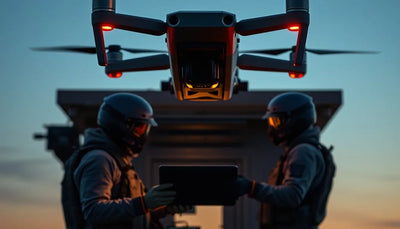
Drones Hit Russian Industrial Site Deep in Western Siberia
A reported drone strike on an industrial site deep in western Siberia highlights how unmanned systems are reshaping risk calculations for commercial operators, buyers, and fleet planners far beyond active conflict zones.

Quick answer
Bloomberg reported that drones struck an industrial site deep in western Siberia, demonstrating the expanding reach of unmanned systems into remote industrial regions.
- The reported strike targeted an industrial location far from the main conflict zone, according to Bloomberg.
- The event shows how drone activity now affects risk models for industrial and energy infrastructure.
- Commercial operators and buyers should monitor how such incidents influence insurance, airspace restrictions, and fleet planning.
- The pre-owned DJI market may see shifting demand as operators reassess security and compliance exposure.
Evidence: AeroVironment unmanned systems solutions
Market context
Turn market news into a buy, repair, or trade-in decision.
Compare pre-owned availability, resale timing, and repair economics before the market moves again.

Bloomberg reported that drones struck an industrial site deep in western Siberia, a development that underscores how unmanned aerial systems are now reaching targets and operating environments far beyond the front lines of active conflict. The report, carried through Google News, identifies the event as part of a broader pattern of drone activity affecting industrial infrastructure in remote Russian regions.
For commercial drone operators, fleet managers, and buyers in the second-hand market, the incident is not simply a geopolitical headline. It is a signal that the operational risk landscape for unmanned systems continues to shift. Insurance underwriters, airspace regulators, and enterprise procurement teams are all watching events like this closely, and their responses can ripple through pricing, compliance requirements, and resale demand for commercial platforms.
The reported incident and its context
According to the Bloomberg report, the strike targeted an industrial site located deep in western Siberia, a region far removed from the primary areas of military engagement. The distance involved is notable because it suggests that drone operations can now reach remote industrial and energy infrastructure that was previously considered low-risk or outside the immediate threat envelope.
Reboot Hub analysis: while the source does not specify the type of unmanned system used, the commercial implication is clear. Infrastructure operators and industrial facility managers are being forced to reconsider their assumptions about drone-related risk. A site that is geographically isolated is no longer automatically insulated from unmanned aerial activity, and that changes how security, monitoring, and counter-drone planning are approached.
For commercial drone buyers, this kind of event tends to accelerate two parallel trends. First, enterprise clients become more interested in detection and mitigation capabilities. Second, operators flying near sensitive industrial sites face tighter scrutiny and more restrictive flight permissions. Both trends can influence which platforms hold their value and which become harder to operate profitably in certain regions.
Risk, insurance, and operational planning
One of the most immediate commercial consequences of reported drone strikes on industrial infrastructure is the effect on insurance markets. When underwriters see unmanned systems involved in incidents near industrial assets, they often reassess liability exposure for commercial drone operations in adjacent sectors. That can lead to higher premiums, new exclusions, or additional requirements for operators who fly near energy, logistics, or manufacturing facilities.
Fleet managers should treat the western Siberia report as a prompt to review their own operating areas. If your flight routes pass near industrial zones, power infrastructure, or remote processing facilities, it is worth confirming that your current insurance coverage and airspace authorizations still reflect the latest risk environment. A reported incident on the other side of the world can still influence how local underwriters and clients evaluate your operation.
The pre-owned DJI market is not immune to these shifts. When insurance costs rise or airspace restrictions tighten, some operators reduce fleet size or exit certain mission types. That can increase the supply of inspected pre-owned units on the resale market, which in turn affects pricing. Buyers who are considering a pre-owned DJI platform should factor in the broader risk climate, not just the condition of the airframe and battery cycles.
What this means for drone owners and the market
The reported strike in western Siberia is a reminder that unmanned systems are now a persistent feature of industrial security planning worldwide. For drone owners, the practical takeaway is that the value of a commercial platform is increasingly tied to the regulatory and insurance environment around it, not just its technical specifications. A drone that is easy to insure and clear to fly in your target region is worth more than a technically superior model that carries operational friction.
Buyers evaluating pre-owned DJI drones should pay closer attention to the documentation and maintenance history that comes with a unit. As risk models tighten, having clear records of OEM-pulled parts, professional DJI repair, and proper firmware updates becomes more important for resale value and insurability. Operators who can demonstrate a clean, well-documented fleet are better positioned when underwriters or enterprise clients ask harder questions. For those researching platform longevity, repair options, and market positioning, the Drone Wiki offers a useful reference point for understanding how different DJI models hold up over time. For owners evaluating service and lifecycle risk, Drone Wiki explains the relevant repair, parts, resale, or operational path.
Fleet managers should also consider diversifying mission planning away from high-scrutiny zones where possible. If your current client work takes you near industrial infrastructure, it may be wise to build in additional buffer distances, document your flight approvals carefully, and keep communication open with site security teams. These small operational adjustments can protect your ability to fly and insure your fleet as the broader risk environment evolves.
Supply chain and resale considerations
Events like the reported western Siberia strike can also have indirect effects on drone supply chains. When industrial regions face elevated security concerns, logistics routes, component availability, and service networks in those areas can be disrupted. For operators who rely on genuine OEM spare parts or professional repair services, any tightening of supply chains in affected regions can extend turnaround times and raise costs.
Reboot Hub analysis: In the pre-owned market, this kind of uncertainty tends to reward buyers who act with documentation in hand. A pristine pre-owned DJI unit with verified maintenance history is a more defensible purchase when the broader operating environment feels less predictable. Sellers who can show that their units were serviced with OEM-pulled parts and professional DJI repair are likely to command stronger prices than those selling units with unclear histories.
Reboot Hub analysis: the commercial drone market has matured enough that geopolitical events now feed directly into buyer behavior, insurance pricing, and resale liquidity. Operators who treat their fleet documentation as a business asset, rather than an afterthought, will be better positioned to adapt when the next incident shifts the risk conversation again.
FAQ
Frequently asked questions
What exactly did Bloomberg report about the western Siberia incident?
Bloomberg reported that drones struck an industrial site deep in western Siberia, according to the source summary carried through Google News. The report does not specify the type of drone or the exact facility involved in the source data available for this analysis.
How could this affect commercial drone insurance and operations?
Reported drone activity near industrial infrastructure can prompt insurers to reassess liability exposure, potentially leading to higher premiums, new exclusions, or stricter requirements for operators flying near industrial zones. Fleet managers should review their coverage and flight authorizations in light of shifting risk models.
Should pre-owned DJI buyers change their purchasing approach after this news?
Buyers should place greater emphasis on documentation, maintenance history, and service records when evaluating pre-owned DJI units. As the operating environment becomes more risk-sensitive, verified repair history and OEM-pulled parts become more important for resale value and insurability.
Which sources support this update?
The visible evidence links identify AeroVironment unmanned systems solutions; each source is used only for the claim it directly supports.
What remains subject to change?
Retail pricing, availability, product bundles and regulatory timelines can change. Readers should verify the latest terms with the named retailer, manufacturer or regulator before acting.
How should buyers or operators use this analysis?
Use the verified facts as a starting point, then compare mission fit, lifecycle support, maintenance needs and current procurement terms before making a purchase or fleet decision.
참고 문헌
- Bloomberg.com via Google News - primary source
- AeroVironment unmanned systems solutions - official company source
Reboot Hub 편집팀은 드론 소유자를 위해 구매, 수리, 재판매 및 운영 분석을 제공합니다. 오류를 발견하신 경우, 편집 정책에 따라 수정 검토를 요청해 주시기 바랍니다.