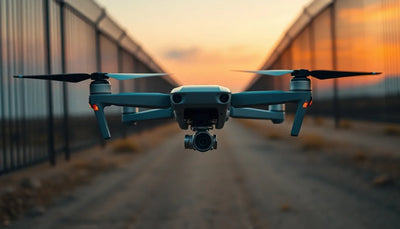
Ukraine’s Drone Testing Speed Reshapes Global Market Dynamics
Ukraine’s ability to test drone designs in days rather than months or years creates faster tech cycles and surplus hardware. Commercial operators and buyers should watch how this affects pricing, availability, and repair demand in the global second-hand market.

A single operational advantage is driving Ukraine’s defense industry forward: the ability to move a drone design from concept to field test in days, not months or years. That statistic, reported by Business Insider, is not a technical specification but a tempo of innovation that has implications far beyond the battlefield. For commercial drone buyers, fleet operators, and anyone involved in the second-hand drone market, this velocity creates ripple effects in hardware availability, repair service cycles, and the overall lifecycle of unmanned aircraft systems.
In a conflict where electronic warfare and air defenses evolve weekly, the luxury of multi-year development programs is gone. Ukraine’s industry has adapted by compressing testing timelines so tightly that prototypes can be evaluated, rejected, or iterated before a traditional R&D cycle would have produced a single report. While the article focuses on defense gains, the commercial drone world should pay attention: faster iteration means faster obsolescence of older airframes, shorter supply chains for components, and a steady flow of hardware into the pre-owned market.
Testing speed and the drone market
The core source detail—testing in days rather than months or years—highlights a structural difference in how drones are developed in a high-stakes environment. When a platform can be flown, measured, and modified within a week, the feedback loop between user and engineer becomes almost real-time. This rapid prototyping approach is not limited to military drones. The techniques and production efficiencies developed in Ukraine will likely influence commercial drone manufacturing as well.
Market context
Turn market news into a buy, repair, or trade-in decision.
Compare pre-owned availability, resale timing, and repair economics before the market moves again.

For fleet operators who manage large numbers of aircraft, the implication is clear: hardware refresh cycles may accelerate across the industry. If a new sensor or flight controller can be validated in days, older models lose their competitive edge faster than before. That does not mean every drone becomes obsolete quickly. But it does mean that resale values for last-generation airframes may decline more rapidly, and that buyers in the pre-owned market need to be more careful about firmware and component compatibility.
This is not a hypothetical shift. The source indicates that Ukraine’s defense industry has already institutionalized this speed. The broader drone manufacturing ecosystem, especially in regions where defense and commercial supply chains overlap, will face pressure to match that tempo. For buyers, that means a larger and faster-moving inventory of used drones will enter the market, offering both opportunity and risk.
What this means for drone buyers
Reboot Hub analysis: Commercial drone buyers who source equipment from second-hand channels should expect increased volume of recently decommissioned or surplus airframes. When defense programs iterate quickly, hardware that was considered cutting-edge six months ago may now be pulled from frontline service. That equipment often ends up on the open market, sold by contractors or through surplus brokers.
However, speed of testing does not guarantee quality. A drone that was validated in days may have undocumented modifications, nonstandard wiring, or experimental components that are not supported by the original manufacturer. Buyers should prioritize platforms that can be inspected thoroughly. Turning to a trusted source for pre-owned DJI drones or other major brands can reduce the risk of acquiring an airframe with unknown service history.
Another practical shift: repair shops may see an increase in requests for maintenance on drones that were originally designed for rapid deployment, not long-term durability. These airframes could require more frequent motor replacements, frame inspections, and firmware updates. Professional repair services that use genuine parts will become more valuable as the installed base diversifies.
What should a buyer do differently? Before purchasing any pre-owned drone, verify the original production date, check for evidence of aftermarket modifications, and request flight logs or maintenance records when possible. If the deal seems too cheap relative to current new pricing, it may reflect the rapid deprecation cycle that comes from fast-moving defense programs.
Implications for fleet operators and repair services
Fleet managers who operate drones for commercial applications—surveying, inspection, agriculture—should review their replacement planning assumptions. The traditional model of buying a drone and using it for three years before upgrading may be challenged by faster hardware evolution. While commercial flight requirements are different from military ones, the availability of newer sensors and processing capabilities from the defense sector can trickle down.
For repair services, the source detail underlines the need for agility. A drone model that was common a year ago may already have a successor with different part numbers. Keeping a stock of OEM-pulled parts becomes more strategic when airframes cycle quickly. Repair shops that offer professional DJI repair services with genuine components are best positioned to serve clients who need to extend the life of older equipment while awaiting new deliveries.
The secondary parts market will also evolve. When military buyers move on to the next generation, the supply of spare parts for previous models can spike, then dry up. Operators who rely on a single airframe type should consider building a small inventory of critical spares now, before supply becomes erratic.
How this affects the pre-owned drone landscape
The pre-owned drone market has historically been driven by enterprise fleet upgrades, hobbyist trade-ins, and insurance write-offs. The Ukraine article adds a new driver: rapid defense prototyping. The scale of hardware that may eventually exit that pipeline is uncertain, but the pattern is familiar. When a large buyer (in this case, a war-fighting nation) accelerates its procurement and attrition cycle, the secondary market receives a surge of used equipment.
For buyers in the pre-owned segment, this can mean lower prices, but also higher variance in condition. Some airframes may have flown only a few hours in testing; others may have been repaired multiple times in field conditions. Sellers may not always disclose the full history. Working with a seller who has a drone trade-in guide and inspection standards can help mitigate these risks.
The rapid iteration also affects the desirability of older models. A drone that cannot accept the latest payload or firmware may lose value quickly. Buyers should focus on modular platforms that allow sensor swaps and software updates, rather than tightly integrated systems that become obsolete when the manufacturer moves on.
Frequently asked questions
Does Ukraine’s testing speed directly impact commercial drone prices?
There is no direct price link yet, but the faster development cycles in defense tend to increase supply of used hardware in the global market, which can exert downward pressure on pricing for older models. Commercial buyers should monitor surplus auction sites and dealer inventories for volume changes.
How can I tell if a pre-owned drone came from a rapid development program?
Visually inspect for non-standard wiring, aftermarket payload mounts, or missing serial number labels. Request any available documentation. If the seller cannot provide a clear chain of custody, consider a professional inspection before purchase.
Should I delay buying a drone now because newer models will arrive faster?
Not necessarily. Rapid iteration does not mean that every new model is a breakthrough. Focus on your specific mission requirements and buy the best tool for today’s job. A well-maintained pre-owned drone from a trusted source can still deliver strong value, especially if the platform has modular upgrade paths.
Fonti consultate
- Business Insider Ukraine defense testing report - primary reporting source
- Ukraine Ministry of Defence - official government source
- BRAVE1 defense technology cluster - official Ukrainian defense innovation source
Reboot Hub Editorial fornisce analisi sugli acquisti, le riparazioni, la rivendita e l'operatività per i proprietari di droni. In caso di errori, contattateci per una revisione della correzione in conformità con la nostra politica editoriale.