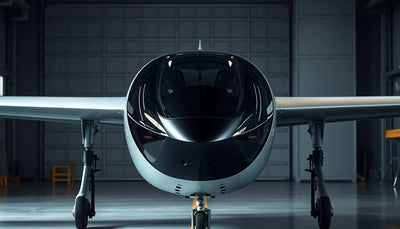
Royal Navy to test Talon Blue combat drone from carrier in 2027
The Royal Navy plans to trial Northrop Grumman's YFQ-48A Talon Blue autonomous combat jet from HMS Prince of Wales in 2027. The program signals shifting defense procurement toward uncrewed maritime aviation, with long-term implications for commercial drone supply chains and operator planning.

Quick answer
The Royal Navy is preparing to test Northrop Grumman's YFQ-48A Talon Blue autonomous combat jet from HMS Prince of Wales in 2027.
- SUAS News reports the Royal Navy plans Talon Blue trials from HMS Prince of Wales in 2027
- The YFQ-48A Talon Blue is a Northrop Grumman autonomous combat jet
- The trial marks a major step for uncrewed maritime aviation
- Defense procurement shifts like this can influence broader drone supply chains and component demand
Evidence: SUAS News · Defense.gov official source
Fleet readiness
Keep DJI hardware available without overbuying new units.
Use defense and fleet news as a planning signal for repair support, inspected pre-owned aircraft, and replacement timing.

The Royal Navy is preparing to test Northrop Grumman's YFQ-48A Talon Blue autonomous combat jet from HMS Prince of Wales in 2027, according to reporting by SUAS News. The planned trial represents a significant milestone for uncrewed maritime aviation and offers a concrete signal about where defense aviation procurement is heading over the next several years.
For commercial drone operators, fleet managers, and repair customers, defense programs like this rarely change day-to-day operations immediately. But they do shape the broader ecosystem: component supply chains, sensor development, autonomy software, and the pool of engineering talent that eventually filters into commercial platforms. Understanding these programs helps buyers anticipate shifts in parts availability, pricing pressure, and technology expectations.
The Talon Blue program and its naval context
SUAS News reports that the Royal Navy will use HMS Prince of Wales, one of the UK's two Queen Elizabeth-class aircraft carriers, as the test platform for the YFQ-48A Talon Blue. Northrop Grumman developed the Talon Blue as an autonomous combat jet, and the 2027 trials are framed as a major step for uncrewed maritime aviation. The reporting does not specify flight counts, payload configurations, or operational ranges, so those details should not be assumed.
The practical implication is that naval aviation is moving toward a mixed fleet model where crewed and uncrewed aircraft operate from the same deck. For commercial operators, that shift matters because it accelerates investment in autonomous flight control, deck handling systems, and beyond-line-of-sight communications. Those same technology areas underpin enterprise drone operations, inspection workflows, and long-range logistics missions.
Defense procurement and the commercial supply chain
Defense programs like Talon Blue create concentrated demand for specialized components: flight controllers, secure data links, precision actuators, and sensor packages. When defense buyers compete for those components, lead times can stretch and prices can shift for adjacent commercial markets. Reboot Hub analysis suggests that commercial operators should watch how naval autonomy programs influence component availability over the next two to three years, particularly in areas where defense and enterprise drones share suppliers.
The Talon Blue trial also reinforces a broader pattern: militaries are validating autonomous systems in demanding maritime environments before those technologies mature into commercial applications. Operators who track defense milestones can often spot early signals for reliability improvements, corrosion-resistant materials, and communications hardening that later appear in enterprise platforms.
What this means for drone owners and the market
For most drone owners, a Royal Navy carrier trial will not change their next purchase decision. But the strategic direction is worth noting. Defense investment in autonomous aviation tends to pull engineering resources and component supply toward high-reliability, high-cost programs. That can delay or reshape commercial product roadmaps, especially for enterprise platforms that share suppliers with defense contractors. Buyers evaluating long-term fleet plans should factor in the possibility of tighter component supply in autonomy-related categories.
For pre-owned DJI drone buyers and repair customers, the immediate impact is limited. DJI's consumer and enterprise platforms operate in a different supply chain than Northrop Grumman's defense programs. However, broader component market pressure can eventually influence repair parts pricing and availability for professional DJI repair work. Operators who want to understand how defense and commercial drone markets intersect can consult the Drone Wiki for background on platform categories, repair considerations, and market dynamics. For owners evaluating service and lifecycle risk, Drone Wiki explains the relevant repair, parts, resale, or operational path.
What operators should watch next
The 2027 timeline gives operators time to observe how the Talon Blue program develops. Key areas to monitor include whether the Royal Navy publishes trial results, whether Northrop Grumman pursues export variants, and whether any subsystem suppliers publicly discuss commercial applications of the technology. Each of those signals can indicate where autonomous aviation investment is concentrating.
Fleet managers should treat this as an early indicator rather than a direct market event. The most practical response is to maintain flexible procurement plans, avoid overcommitting to platforms that depend on constrained component categories, and keep repair and maintenance budgets realistic as defense-driven demand evolves.
FAQ
Frequently asked questions
What is the Talon Blue drone?
The YFQ-48A Talon Blue is an autonomous combat jet developed by Northrop Grumman. SUAS News reports that the Royal Navy plans to test it from HMS Prince of Wales in 2027.
Why is the Royal Navy testing Talon Blue from a carrier?
The trial is described by SUAS News as a major step for uncrewed maritime aviation, signaling the Royal Navy's interest in operating autonomous combat aircraft alongside crewed naval aviation from its Queen Elizabeth-class carriers.
Does this affect commercial drone buyers or repair customers?
There is no direct short-term impact on commercial drone pricing or repair costs. However, defense programs can influence component supply chains and technology development over time, which is worth monitoring for fleet planning and parts availability.
Which sources support this update?
The visible evidence links identify SUAS News and Defense.gov official source; each source is used only for the claim it directly supports.
What remains subject to change?
Retail pricing, availability, product bundles and regulatory timelines can change. Readers should verify the latest terms with the named retailer, manufacturer or regulator before acting.
How should buyers or operators use this analysis?
Use the verified facts as a starting point, then compare mission fit, lifecycle support, maintenance needs and current procurement terms before making a purchase or fleet decision.
Fonti consultate
- SUAS News - primary source
- Defense.gov official source - official government source
Reboot Hub Editorial fornisce analisi sugli acquisti, le riparazioni, la rivendita e l'operatività per i proprietari di droni. In caso di errori, contattateci per una revisione della correzione in conformità con la nostra politica editoriale.