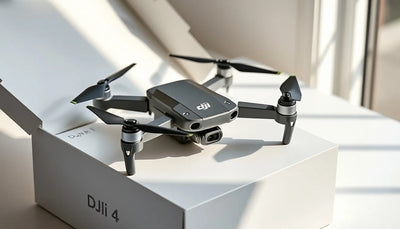
Lithuania nuclear ban repeal: Why drone buyers should watch
Lithuania’s parliament has agreed to lift its constitutional ban on nuclear weapons and foreign military bases. For drone buyers and fleet operators, this signals heightened defense spending and potential shifts in airspace rules that affect pre-owned DJI drone demand.

On July 2, 2026, Defense News reported that Lithuania’s parliamentary parties have agreed to lift a constitutional ban on nuclear weapons and the permanent stationing of foreign military bases in the Baltic nation. The move, described by officials as a response to a “situation getting worse,” marks a significant geopolitical shift for a country that borders Russia and Belarus. While the immediate focus is on nuclear deterrence and alliance posture, the decision carries concrete ripple effects for the commercial drone industry—especially for fleet operators, repair customers, and buyers in the pre-owned DJI market.
For anyone managing a drone fleet or planning a purchase in the coming months, this is not a distant headline. Lithuania is a member of the European Union and NATO, and its policy changes often foreshadow broader European security realignments. Increased defense spending, new base infrastructure, and tighter airspace controls are all likely consequences. And where defense budgets grow, drone procurement—both new and second-hand—tends to follow.
Defense spending and the drone procurement ripple
The Lithuanian agreement to end the nuclear weapon ban will almost certainly accelerate defense investment in the region. While the source article does not specify a dollar amount, the underlying rationale—“situation getting worse”—suggests that Lithuania and its allies will prioritize rapid military modernization. Drones are a natural fit: surveillance, reconnaissance, border monitoring, and force protection are all areas where UAVs deliver cost-effective capability.
Industrial drone procurement
Source a brand-new industrial drone for this mission.
Discuss mission fit, aircraft model, quantities, configuration, pickup, and lifecycle support with Reboot Hub.

For commercial drone buyers, the immediate implication is market tightening. As defense forces absorb new inventory—particularly from Western manufacturers—the availability of pre-owned DJI drones on the civilian market may shift. Fleet operators who had planned to upgrade by selling used aircraft could find a stronger buyer pool among defense subcontractors and security firms looking for proven platforms at lower cost. Conversely, buyers of inspected pre-owned units may see prices stabilize or rise if supply is diverted to institutional customers.
Additionally, the move could spur European allies to follow Lithuania’s lead. The Baltic region has long been a bellwether for NATO posture. If neighboring countries reconsider their own constitutional restrictions, the demand for tactical drones—both new and pre-owned—could increase significantly. Operators holding multiple pre-owned DJI drones may find this an advantageous time to list them, provided they can document clear provenance and maintenance history.
Airspace regulation and operational planning
One of the less obvious consequences of a nuclear weapon ban repeal is the impact on national airspace management. Lithuania will need to create secure corridors for potential allied deployments, which may involve new no-fly zones, altitude restrictions, or notification requirements. Commercial drone operators who fly near military installations, border regions, or critical infrastructure should anticipate tighter controls.
The source does not detail any specific airspace changes, but historical precedent from other NATO nations suggests that enhanced defense posture often leads to expanded temporary restricted areas (TRAs) and more frequent airspace closures. Fleet managers should review their operational plans for any Baltic or eastern European missions and consider whether their drones are equipped with geofencing systems that can be updated to reflect new restrictions.
For buyers in the pre-owned market, this reinforces the value of aircraft that support future firmware updates. Older DJI models that cannot be upgraded to comply with evolving remote identification or geofencing requirements could lose resale value. A pristine pre-owned unit with a recent maintenance record and current software is a safer investment in a volatile regulatory environment.
What this means for drone buyers
Whether you are purchasing your first quadcopter or adding to a multi-unit fleet, the Lithuania story should inform your buying decision in three concrete ways.
First, timing matters. If you are in the market for a pre-owned DJI drone, consider acting before defense demand absorbs available inventory. The second-hand supply of popular enterprise models such as the Matrice 300 or Mavic 3 Enterprise may tighten in the next 6–12 months as security-minded buyers compete for them. However, avoid rushing into a purchase without proper inspection. A professional DJI repair services check can identify hidden battery degradation or motor wear that would undermine the aircraft’s reliability in critical missions.
Second, plan for airspace uncertainty. If you operate in or near NATO’s eastern flank, build a buffer into your flight schedules. Allow extra time for airspace authorization, and maintain a relationship with your local civil aviation authority. Drones that can transmit ADS-B or operate with remote ID modules will have an easier time gaining clearance.
Third, consider trade-in timing. If you are holding a fleet of older drones that you intend to sell, this geopolitical shift offers a window. Defense contractors and logistics firms often prefer inspected pre-owned units to new ones because of shorter delivery times. Using a drone trade-in guide can help you assess fair value and prepare the aircraft for a quick sale.
In summary, drone buyers should factor regional security developments into their purchase timeline and budget. The market for pre-owned DJI equipment is not isolated from geopolitics—it reacts to supply shifts, regulatory changes, and institutional demand that originate in events like Lithuania’s constitutional revision.
Repair and spare parts outlook
Increased defense procurement often leads to longer lead times for OEM spare parts, as military orders can crowd out civilian supply. Lithuania’s move does not directly affect DJI’s supply chain, but it contributes to a European trend of prioritizing defense logistics. Commercial repair shops may face delays in receiving genuine OEM spare parts for enterprise drones if manufacturers prioritize institutional contracts.
For operators who rely on their drones for revenue—agriculture, inspection, security, or film—this means it is prudent to stock critical spares in advance. Propellers, batteries, gimbal assemblies, and main boards should be on hand if your fleet flies frequently. A professional DJI repair services provider can help identify which components are most vulnerable to supply disruptions and advise on preemptive replacements.
Additionally, the second-hand market for OEM components may become more active as fleet operators upgrade to newer models and sell pulled parts. Buyers of pre-owned DJI drones should verify that any replacement parts are genuine and not aftermarket counterfeits, as performance and safety can degrade significantly with non-OEM components.
Frequently asked questions
Will Lithuania’s nuclear ban repeal directly affect drone regulations in other European countries?
Not immediately. The decision is a national constitutional change, not an EU-wide directive. However, it sets a precedent that could encourage similar debates in other Baltic and Central European nations. Commercial drone operators should monitor national airspace authorities for any new restricted zones or security directives in the region.
Should I delay buying a pre-owned DJI drone because of this news?
No, but you should accelerate your due diligence. As defense demand grows, quality pre-owned inventory may become scarcer and more expensive. If you find an inspected pre-owned unit with clear flight logs and a valid certificate of authenticity, consider making your purchase sooner rather than later.
How can I prepare my fleet for potential airspace changes in the Baltic region?
Ensure all your drones have updated geofencing databases and remote ID modules if required. Maintain open communication with local air traffic control or civil aviation authorities. If you plan to fly near military installations, obtain advance permissions and document your compliance with all applicable rules.
Fonti consultate
- Defense News - primary source
Al momento della pubblicazione non era disponibile ulteriore documentazione ufficiale.
Reboot Hub Editorial fornisce analisi sugli acquisti, le riparazioni, la rivendita e l'operatività per i proprietari di droni. In caso di errori, contattateci per una revisione della correzione in conformità con la nostra politica editoriale.