Fisherman Pulls Shahed-Style Drone From Florida Waters Near Eglin AFB
A Florida fisherman recovered a delta-wing drone resembling the Shahed-136 family, and Eglin Air Force Base acknowledged losing a drone. The incident highlights how military test assets can surface in civilian areas and why operators should track defense drone activity.

Quick answer
A Florida fisherman recovered a delta-wing drone resembling the Shahed-136 family, and Eglin Air Force Base acknowledged losing a drone, according to The War Zone.
- The recovered airframe appears to be from the same family as drones used by the U.S. military against Iran
- Eglin Air Force Base confirmed it lost a drone in the area
- The incident raises questions about tracking and recovery of military test assets near civilian waterways
- Commercial operators should monitor defense drone activity when planning coastal missions
Evidence: The War Zone
Fleet readiness
Keep DJI hardware available without overbuying new units.
Use defense and fleet news as a planning signal for repair support, inspected pre-owned aircraft, and replacement timing.

Verified facts
What the available evidence confirms
| Aspect | Reported detail |
|---|---|
| Location | Florida waters, near Eglin Air Force Base area |
| Airframe type | Delta-wing drone resembling Shahed-136 family |
| Reporting source | The War Zone |
| Eglin AFB status | Acknowledged losing a drone |
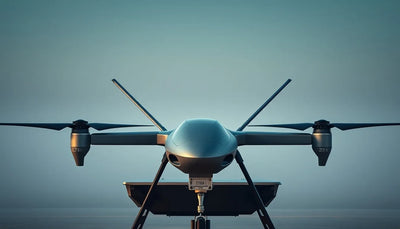
A Florida fisherman hauling in his catch off the state's Gulf Coast instead pulled up something far less ordinary: a delta-wing drone that appears to belong to the same family as the Shahed-136 one-way attack platforms used by the U.S. military in strikes against Iran. The recovery, first reported by The War Zone, quickly drew attention because Eglin Air Force Base, a major test and evaluation hub for unmanned systems, acknowledged that it had lost a drone.
The incident sits at an unusual intersection of defense testing, coastal civilian activity, and the growing public visibility of military drone programs. For commercial drone operators, fleet managers, and anyone tracking the second-hand UAV market, the episode is a reminder that military test assets can end up in unexpected places, and that recovery, identification, and accountability processes are not always immediate or transparent.
What the reporting shows about the recovered airframe
According to the primary reporting from The War Zone, the drone hauled in off Florida appears to be of the same family as the Shahed-136 clones used by the U.S. military to strike targets in Iran. The Shahed-136 is a delta-wing, one-way attack drone design that has become widely associated with long-range loitering munitions. The U.S. has developed and deployed similar platforms for its own operational and test purposes, and the Florida recovery suggests that at least one of those airframes ended up in coastal waters.
Eglin Air Force Base, located in the Florida Panhandle, is one of the most active test ranges for unmanned aerial systems in the United States. The base's acknowledgment that it lost a drone adds a layer of official recognition to the find, though the reporting does not confirm that the recovered airframe is definitively the same unit Eglin lost. That gap between a visual resemblance and a confirmed chain of custody is important for anyone trying to understand how military drone incidents are disclosed to the public.
For commercial operators, the key takeaway is procedural rather than technical. When a defense test asset goes missing, the identification and recovery process can take time, and public information may lag behind what local residents or operators observe on the ground or water.
Why defense test ranges matter for civilian airspace and waterways
Eglin Air Force Base operates over a vast area that includes both restricted airspace and adjacent civilian corridors. Drone testing at such ranges routinely involves platforms that are not available on the commercial market, and those tests can occasionally produce mishaps, lost links, or unplanned water landings. The Florida recovery is a concrete example of how a military test asset can drift or be carried into areas where recreational boaters, fishermen, and commercial drone pilots operate.
For a commercial UAV operator planning missions near coastal military ranges, the practical implication is to treat nearby test activity as a dynamic risk factor. Notices to airmen, temporary flight restrictions, and local marine advisories can all shift quickly when a test asset is unaccounted for. A drone found by a fisherman is not just a curiosity; it is evidence that the boundary between test range and public space is thinner than many operators assume.
Reboot Hub analysis suggests that fleet managers operating near defense installations should build extra buffer time into mission planning and maintain contact with local range control or harbor authorities when test activity is reported. The absence of a formal recovery announcement does not mean an area is clear.
What this means for drone owners and the market
The Florida recovery does not directly involve a commercial drone model, but it carries indirect signals for the broader UAV market. First, it reinforces the reality that military and civilian drone ecosystems are increasingly overlapping in terms of airframe shapes, flight profiles, and public awareness. A delta-wing loitering munition and a consumer camera drone are very different machines, yet both now share airspace narratives in coastal communities.
Second, the incident highlights the importance of serial numbers, registration, and visible identification on any drone operating near sensitive areas. When a drone is lost or recovered, the ability to trace it quickly depends on clear marking and ownership records. For commercial operators and buyers in the pre-owned DJI market, this is a useful reminder that documentation matters. A drone without a traceable history can create liability and recovery complications, even if the airframe itself is inexpensive to replace. For owners evaluating service and lifecycle risk, Hivemind Swarm U S Military S Shahed 136 Clone Gets Ai Powered Cooperative Attack Capability explains the relevant repair, parts, resale, or operational path.
For repair customers and fleet planners, the takeaway is more subtle. Military test activity near coastal ranges can temporarily affect local logistics, airspace access, and even marine traffic. Operators who depend on predictable flight windows should monitor defense testing schedules where available. Meanwhile, buyers evaluating Hivemind Swarm U S Military S Shahed 136 Clone Gets Ai Powered Cooperative Attack Capability coverage may find that defense drone developments shape public perception and regulatory attention in ways that eventually reach the commercial sector.
What should a buyer, pilot, or fleet manager do differently after reading this? At minimum, treat coastal military ranges as active operational zones rather than static map features. Before flying near Eglin or similar installations, check for temporary restrictions, log any unusual drone sightings through the appropriate channels, and keep your own aircraft marked and documented so that recovery and identification are straightforward if something goes wrong.
The longer-term signal for defense and commercial drone overlap
The Shahed-style recovery off Florida is part of a larger pattern in which defense drone programs and commercial UAV activity are becoming harder to separate in public discussion. The U.S. military's use of Shahed-family clones for strikes against Iran has already drawn attention to how one-way attack platforms are proliferating. When a similar airframe turns up in the hands of a Florida fisherman, it connects a distant operational story to a domestic, civilian context.
For the pre-owned DJI market and the repair economy, the connection is not direct but it is real. Public incidents involving military drones tend to increase scrutiny of all unmanned aircraft, which can lead to new local restrictions, heightened reporting expectations, or changes in how coastal communities view drone activity. Operators who stay ahead of those shifts by keeping their aircraft documented, their flight logs clean, and their airspace awareness current will be better positioned than those who treat defense testing as someone else's problem.
The War Zone's reporting leaves several questions open, including whether the recovered airframe has been formally matched to Eglin's lost drone and what caused the loss in the first place. Those details may emerge through official statements or further reporting. Until then, the incident stands as a concrete example of how quickly a military test asset can enter civilian space, and why operators on the water and in the air should pay attention.
FAQ
Frequently asked questions
Was the drone found in Florida confirmed to be a Shahed-136?
The War Zone reported that the recovered airframe appears to be of the same family as the Shahed-136 clones used by the U.S. military against Iran, but no official confirmation of an exact model match was included in the source data.
Did Eglin Air Force Base confirm the drone was theirs?
Eglin Air Force Base acknowledged that it lost a drone, according to the reporting, but the source does not confirm that the recovered airframe was definitively matched to that specific loss.
Should commercial drone operators avoid flying near Eglin AFB?
Operators should treat coastal military ranges as active zones and check for temporary flight restrictions or marine advisories before flying. The incident shows that test assets can end up in civilian areas, so extra planning caution is warranted.
Which sources support this update?
The visible evidence links identify The War Zone; each source is used only for the claim it directly supports.
What remains subject to change?
Retail pricing, availability, product bundles and regulatory timelines can change. Readers should verify the latest terms with the named retailer, manufacturer or regulator before acting.
How should buyers or operators use this analysis?
Use the verified facts as a starting point, then compare mission fit, lifecycle support, maintenance needs and current procurement terms before making a purchase or fleet decision.
Fonti consultate
- The War Zone - primary source
Al momento della pubblicazione non era disponibile ulteriore documentazione ufficiale.
Reboot Hub Editorial fornisce analisi sugli acquisti, le riparazioni, la rivendita e l'operatività per i proprietari di droni. In caso di errori, contattateci per una revisione della correzione in conformità con la nostra politica editoriale.