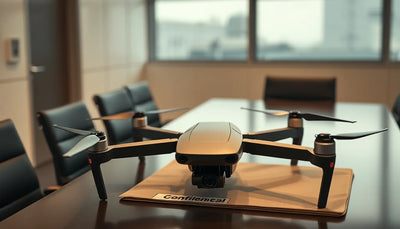
F-15E Pilot Spotted a "Jellyfish-Like" Drone Swarm Over Iran
A downed F-15E pilot reportedly saw a "jellyfish-like" drone swarm over Iran. We examine what this sighting means for drone technology, fleet planning, and the pre-owned DJI market.

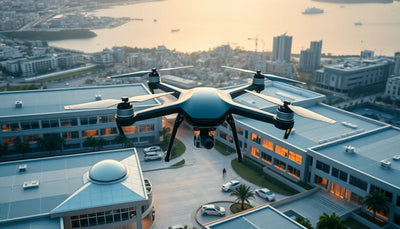
A recent report from The War Zone describes an account in which a U.S. Air Force F-15E Strike Eagle pilot, whose aircraft was downed over Iran, reportedly saw what he described as a “jellyfish-like” formation of drones in the sky before the jet went down. The pilot referred to the scene as a “minefield of drones,” suggesting a dense, layered, and coordinated presence of unmanned aerial systems operating in a contested environment. While the full details of the incident remain unconfirmed, the description offers a rare glimpse into how drone swarms are being perceived at the tactical level—and what that could mean for the broader drone economy.
For commercial drone buyers, fleet operators, and second-hand market analysts, this is not merely a war story. It is a signal that swarm technology, once confined to research labs and experimental military programs, is maturing rapidly. The operational characteristics behind a “jellyfish-like” formation—multiple aircraft moving in loose synchronization, appearing organic from a distance, and potentially capable of autonomous coordination—represent a level of capability that will inevitably influence civilian drone design, regulation, and the value of existing equipment.
What the “jellyfish-like” swarm tells us about current drone capabilities

The pilot’s use of the word “minefield” implies not only density but also threat: the drones were not merely present but were positioned in a way that made flight through them hazardous. The “jellyfish” description suggests a swarm that moves as a collective, with individual units maintaining relative positions without rigid structure—much like the pulsing, drifting motion of a marine organism. This is consistent with advances in distributed swarm algorithms that allow drones to self-organize without centralized control, using local communication and sensors to avoid collisions while maintaining coverage.
Fleet readiness
Keep DJI hardware available without overbuying new units.
Use defense and fleet news as a planning signal for repair support, inspected pre-owned aircraft, and replacement timing.
Although the source does not provide technical details about the specific drones involved, the reported sighting aligns with known trends in drone swarm development. Programs in multiple countries have demonstrated swarms of 50, 100, or more small UAVs operating together using mesh networking and onboard computer vision. These systems are designed to overwhelm air defenses, perform distributed reconnaissance, or carry out synchronized electronic warfare. For commercial operators, the key takeaway is that the underlying technology—swarm coordination, resilient communications, and autonomous rerouting—is far from theoretical.
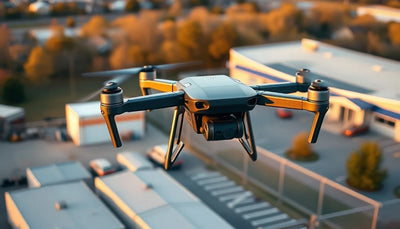
From a fleet planning perspective, this means that software and networking capabilities are advancing faster than airframe hardware. A quadcopter built three years ago with basic GPS waypoint navigation may already be obsolete in terms of its ability to participate in coordinated multi-unit operations. Buyers looking at the second-hand market should pay close attention not just to the airframe condition, but to the flight controller’s support for inter-drone communication protocols and the availability of firmware updates that enable swarm-like behaviors.
Implications for the defense procurement and repair ecosystem

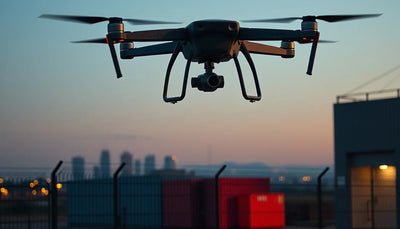
The reported sighting over Iran also highlights the growing gap between low-cost, expendable drones and high-value manned platforms like the F-15E. The “minefield” analogy suggests that even a large number of relatively simple drones can create a no-go zone for aircraft that cost tens of millions of dollars. For defense procurement, this reinforces the logic of investing in counter-UAS technology, but it also creates a robust secondary market for used drones that can be repurposed for training or evaluation.
Commercial repair shops and parts suppliers may see increased demand for components that are common across both military and civilian platforms. Many small drones share off-the-shelf motors, ESCs, and propellers. If military swarms rely on low-cost, high-volume UAVs, then genuine OEM spare parts for popular platforms—like those used in the DJI ecosystem—become more valuable. Fleet operators who maintain their drones through professional DJI repair services can ensure their aircraft remain flight-ready while also prolonging the operational life of components that might otherwise be cycled out prematurely.
Additionally, the event underscores the importance of firmware security and supply chain verification. When drones are used in contested environments, trust in the hardware becomes paramount. Buyers of pre-owned DJI drones should verify that the aircraft have not been tampered with and that all components are genuine. This is especially relevant for operators who intend to fly in sensitive airspace or near critical infrastructure.
What this means for drone buyers

For the commercial drone buyer, the reported swarm over Iran serves as a reminder that the technology curve is steep and continuous. What is cutting-edge today—autonomous formation flight, mesh networking, obstacle avoidance—will become standard in the next generation of enterprise drones. Buyers should consider not just the current capabilities of a drone but its upgrade path. Can the flight controller be updated to support new swarm algorithms? Is the communication module capable of peer-to-peer data sharing? Does the manufacturer have a roadmap for multi-drone coordination?
In the pre-owned DJI market, aircraft that are three to four years old may still be excellent for solo missions, but they are unlikely to support advanced cooperative behaviors. If your fleet plan includes scaling up to multi-drone operations, you may want to prioritize newer models that have been designed with networking in mind. High-time airframes with older flight controllers may still be valuable for single-pilot work such as aerial inspection, mapping, or cinematography, but they are not a good investment if you plan to scale into swarms later.
Repair decisions also change. When a drone is involved in a minor crash, the cost of replacing a damaged arm or motor with professional DJI repair services may be worth it only if the drone’s flight controller and communication module are still current. If the drone lacks the ability to receive future firmware updates, putting money into airframe repairs may be a losing proposition. Buyers should evaluate the full electronics stack, not just the airframe condition.
For those considering entering the drone market through drone trade-in guide programs, it is a good time to assess whether your older units can be traded for credit toward newer models that offer better swarm-readiness. Trade-in programs allow operators to upgrade their fleets without absorbing the full cost of new equipment, and they keep older but reliable drones in the pre-owned channel where they can serve solo missions for budget-conscious buyers.
How the second-hand drone market may shift

The “jellyfish-like” drone swarm sighting is not a market-moving event on its own, but it is a cultural and informational signal that will influence buyer sentiment. As defense applications of drone swarms become more visible, commercial operators may start to see value in networking-capable drones, even if they currently operate alone. This could drive demand for certain used models that are known to support third-party swarm software or that have modular communication payloads.
Conversely, drones that are locked into closed ecosystems with no support for multi-unit coordination may depreciate faster. The pre-owned market will likely segment into two tiers: solo-friendly aircraft that are affordable and reliable for single-pilot tasks, and connected aircraft that command a premium because they can be integrated into a larger system of drones. Repair shops will need to adapt by stocking parts for both tiers and by offering upgrade services for flight controllers and communication modules.
Supply chain reliability also matters. If military demand for certain drone components spikes due to swarm programs, civilian availability of genuine OEM spare parts may tighten. Fleet operators who keep a stock of critical spares or who use professional DJI repair services that source genuine parts will have an advantage in keeping their aircraft airborne during supply gaps.
Finally, the second-hand market may see increased interest from buyers who want to experiment with swarm concepts on a budget. A used mini-class drone that can be reprogrammed to follow simple formation patterns is a low-cost way to learn the operational and safety challenges of multi-drone flights. This kind of experimental demand can support values for older models that are still capable and modifiable.
Was the “jellyfish-like” swarm actually a known drone type?
The source does not specify which drone model or manufacturer was involved. The description—“jellyfish-like” and “minefield”—suggests a large number of small UAVs operating together, but no technical details such as make, model, or radio frequency have been confirmed. Commercial operators should treat the sighting as a general indicator of swarm maturity rather than a specific hardware reference.
Should commercial drone operators invest in swarm-capable drones now?
Not necessarily immediately, but operators who plan to expand their fleet within the next two years should prioritize drones that support mesh networking and open communication protocols. Buying used drones that are two or three years old with updateable flight controllers can be a cost-effective way to prepare for swarm operations without paying full retail for the latest models. The drone trade-in guide can help evaluate the value of current equipment toward such an upgrade.
Does this incident affect the value of pre-owned DJI drones?
Indirectly, yes. The visibility of swarm technology increases interest in drones that support cooperative flight. Older DJI models that lack these capabilities may depreciate faster relative to newer models that offer built-in networking features. However, many pre-owned DJI drones remain excellent solo platforms, so their value for single-pilot applications remains stable. Buyers should match their purchase to their operational needs rather than chase the latest swarm trend if they do not require it.