EHang’s Hong Kong Sandbox Win and What It Means for Drone Operators
EHang (EH) was selected for Hong Kong’s Low-Altitude Economy Regulatory Sandbox X, enabling trial flights of its pilotless EH216-S eVTOL. This move signals evolving urban airspace rules that could reshape compliance for commercial drone fleets in the Greater Bay Area.

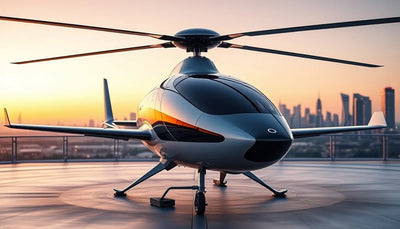
EHang Holdings (NASDAQ: EH) announced that it was selected, alongside Kwoon Chung Smart Mobility and Hong Kong Cyberport, for Hong Kong’s Low-Altitude Economy Regulatory Sandbox X. This initiative allows the company to conduct compliant trial operations of its pilotless EH216-S eVTOL in the city. For commercial drone operators and fleet managers following urban air mobility developments, this sandbox participation signals more than just a company milestone – it reflects a broader regulatory effort to shape real-world use cases for low-altitude flight in a densely populated urban environment.
While EHang’s technology is distinct from the multirotor drones used by most commercial operators today, the regulatory framework being tested in Hong Kong could set precedents for how all low-altitude aircraft – including traditional UAVs – are integrated into controlled airspace. Understanding these developments is valuable for anyone managing drone fleets, planning repairs, or evaluating pre-owned DJI drones for future operations in regions with evolving airspace rules.
Understanding the Hong Kong Low-Altitude Economy Regulatory Sandbox X
The regulatory sandbox announced in mid-2026 is a structured environment designed to allow novel aviation concepts to be tested under real conditions while maintaining safety oversight. EHang’s inclusion, together with Kwoon Chung Smart Mobility (a subsidiary of Kwoon Chung Bus Holdings) and Hong Kong Cyberport (a technology hub), indicates that the sandbox will evaluate both vehicle performance and operational procedures. Hong Kong has been actively pushing to build a low‑altitude economy, and this sandbox is one of its most concrete steps yet.
Operator checklist
Turn policy news into a safer fleet decision.
Before changing aircraft, compare repair paths, available DJI inventory, and trade-in timing against the rule change.

According to the source, the sandbox enables compliant trial operations of the EH216-S in Hong Kong. This pilotless eVTOL has been in development for years, but what matters operationally is that the sandbox provides a pathway to gather data on how such vehicles interact with existing air traffic, weather constraints, and ground infrastructure. For drone operators, the key takeaway is that regulators are willing to create dedicated test corridors. Such corridors may eventually influence standardised airspace classes for all unmanned systems, including the popular DJI Matrice and Mavic series flown by fleet operators today.
Concrete entities named in the source – EHang, Kwoon Chung Smart Mobility, Hong Kong Cyberport, and the Greater Bay Area – show that this is not an isolated experiment but part of a regional strategy. The sandbox could accelerate certification and operational guidelines that ripple into commercial drone regulations across Asia.
EHang’s Strategic Positioning in the Greater Bay Area
Hong Kong’s Low-Altitude Economy Regulatory Sandbox X is geographically and economically tied to the Greater Bay Area – a cluster of cities including Shenzhen, Guangzhou, and Macau. EHang’s participation strengthens its narrative as a leading player in urban air mobility within this region. The company already has a history of flight demonstrations and early certification steps in China, so the Hong Kong sandbox adds international credibility and a new test environment with different weather and airspace constraints.
From a fleet planning perspective, the Greater Bay Area’s growing emphasis on low‑altitude flights means that drone operators working in logistics, inspection, or surveillance should anticipate tighter coordination with manned eVTOL traffic. While EHang’s EH216-S is pilotless and designed for passenger transport, its operational data will inform how shared airspace is managed. For example, corridors designated for eVTOLs may exclude or restrict traditional drones, affecting where commercial UAVs can fly. Fleet managers who rely on pre-owned DJI drones for routine operations should monitor these developments closely, especially if they plan to expand into Chinese markets or work with cross‑border logistics companies.
The sandbox also highlights the role of infrastructure partners like Hong Kong Cyberport. Technology hubs that support testing can influence which compliance systems become standard – such as remote identification, geofencing, and traffic management interfaces. If these systems align with existing DJI infrastructure (e.g., AeroScope or FlySafe), the transition for operators using DJI hardware could be smoother. However, the source does not specify any technical integration details, so it is prudent for operators to wait for concrete regulatory guidance rather than assume compatibility.
What this means for drone buyers
For buyers of commercial drones – especially those considering pre-owned DJI drones – the EHang sandbox win has several indirect but important implications. First, regulatory momentum often leads to new compliance requirements. As urban air mobility expands, authorities may mandate advanced remote identification, height‑based geo‑zones, or operator licensing for any aircraft operating within city limits. Second, the push for a low‑altitude economy could increase demand for capable drones that can integrate with future traffic management systems. Third, second‑hand market pricing for older DJI models without robust geofencing or remote ID capabilities may soften as fleet operators upgrade to compliant hardware.
What should a buyer or fleet manager do differently after reading this? Start reviewing your fleet’s compliance readiness now. If you operate in or near a region where low‑altitude airspace is being redefined (Hong Kong, the Greater Bay Area, or any major city pursuing similar sandbox programs), ensure your drones meet the latest standards for remote identification and geo‑awareness. For those considering purchasing a pre-owned unit, we recommend checking that the model supports firmware updates for remote ID and geofencing. Our pre-owned DJI drones are inspected to ensure they can run current firmware, giving you a path toward compliance. If you already own a fleet and need to upgrade avionics or sensors, our professional DJI repair services can help extend the life of your equipment with genuine OEM spare parts while keeping you aligned with new regulations.
Additionally, keep an eye on trade‑in opportunities. As regulatory sandboxes grow into everyday operations, you may want to transition older units for newer models that offer better integration with urban air mobility networks. Our drone trade-in guide outlines how to evaluate the value of your current equipment against future compliance costs.
Broader Implications for Fleet Planning and the Pre-Owned DJI Market
The Hong Kong sandbox is a clear signal that regulators are moving from theoretical frameworks to active testing of low‑altitude aircraft in city environments. This shift will inevitably influence the commercial drone ecosystem. For fleet operators, the most immediate impact may come in the form of amended airspace classifications. If EHang’s eVTOL trials prove successful, we could see permanent low‑altitude corridors established in Hong Kong and later expanded to other cities. These corridors will require drone operators to either stay out of certain zones or equip their aircraft with interoperable traffic management transponders.
In the pre‑owned DJI market, demand for older models – those without built‑in ADS‑B receivers or advanced remote ID modules – may decline as regulations tighten. Conversely, second‑hand units of the DJI Matrice 300/350 RTK or Mavic 3 Enterprise series, which support most current compliance features, could retain value better. Fleet managers should plan their upgrade cycles accordingly. If you currently operate a mixed fleet of pre‑owned and new drones, it may be wise to consolidate around models that can be updated to meet future standards.
One concrete operator‑facing takeaway is to establish a relationship with a repair and compliance provider that understands these regulatory trends. Professional DJI repair services that use genuine OEM parts ensure that your aircraft remain in airworthy condition and can receive firmware updates required for compliance. Reboot Hub’s repair facility, for example, specialises in servicing pre-owned DJI drones and can advise on part replacements that keep your fleet ready for new airspace rules.
The source does not detail specific technical standards or timelines, so we cannot predict exactly when or how these sandbox outcomes will become law. However, the mere existence of the sandbox accelerates the conversation. Drone buyers and fleet planners who ignore these signals may find themselves grounded or facing costly retrofits. Staying informed and investing in compliant hardware – whether new or pre-owned – is the prudent commercial move.
How does the Hong Kong sandbox affect commercial drone operators who do not fly eVTOLs?
The sandbox is primarily for eVTOL testing, but the data collected will help define how low‑altitude airspace is shared. Drone operators can expect future regulations to require tighter coordination with eVTOL traffic, potentially limiting autonomous drone flights in certain corridors or mandating new onboard compliance hardware.
Should I delay buying a pre‑owned DJI drone because of EHang’s sandbox win?
No, but you should choose models that support remote ID and geofencing updates. Older models that cannot run the latest firmware may lose value or become non‑compliant. Purchasing inspected pre‑owned DJI drones from a trusted source that verifies firmware upgradability is a sensible approach.
Will EHang’s sandbox participation increase the value of used DJI drones?
Indirectly, yes. If regulatory sandboxes push the industry toward higher compliance standards, demand for newer or firmware‑upgradable drones may rise, buoying prices for well‑maintained pre-owned units that meet those standards. Older, non‑compliant models may depreciate faster.
Fonti consultate
- Yahoo Finance / Simply Wall St report on EHang Hong Kong sandbox - primary market reporting source
- EHang Hong Kong sandbox official release - official company announcement
- Hong Kong Low-altitude Economy Regulatory Sandbox - official government context
- EHang Investor Relations - official company investor information
Reboot Hub Editorial fornisce analisi sugli acquisti, le riparazioni, la rivendita e l'operatività per i proprietari di droni. In caso di errori, contattateci per una revisione della correzione in conformità con la nostra politica editoriale.