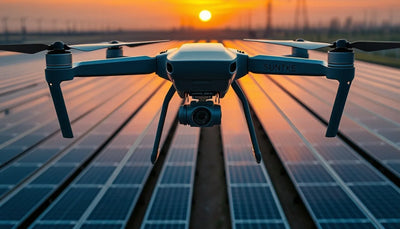
Draganfly Gets FAA 44807 Exemption for Heavy-Lift Drone Over 55 Pounds
Draganfly secured an FAA Section 44807 exemption for a heavy-lift platform over 55 pounds, opening U.S. commercial pathways for defense, industrial, and emergency response payload work. The ruling signals shifting regulatory room for larger airframes.

Quick answer
Draganfly announced that the FAA granted a Section 44807 Special Authority for a heavy-lift drone platform over 55 pounds, clearing a regulatory path for commercial operations in U.S. airspace.
- The exemption applies to a heavy-lift platform exceeding 55 pounds.
- Target use cases include defense, industrial, and emergency response deployments.
- The FAA action was reported by Yahoo Finance on September 1, 2026.
- Draganfly describes the approval as validating its advanced safety architecture.
Evidence: Source material · FAA UAS official guidance
Operator checklist
Turn policy news into a safer fleet decision.
Before changing aircraft, compare repair paths, available DJI inventory, and trade-in timing against the rule change.

Draganfly Inc. has secured a Federal Aviation Administration Section 44807 Special Authority for a heavy-lift drone platform exceeding 55 pounds, according to a company announcement carried by Yahoo Finance on September 1, 2026. The exemption clears a regulatory pathway for commercial operations in U.S. airspace that would otherwise face significant weight-based restrictions under standard small unmanned aircraft rules.
The reported development matters because the 55-pound threshold has long functioned as a hard operational boundary for many commercial drone programs. Crossing it typically requires a different approval track, more involved airworthiness documentation, and a safety case that satisfies FAA reviewers. Draganfly framing the exemption as validation of its safety architecture suggests the company expects the approval to support defense, industrial, and emergency response payload work where heavier airframes are operationally necessary.
Reboot Hub analysis: the announcement should be read as a regulatory signal rather than a product launch. A Section 44807 exemption is specific to an applicant and a defined operational envelope. It does not automatically extend to other manufacturers, other airframes, or even other Draganfly platforms unless separately approved. Fleet buyers evaluating heavy-lift options should still verify the exact scope of any exemption before changing procurement plans.
The regulatory mechanics behind the Section 44807 path
Section 44807 gives the FAA authority to grant special approvals for unmanned aircraft operations that do not fit neatly within existing Part 107 or traditional airworthiness certification frameworks. For heavier platforms, this route has become a practical bridge between small-drone rules and full type certification, especially where public-interest or specialized commercial missions justify the added operational complexity.
Draganfly describes the approval as validating an advanced safety architecture, though the Yahoo Finance report does not include the specific technical documentation, redundancy features, or failure-mode analysis submitted to the FAA. Operators should treat the phrase as a company characterization rather than an independent engineering review. What is concrete is that the exemption applies to a platform over 55 pounds and is positioned for defense, industrial, and emergency response deployments.
For commercial operators, the practical takeaway is that the FAA continues to grant case-by-case approvals for heavier airframes when applicants can demonstrate a credible safety case. That does not lower the compliance burden for everyone. It does suggest that well-documented heavy-lift programs can move from concept to legal operation without waiting for a broader rulemaking cycle.
What this means for drone owners and the market
The immediate market impact is concentrated in heavier commercial and government-adjacent segments rather than the consumer or small enterprise space. Most drone owners flying sub-55-pound platforms under Part 107 will see no direct change to their daily operations. The ruling does, however, reinforce a longer-term pattern: weight classes are becoming less of a binary barrier and more of a documentation and safety-case challenge.
For fleet operators and procurement teams, the Draganfly announcement is a reminder that regulatory feasibility should be evaluated alongside payload capacity, endurance, and serviceability. A heavy-lift airframe may be technically capable of a mission but operationally unavailable without the right FAA authority. Buyers should ask vendors for the exact exemption scope, any geographic or altitude limits, and whether the approval transfers to a customer or remains tied to the manufacturer.
In the pre-owned and repair market, the effect is indirect but real. As heavier commercial platforms gain clearer regulatory footing, more enterprise fleets may enter service, creating downstream demand for airframe inspection, component replacement, and maintenance documentation. Operators researching how heavier systems are supported can use resources like the Drone Wiki to understand platform categories, maintenance considerations, and how commercial airframes differ from consumer models. For owners evaluating service and lifecycle risk, Drone Wiki explains the relevant repair, parts, resale, or operational path.
For pre-owned DJI owners specifically, this ruling does not change the regulatory status of popular sub-55-pound models. It does, however, highlight a segmentation trend: consumer and light commercial drones operate under one set of rules, while specialized heavy-lift platforms increasingly move through separate approval channels. Buyers should not assume that regulatory progress in one weight class translates to relaxed requirements in another.
Defense, industrial, and emergency response implications
The three use cases named in the Draganfly announcement each carry distinct operational requirements. Defense missions often involve sensor or logistics payloads that push gross weight upward. Industrial work such as infrastructure inspection or cargo movement may require heavier batteries, winches, or specialized cameras. Emergency response can demand simultaneous payloads, including communications relays, medical supplies, or thermal imaging systems.
What these missions share is a tolerance for higher regulatory overhead when the alternative is no air support at all. A Section 44807 exemption may include conditions such as visual observers, restricted airspace, or operational ceilings that would be impractical for routine consumer flying but acceptable for a planned industrial or public-safety mission.
For repair and maintenance providers, heavier airframes change the service profile. Larger motors, more complex power systems, and mission-specific payload integration all require different inspection routines than small folding consumer drones. The announcement does not include Draganfly service documentation, so operators should not assume standardized maintenance intervals or parts availability. That information must come from the manufacturer or an approved service channel.
What operators should watch next
The most useful next data point is not another Draganfly press release but the actual exemption document, which would specify the operational limits, pilot requirements, and any FAA-imposed conditions. Until that document is public, the announcement should be treated as a milestone claim with limited independent verification.
Fleet managers evaluating heavy-lift platforms should also track whether other manufacturers pursue similar Section 44807 approvals. If the FAA begins granting these exemptions more routinely, the competitive landscape for industrial drones could shift quickly. If the Draganfly approval remains an outlier, it may reflect a particularly strong safety case rather than a broader regulatory trend.
For now, the operator-facing action is straightforward: do not change current flight operations based on this announcement. Treat it as evidence that heavy-lift commercial work is becoming more accessible through documented, case-specific approvals. If your organization has a mission that requires a platform over 55 pounds, the Draganfly example suggests that a well-prepared Section 44807 application is a viable path, but the preparation burden remains significant.
FAQ
Frequently asked questions
What did the FAA approve for Draganfly?
According to the Yahoo Finance report, the FAA granted Draganfly a Section 44807 Special Authority for a heavy-lift drone platform over 55 pounds, enabling commercial operations in U.S. airspace for defense, industrial, and emergency response applications.
Does this change rules for drones under 55 pounds?
No. The exemption applies to a specific heavy-lift platform over 55 pounds. Standard Part 107 operations for sub-55-pound drones, including most consumer and light commercial DJI models, are unaffected by this announcement.
Should fleet buyers change procurement plans based on this news?
Not immediately. The exemption is tied to Draganfly and its defined operational envelope. Buyers should request the exact exemption scope and conditions from the manufacturer before treating the approval as a general market shift.
Which sources support this update?
The visible evidence links identify Source material and FAA UAS official guidance; each source is used only for the claim it directly supports.
What remains subject to change?
Retail pricing, availability, product bundles and regulatory timelines can change. Readers should verify the latest terms with the named retailer, manufacturer or regulator before acting.
How should buyers or operators use this analysis?
Use the verified facts as a starting point, then compare mission fit, lifecycle support, maintenance needs and current procurement terms before making a purchase or fleet decision.
Fonti consultate
- Yahoo Finance market report - primary source
Al momento della pubblicazione non era disponibile ulteriore documentazione ufficiale.
Reboot Hub Editorial fornisce analisi sugli acquisti, le riparazioni, la rivendita e l'operatività per i proprietari di droni. In caso di errori, contattateci per una revisione della correzione in conformità con la nostra politica editoriale.