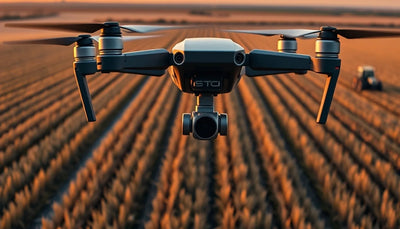
DJI says Australia is primed for scaled BVLOS drone operations
DJI sees scale as the biggest opportunity in Australia's beyond visual line of sight drone market. The outlook signals broader enterprise adoption and a maturing commercial ecosystem that could reshape fleet planning, maintenance demand, and pre-owned DJI aircraft value.

Quick answer
DJI says Australia is primed for beyond visual line of sight (BVLOS) drone growth, with scale identified as the biggest opportunity.
- DJI views scale as the key opportunity in Australia's BVLOS drone market
- The outlook signals broader enterprise and commercial drone adoption
- Operators may need to plan for higher fleet utilization and maintenance demand
- A maturing BVLOS market could influence pre-owned DJI aircraft value
Evidence: DIU Blue UAS
DJI buying context
Match product news to hardware you can actually deploy.
Check inspected DJI aircraft, repair support, and trade-in timing before deciding whether to upgrade, repair, or wait.

DJI is pointing to Australia as a market where beyond visual line of sight (BVLOS) drone operations have room to expand at scale, according to a report carried by agnavigator.com and surfaced through Google News. The assessment frames scale as the central opportunity rather than a narrow technical or regulatory milestone. That distinction matters for commercial operators who are planning multi-year fleet investments, maintenance budgets, and resale strategies around DJI hardware.
The report does not attach a specific launch date, aircraft model, or regulatory approval to the outlook. Instead, it presents a directional view from DJI that the Australian commercial drone environment is moving toward broader BVLOS use. For readers in procurement, fleet management, and repair planning, the signal is worth watching even without a hard product announcement attached to it.
Why the BVLOS framing matters for commercial operators
Beyond visual line of sight operations change the economics of drone work. When a pilot no longer needs to keep the aircraft within direct sight, the operational radius, route planning, and mission profile all shift. The agnavigator.com report highlights DJI's view that Australia is positioned for growth in this category, with scale identified as the biggest opportunity. That language suggests the company sees the market moving from pilot projects and isolated approvals toward repeatable, higher-volume commercial activity.
For fleet operators, the implication is not about a single aircraft purchase. It is about how many aircraft, batteries, charging cycles, and spare parts a growing BVLOS program will consume. Higher utilization tends to accelerate wear on gimbals, landing gear, motor assemblies, and sensor housings. Operators who treat maintenance as an afterthought may find that a scaled BVLOS rollout exposes gaps in their repair and parts planning faster than a visual line of sight program would.
What this means for drone owners and the market
If Australia's commercial drone sector moves toward scaled BVLOS work, the secondary market for DJI aircraft could feel the effect in two directions. On one side, enterprise operators may hold onto airframes longer and push them harder before rotating them out of service, which can change the condition profile of pre-owned units entering the market. On the other side, a busier commercial environment can create demand for inspected pre-owned DJI drones as backup aircraft, training units, or lower-cost additions to a growing fleet. Buyers evaluating pre-owned DJI drones should pay closer attention to documented flight hours, maintenance history, and genuine OEM spare parts than they would for lightly used consumer units. For operators and repair customers, resources like the Drone Wiki can help clarify maintenance and ownership questions as fleet utilization rises. For owners evaluating service and lifecycle risk, Drone Wiki explains the relevant repair, parts, resale, or operational path.
The source-limited nature of this report means we do not yet have verified specifics on which DJI platforms would lead a scaled BVLOS push in Australia, what regulatory conditions would apply, or which industries would adopt first. Reboot Hub analysis suggests that agriculture, linear infrastructure inspection, and regional logistics are the most likely early candidates based on the operational profile of BVLOS work, but that is an interpretation rather than a confirmed DJI statement. Procurement teams should treat the outlook as a planning signal, not a purchasing trigger.
Maintenance, parts, and the pre-owned DJI angle
A scaled BVLOS market changes the maintenance conversation. Aircraft that fly longer routes and operate beyond direct visual oversight tend to log more hours per deployment, which means more frequent inspections, more battery cycling, and more opportunities for component fatigue. The agnavigator.com report does not include specific maintenance data or DJI service commitments, so operators should not assume any particular warranty or support structure applies. What is reasonable to infer is that higher utilization will make genuine OEM spare parts and professional DJI repair more relevant to fleet uptime planning.
For buyers in the pre-owned DJI market, the BVLOS outlook adds a layer of diligence. A drone that was used in a scaled commercial program may have a different wear profile than a unit used for occasional mapping or photography. Asking about mission history, repair records, and whether OEM-pulled parts were used in prior service becomes more important. The report does not provide resale pricing data, so any specific value projection would be speculative. The practical takeaway is that condition transparency and service documentation will carry more weight as commercial utilization increases.
What operators should watch next
The DJI outlook reported by agnavigator.com is a directional signal rather than a detailed roadmap. Operators and buyers should watch for follow-on developments that would make the opportunity concrete: named enterprise platforms, Australian regulatory approvals, pilot program results, or DJI enterprise channel updates. Without those specifics, the report is best used as a prompt to review fleet readiness, parts inventory, and maintenance partnerships before BVLOS demand accelerates.
For a fleet manager, the immediate action is not to buy new aircraft based on a single industry outlook. It is to assess whether current maintenance workflows, spare parts access, and pilot training records can support higher utilization. For a repair customer or pre-owned buyer, the action is to prioritize documented service history and genuine OEM parts. The Australian BVLOS story is still forming, but the commercial direction DJI is signaling points toward a busier, more demanding operating environment for drone owners.
FAQ
Frequently asked questions
What did DJI say about Australia's drone market?
DJI said Australia is primed for beyond visual line of sight drone growth, with scale identified as the biggest opportunity, according to a report carried by agnavigator.com.
Does this announcement include a specific DJI aircraft or launch date?
No. The source report does not name a specific DJI platform, launch date, or regulatory approval. It presents a directional outlook on the Australian BVLOS market.
How should drone buyers and fleet operators respond to this outlook?
Reboot Hub analysis: Operators should review maintenance workflows, spare parts access, and service documentation rather than making immediate purchasing decisions. Higher BVLOS utilization would likely increase wear and make genuine OEM parts and repair history more important.
Which sources support this update?
The visible evidence links identify DIU Blue UAS; each source is used only for the claim it directly supports.
What remains subject to change?
Retail pricing, availability, product bundles and regulatory timelines can change. Readers should verify the latest terms with the named retailer, manufacturer or regulator before acting.
How should buyers or operators use this analysis?
Use the verified facts as a starting point, then compare mission fit, lifecycle support, maintenance needs and current procurement terms before making a purchase or fleet decision.
Fonti consultate
- agnavigator.com via Google News - primary source
- DIU Blue UAS - official government source
Reboot Hub Editorial fornisce analisi sugli acquisti, le riparazioni, la rivendita e l'operatività per i proprietari di droni. In caso di errori, contattateci per una revisione della correzione in conformità con la nostra politica editoriale.